Executive Summary: Cross-Emirate Transit at a Glance
Securing private transport between the UAE’s two major metropolitan hubs requires more than simply handing over a credit card at a rental desk. Before committing to a vehicle, travelers must understand the nuanced logistics of highway transit, staggered speed regulations, and multi-emirate toll systems. The table below outlines the baseline metrics you should anticipate when organizing your journey for car lift from abu dhabi to dubai.
| Transit Factor | Abu Dhabi Framework | Dubai Framework | Inter-City Highway (E11/E311) Reality |
|---|---|---|---|
| Toll Systems | Darb (Active peak hours only) | Salik (Active 24/7 at specific gates) | Rental agencies levy an administrative markup on all cross-border tolls, usually billing 5 to 5.25 AED per crossing. |
| Speed Limits & Buffers | Strict adherence. 140 km/h means 140 km/h. Zero buffer. | 20 km/h buffer applied. A 100 km/h zone allows 120 km/h. | The buffer vanishes the exact moment you cross the border at Ghantoot. Sudden deceleration is mandatory. |
| Standard Parking | Mawaqif system. Standardized color-coded curbs. | RTA system. Zone-based alphanumeric codes. | Rental cars utilize digital plates. You must pay via SMS or local transit applications specific to each emirate. |
| Estimated One-Way Fuel | N/A | N/A | Approximately 40-60 AED depending on vehicle aerodynamics and air conditioning demand during summer months. |
Why Securing a Car Lift from Abu Dhabi to Dubai Makes Financial Sense
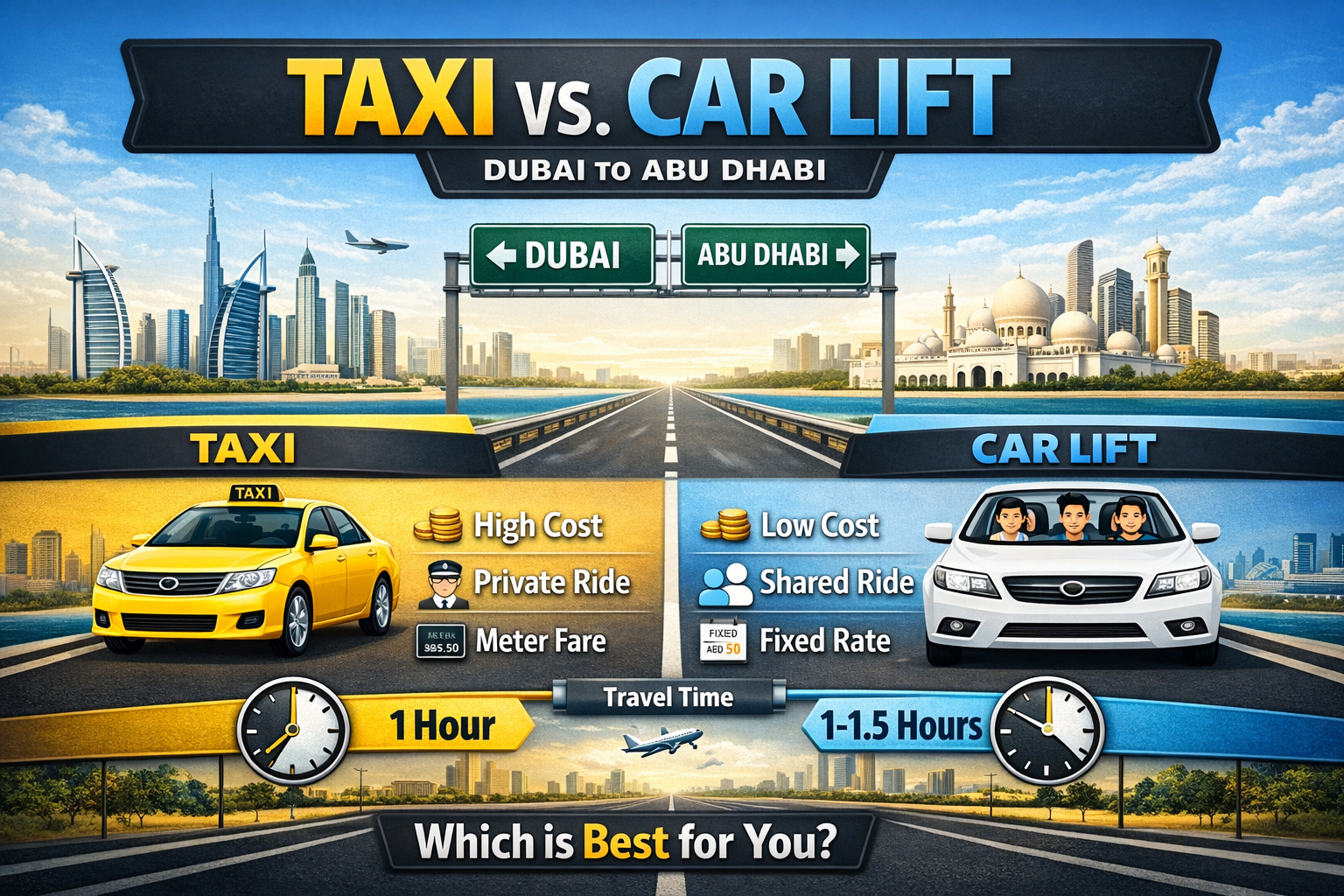
I learned this the hard way. Last summer, I organized a corporate retreat requiring a fleet transfer. We initially looked at private chauffeur services and metered taxis. A standard one-way taxi fare from Abu Dhabi International Airport to Downtown Dubai hovered between 300 and 350 AED. When multiplying that by several days of unpredictable inter-city movement, the expenditure ballooned immediately. Opting for a car lift from abu dhabi to dubai shifted the paradigm completely. You gain absolute geographic autonomy for a fraction of the cumulative cost. A standard mid-size sedan frequently runs less than 150 AED per day. Even factoring in the fluctuating fuel prices and inevitable toll gate crossings, the economic advantage leans heavily toward independent driving. You are not shackled to the rigid schedules of intercity buses or the exorbitant waiting fees of private transfers. You possess the freedom to detour into Yas Island for a morning meeting and still arrive in Jumeirah for late afternoon negotiations. The financial amortization of a daily rental rate against multiple taxi fares becomes starkly obvious the moment you require more than two point-to-point journeys within a 24-hour window.
The Hidden Economics of the E11 Route
Let us dissect the actual cost of operating that vehicle on the E11 highway. Many travelers assume the daily rate quoted by the agency represents the bulk of the expense. This represents a fundamental miscalculation. First, scrutinize the mileage cap. Standard contracts frequently limit you to 250 kilometers per day. The round trip between the two cities easily consumes 280 to 300 kilometers depending on your starting district and final destination. Exceeding this threshold incurs penalties ranging from 0.50 to 1.00 AED per kilometer. I strongly advocate negotiating unlimited mileage if you plan on extended exploration beyond the main highway arteries. Second, toll management presents another hurdle. Every rental agency pre-equips their fleet with a Salik tag. However, they do not absorb the cost out of goodwill. The standard 4 AED toll is almost universally marked up to cover administrative overhead. Over a three-day rental, weaving through the heavily tolled corridors of Sheikh Zayed Road, these micro-transactions quietly stack up against your pre-authorized credit card block.
Vehicle Selection for Your Abu Dhabi to Dubai Car Lift
Forget the generic advice suggesting you simply grab the cheapest compact car available. The UAE driving environment demands mechanical resilience. I recall renting a budget subcompact for a quick dash up the coast during peak July temperatures. Big mistake. The violent crosswinds near the Al Samha stretch nearly pushed me into the heavy-vehicle lane, and the undersized engine screamed at 120 km/h while the air conditioning struggled to combat the 45-degree heat radiating through the glass. When arranging your vehicle, prioritize curb weight and engine displacement. Mid-size sedans like the Toyota Camry or Nissan Altima represent the sweet spot for solo travelers or couples. They offer sufficient aerodynamic stability against highway gusts and possess robust cooling systems designed specifically for Gulf specifications. Families should immediately look toward crossovers or full-size SUVs. The elevated driving position provides a distinct tactical advantage when navigating the dense, aggressive traffic patterns frequently encountered as you transition past the Dubai Marina skyline.
Engine Performance Against UAE Heat
Thermodynamics play a brutal role in Middle Eastern vehicle performance. Rental fleets endure grueling duty cycles. An engine constantly running at high RPMs on the highway while simultaneously driving a massive air conditioning compressor experiences severe thermal stress. When you inspect your vehicle at the depot, specifically check the tire condition. The combination of abrasive sand, extreme asphalt temperatures, and sustained highway speeds accelerates tread degradation exponentially. A blowout at 140 km/h on the E11 is a scenario you must avoid at all costs. Request a vehicle with less than 40,000 kilometers on the odometer. Newer vehicles guarantee more efficient thermal management and reliable cabin cooling. Do not hesitate to idle the car for five minutes in the parking lot to verify the AC output is genuinely frigid, not merely cool.
One-Way Fees: Optimizing Your Car Lift from Abu Dhabi to Dubai
Logistical friction often arises when travelers attempt to return their vehicle in a different emirate. Most major agencies operate branches in both cities, technically allowing for a cross-city drop-off. However, this convenience carries a premium. One-way drop-off fees typically range from 150 to 350 AED. The justification provided by rental counters is the operational cost of repatriating the asset to its original fleet pool. If your itinerary explicitly requires arriving at Abu Dhabi Airport and departing from Dubai International Airport, this fee is largely unavoidable. However, savvy renters can mitigate this. I have frequently bypassed this surcharge by monitoring local traffic bulletins and promotional offers from regional agencies attempting to rebalance their own fleet distribution. Sometimes, an agency desperately needs sedans moved to their northern branches and will waive the drop-off penalty entirely. Always ask the counter agent directly if they have specific vehicles they need relocated.
Navigating Salik and Darb Tolls
The bifurcation of the toll systems between the two cities routinely confuses international visitors. Abu Dhabi utilizes the Darb system, which relies entirely on digital license plate reading without a physical window tag. Darb tolls are only active during specific morning and evening peak hours. Conversely, Dubai’s Salik system utilizes physical RFID tags adhered to the windshield and operates 24 hours a day. Your rental vehicle will manage both automatically. The critical detail lies in the final billing cycle. The rental agency pulls data from both municipal authorities. Because of the bureaucratic lag between the Roads and Transport Authority in Dubai and Abu Dhabi’s transport department, toll charges might not finalize until a week after you return the keys. This delayed reconciliation is precisely why agencies place a block on your credit card for up to thirty days post-rental.
Driving Dynamics: Rules for Renting a Car Between Abu Dhabi and Dubai
The psychological shift required when driving across the border is profound. Abu Dhabi driving is highly structured, strictly enforced, and generally predictable. Dubai driving is fast-paced, fluid, and demands omniscient situational awareness. The E11 is a multi-lane behemoth. The two left-most lanes are unofficially reserved for high-speed transit. If you are occupying the far-left lane and a vehicle approaches rapidly from behind, flashing their headlights, the local protocol dictates you indicate right and yield immediately, regardless of your current speed. This is not aggression; it is simply the rhythm of the highway. Heavy trucks are restricted to the far-right lanes and operate under entirely different speed mandates. Understanding this segregation of traffic flow is vital for maintaining a safe buffer zone around your vehicle.
The Zero-Tolerance Speed Buffer Explained
Perhaps the most critical piece of intelligence I can offer involves the radar networks. Check the federal traffic guidelines before your trip, as enforcement strategies shift. Historically, Dubai permits a 20 km/h grace period over the posted limit. If the sign reads 100, the flash will not trigger until you hit 121 km/h. Abu Dhabi eliminated this buffer entirely several years ago. When traveling northbound toward Dubai, the exact moment you pass the border area near Ghantoot, the rules change. Countless drivers secure a traffic fine within their first hour because they fail to recalibrate their driving habits to the local jurisdiction. Furthermore, tailgating is heavily monitored by automated smart cameras in both emirates. Maintain at least a three-second gap. The fines for failing to maintain a safe distance are exorbitant and frequently accompanied by black points on the vehicle’s registration, a penalty the rental agency will happily pass directly to you via an administrative surcharge.
Final Checklist Before Commencing Your Car Lift from Abu Dhabi to Dubai
Never sign the release document without conducting a forensic external audit of the vehicle. I use my smartphone to record a continuous 4K video, walking slowly around the entire perimeter of the car. I capture the wheel alloys, the lower front bumper lip, and the windshield glass under direct sunlight. Minor sandblasting on the paint might seem insignificant at the depot, but under the fluorescent lights of a return garage, a meticulous agent might attempt to categorize it as new damage. Ensure your paperwork includes the proper insurance waivers. Basic Collision Damage Waiver (CDW) usually carries an excess of 1000 to 1500 AED. Given the high-speed nature of the E11, upgrading to a Super CDW that reduces your liability to zero is a sound financial defense mechanism. Verify that the physical vehicle registration card is present in the glovebox; police checkpoints, while rare, will demand it alongside your valid international driving permit and passport copy. Finally, familiarize yourself with the emergency breakdown protocols. Knowing whether to call the rental agency’s fleet manager or a third-party towing service will save you immense frustration if you suffer a tire puncture near the industrial sectors of Jebel Ali.
Frequently Asked Questions About Inter-City Transit
Is it legal to drive a rental vehicle outside the UAE borders to Oman?
Generally, no. Standard rental agreements strictly forbid cross-border travel. Taking the vehicle into Oman requires specialized NOC (No Objection Certificate) documentation, enhanced insurance coverage, and specific pre-approval from the rental agency’s regional manager. Attempting to cross the border without these will result in immediate detainment by customs officials.
What is the protocol if I am involved in a minor collision?
Do not move the vehicle unless it is actively blocking a high-speed lane and creating an immediate hazard. In Abu Dhabi, you must utilize the Saeed application or contact the police directly to secure an accident report. In Dubai, the Dubai Police application allows you to photograph minor damage and receive a digital report. A rental agency will not process a damage claim without an official police report. Period.
How are parking fees managed when crossing emirates?
Your rental car will not have physical parking permits. You must utilize the municipal SMS systems. In Abu Dhabi, you text the Mawaqif system. In Dubai, you text the RTA system. The format usually involves the plate source, the plate number, the zone code, and the duration. Failing to pay for parking accurately will result in municipal fines that are automatically forwarded to the rental company.
Can I rent an electric vehicle for this route?
Yes, EV rentals are becoming increasingly viable. The infrastructure connecting the two cities features multiple rapid-charging stations at ADNOC and ENOC stops. However, highway speeds deplete battery range significantly faster than urban driving. If you rent a standard EV, plan for a mandatory 30-minute charging stop to guarantee you reach your destination without entering low-power mode.
Will the rental agency accept a debit card for the security deposit?
Almost universally, no. Major agencies require an embossed credit card to process the pre-authorization block. This is due to the delayed nature of toll and traffic fine reporting. A debit card does not offer the agency the necessary financial security to recover post-rental municipal charges.