The Real Economics of a Car Pool Dubai Monthly Plan
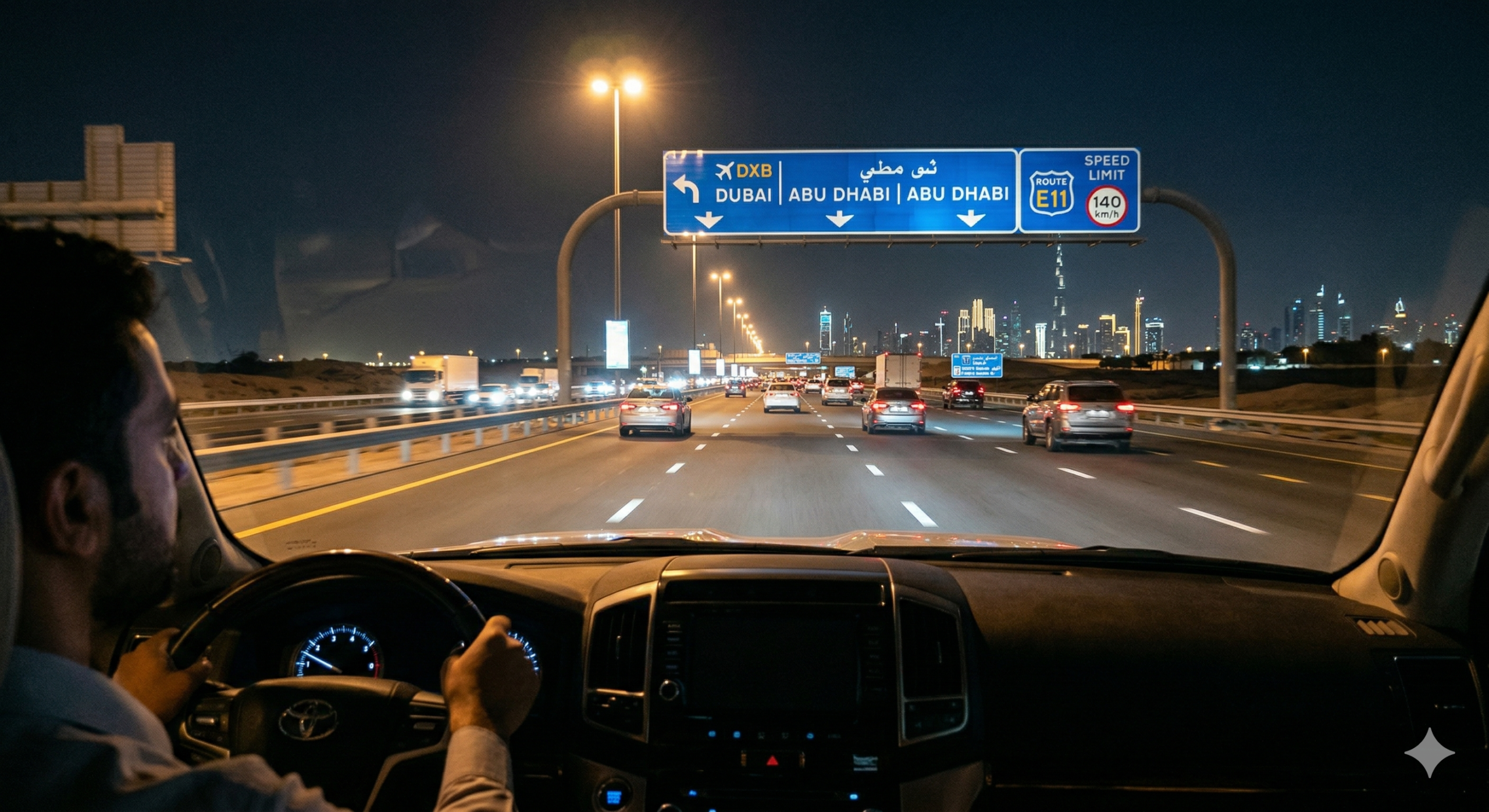
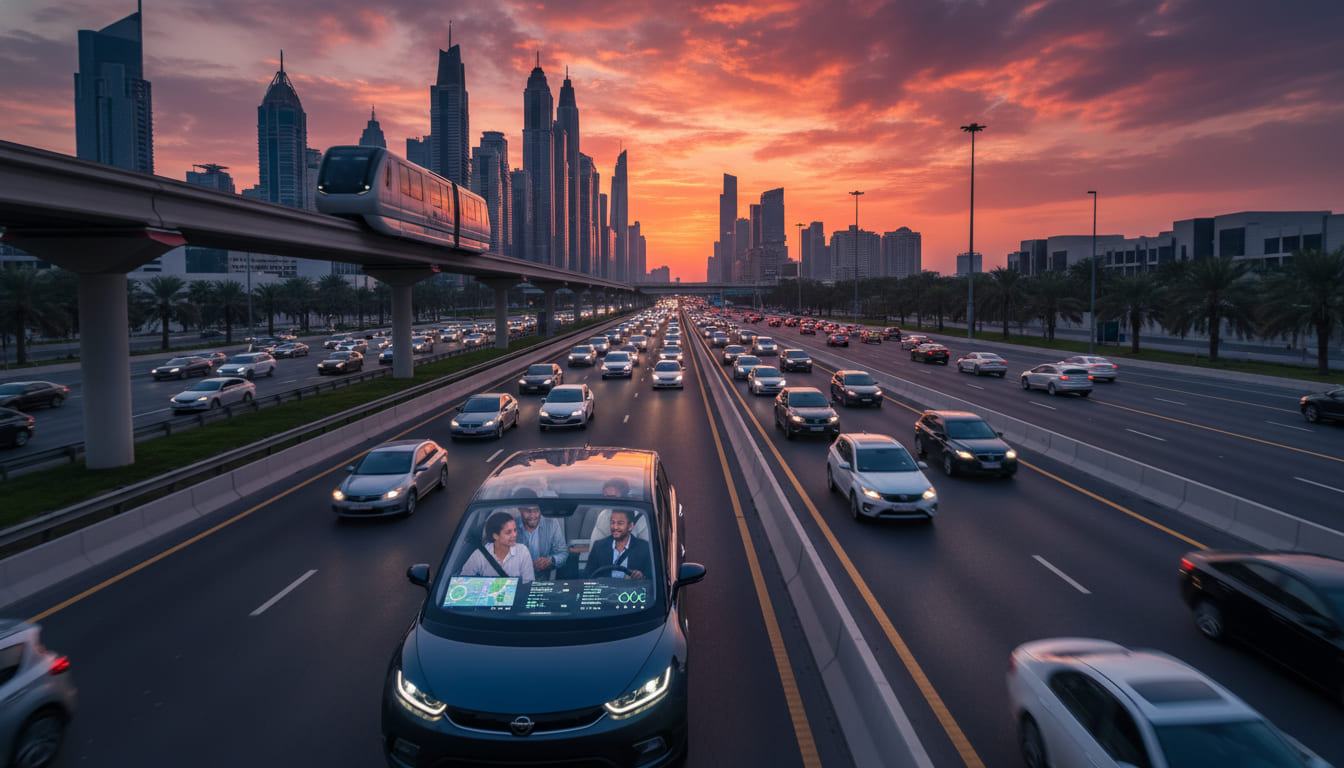
I lost 480 hours to Sheikh Zayed Road last year. That is twenty full days staring at brake lights between Jebel Ali and the Trade Centre. When I finally ran the numbers on my daily commute, the financial and psychological bleed was staggering. Opting for a structured shared commute was not about saving a few dirhams; it was about reclaiming my time and preserving my sanity. Here is the unvarnished reality of setting up a reliable transit car pool strategy in the UAE.
For professionals navigating the intense corporate landscapes of the Emirates, mobility is a serious logistical challenge. The sheer volume of single-occupancy vehicles clogging the arterial highways during peak hours highlights a systemic inefficiency. You see it every morning on Al Ittihad Road and Hessa Street. I spent months auditing corporate transportation budgets and personal commuter habits across Dubai. The data unequivocally pointed toward one pragmatic solution: migrating to a shared transit model. Yet, the execution of this strategy requires extreme diligence.
| Commute Factor | Self-Driving (Private Car) | Car Pool Dubai Monthly Setup |
|---|---|---|
| Average Monthly Cost (Dubai-Sharjah) | AED 1,800 – AED 2,500 (Fuel, Salik, Parking) | AED 600 – AED 900 |
| Productive Time Retrieved | 0 Hours (Requires full attention) | Approx. 40 Hours/Month |
| Stress & Cortisol Levels | High (Traffic bottlenecks, erratic drivers) | Low (Passive commuting) |
| Environmental Footprint | High (Single occupancy emissions) | Low (Shared footprint) |
Decoding the Car Pool Dubai Monthly Ecosystem
The shared transportation matrix in the UAE operates on multiple tiers. You have informal arrangements pieced together via community WhatsApp groups, formal platforms sanctioned by authorities, and premium corporate transportation contracts. The primary driver for entering this ecosystem is usually financial arbitrage. Living in a more affordable emirate like Sharjah or Ajman while drawing a Dubai salary creates a geographic disconnect. Bridging that physical gap economically is where the car pool Dubai monthly model becomes highly relevant.
However, the ecosystem is heavily regulated. The government actively discourages unlicensed transport networks to ensure passenger safety. When I analyzed the regional transit data alongside recent urban traffic studies, a stark pattern emerged. Commuters who attempt to hack together a cheap, unregulated lift often face severe disruptions. Drivers get penalized, vehicles get impounded, and passengers are left stranded on the shoulder of E311. True commuter peace of mind requires formalizing the arrangement.
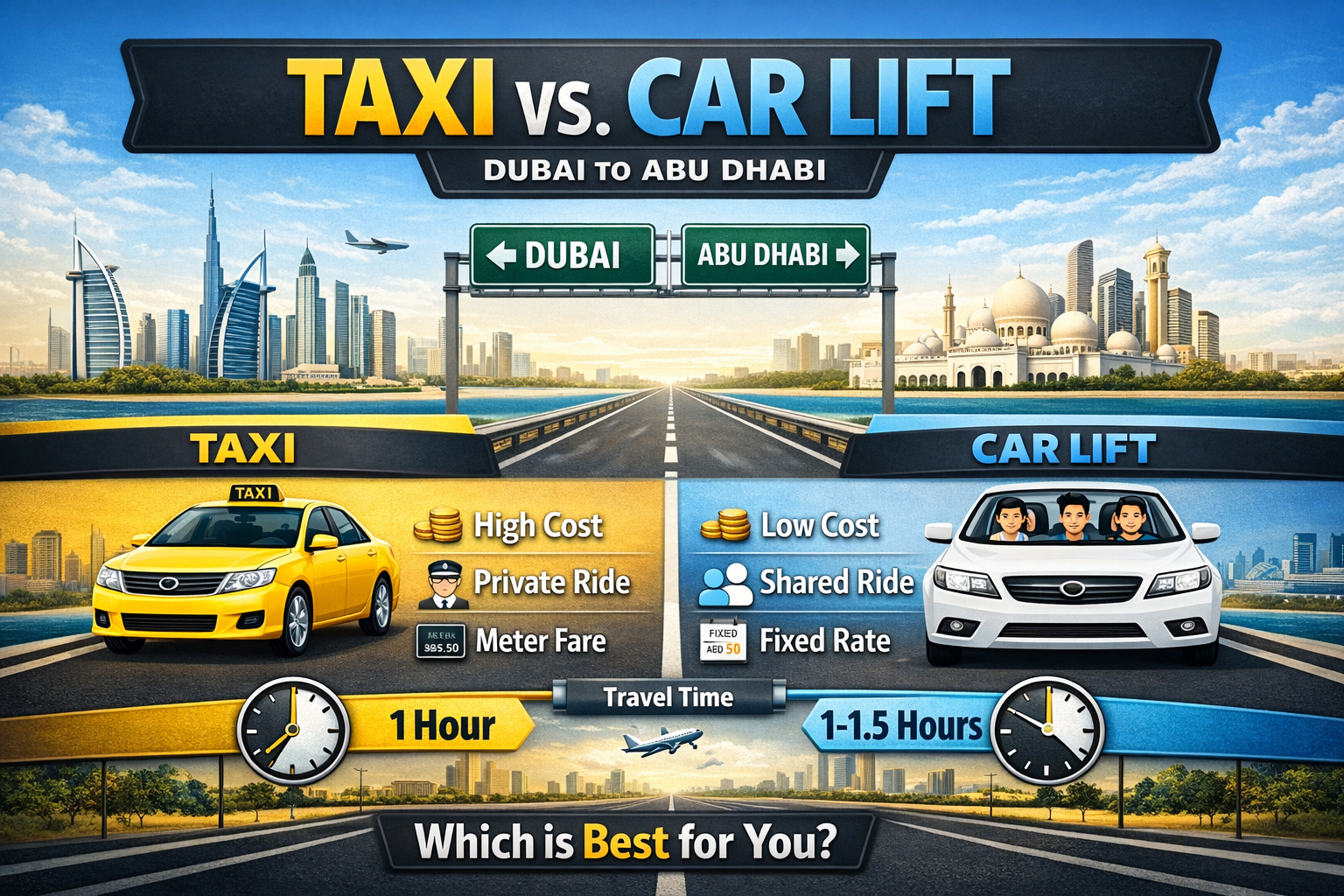
Professional services have stepped into this void. By operating dedicated fleets, they offer the consistency of public transport with the point-to-point convenience of a taxi. While informal groups exist, utilizing a dedicated professional service bridges the gap between chaotic coordination and premium taxi costs. I recently reviewed the logistics frameworks provided by professional car lift services operating across Dubai and Abu Dhabi, noting their strict adherence to scheduling and dynamic route optimization. That level of infrastructure is what separates a stressful ride from a seamless transit experience.
The Financial Math Behind Your Commute
Let us strip away the assumptions and look at the raw arithmetic of a standard 80-kilometer daily round trip. Most private car owners drastically underestimate their actual commuting costs, focusing entirely on the fuel gauge while ignoring the invisible financial drains.
Consider a mid-range sedan. At current UAE fuel prices, an 80-kilometer daily drive consumes roughly AED 500 to AED 650 per month depending on traffic density. Stop-and-go traffic annihilates fuel efficiency. Then, we factor in Salik. Passing through two toll gates each way costs AED 16 daily. Over a 22-day working month, that is AED 352. We have not even parked the car yet. Commercial parking zones in areas like Business Bay or Dubai Media City can easily drain AED 10 to AED 20 per day if your employer does not provide a designated bay. That adds another AED 220 to AED 440 monthly.
Finally, there is vehicle depreciation and maintenance. Adding 20,000 kilometers annually to your odometer accelerates the depreciation curve and guarantees more frequent servicing, tire replacements, and brake pad wear. I calculate this hidden amortization at roughly AED 500 per month for a standard vehicle. Your real monthly commuting cost hovers around AED 1,800 to AED 2,200.
Contrast this with a formalized shared commute. A standard seat in a well-maintained, scheduled passenger van ranges between AED 600 and AED 900 per month, depending on the exact pickup and drop-off coordinates. The financial delta is undeniable. You are effectively giving yourself an annual salary increase of AED 14,000 simply by changing how you arrive at the office.
Navigating the Legalities of a Car Pool Dubai Monthly Arrangement
The legal framework surrounding shared transport in the UAE is robust, designed entirely around passenger safety and the protection of licensed public transit networks. It is entirely legal to carpool with colleagues or friends if no money changes hands for profit. Sharing the exact cost of petrol is generally accepted, but the moment a driver begins generating income from passengers without commercial licensing, they cross into illegal territory.
The authorities employ strict measures against illegal passenger transport, colloquially known as ‘smuggling’. Fines for operating an unlicensed taxi service can reach up to AED 30,000, accompanied by vehicle impoundment and potential deportation for expatriate offenders. This is why vetting your transport provider is non-negotiable. You must ensure you are engaging with entities that operate within the Dubai Roads and Transport Authority (RTA) framework or utilize officially licensed commercial transport vehicles.
When I advise corporate clients on establishing commuter networks for their staff, I emphasize documentation. A legitimate operator will have no hesitation proving their commercial licensing and vehicle insurance status. If a provider insists on cash-only payments and shadowy pickup locations away from main roads, that is a glaring red flag. A legitimate car pool Dubai monthly agreement should feel like a standard vendor contract, not a clandestine operation.
The Psychology of Sheikh Zayed Road Traffic
We rarely quantify the cognitive toll of aggressive driving. Navigating six lanes of high-speed, dense traffic while anticipating the erratic movements of other drivers forces the human brain into a prolonged state of hyper-vigilance. Cortisol levels spike. By the time you sit at your desk at 8:30 AM, you have already experienced a mild stress event.
Transitioning to a shared commute changes this physiological baseline. I clearly recall my first week using a dedicated transport service. Instead of gripping the steering wheel while merging onto Al Khail Road, I was sitting in the back row, answering emails and reading an industry report. The return on investment here is measured in mental bandwidth. You arrive at your destination entirely decoupled from the stress of the journey.
This psychological shift has tangible impacts on workplace performance. HR departments in massive free zones like DMCC are increasingly aware of ‘commuter burnout’. Some progressive firms now actively facilitate car pool matching among their staff, recognizing that an employee who reads a book for forty minutes on the way to work is vastly more productive than one who spent that same time fighting for a lane change near the Mall of the Emirates.
Evaluating Your Car Pool Dubai Monthly Options: A Vetting Protocol
Finding an empty seat is easy. Finding a reliable, hygienic, and punctual seat requires a systematic vetting process. When locking in a car pool Dubai monthly contract, you must evaluate the operator across four distinct metrics: punctuality, route optimization, vehicle condition, and communication.
First, demand transparency on the exact route. A van that picks up eight people across five different neighborhoods before hitting the highway will easily double your transit time. You want a service with tight geofencing—picking up passengers within a very localized radius before initiating the main highway journey. I always ask operators for their maximum passenger cap and their exact routing map.
Second, scrutinize the vehicle. In the UAE summer, a failing air conditioning unit transforms a van into an intolerable greenhouse. Ensure the vehicle undergoes regular commercial servicing. Look at the tires. A professional operator replaces tires long before the tread wears down to the legal limit. Do not compromise on baseline safety features for the sake of saving fifty dirhams a month.
Third, establish communication protocols. What happens if the primary vehicle breaks down? A sole proprietor with a single minivan will leave you stranded. A professional operation has redundancy—backup vehicles and drivers ready to deploy. Always ask what their contingency plan is for unexpected mechanical failures or driver illness.
Environmental Impact: Commuting with a Conscience
Beyond the personal economics, there is a macro-level environmental imperative to rethink our mobility. The UAE has committed to ambitious Net Zero targets by 2050. The current paradigm of placing one human inside a two-ton metal box to move them twenty kilometers is fundamentally incompatible with those sustainability goals.
According to global transport emission metrics, passenger cars account for a massive percentage of urban greenhouse gases. By consolidating four commuters into a single vehicle, you are effectively cutting the per-capita emissions of that journey by seventy-five percent. If thousands of professionals in the UAE made this shift, the reduction in daily carbon tonnage would be monumental.
We are seeing an increased corporate focus on Scope 3 emissions—those indirect emissions that occur in a company’s value chain, which includes employee commuting. Multinational corporations based in DIFC and Dubai Internet City are starting to track how their workforce arrives at the office. Engaging in a structured shared transit setup allows environmentally conscious professionals to align their daily habits with broader ecological goals without sacrificing convenience.
Securing a Reliable Car Pool Dubai Monthly Seat
The mechanics of securing a seat have evolved. Gone are the days of relying solely on dubizzle ads or physical notice boards in supermarket foyers. Today, the process is largely digitized, though it still requires a discerning eye.
Begin your search at least two weeks before your intended start date. This buffer allows you to take a trial run. I strongly advocate for a one-day or three-day trial before committing to a full car pool Dubai monthly payment. This trial reveals the unadvertised realities: Does the driver speed? Do the other passengers take loud phone calls? Is the pickup time actually 7:00 AM, or does it drift to 7:15 AM?
Payment structures also require clarity. Professional services will offer clear invoicing, often accepting bank transfers or digital payments. Be wary of operators who demand full upfront cash payments for multiple months without providing a receipt or service agreement. Establishing clear terms regarding sick days, annual leave, and public holidays ensures there are no financial disputes at the end of the month.
The Abu Dhabi to Dubai Corridor
While the internal Dubai commute is massive, the inter-emirate corridor between Abu Dhabi and Dubai represents an entirely different logistical beast. Traversing the E11 or E311 for 120 kilometers each way is a grueling daily undertaking. The wear and tear on a personal vehicle on this route is catastrophic over a three-year period.
For this specific demographic, a highly structured shared commute is practically mandatory for long-term career survival. The vehicles required for this route need to be higher-tier—comfortable seating, high-speed stability, and exceptional safety ratings. The cost of a car pool Dubai monthly setup on this inter-emirate route is naturally higher, reflecting the immense mileage, but the comparative savings against self-driving are even more pronounced. You are saving not just on petrol, but avoiding rapid vehicle depreciation.
Many professionals utilizing this corridor have negotiated hybrid working models. They travel to Dubai three times a week and work from Abu Dhabi for two. Professional transit services are adapting to this, offering flexible monthly packages that cater to a three-day-a-week commuter schedule, ensuring passengers do not pay for empty seats on their remote working days.
Corporate Perspectives on Shared Transit
Facility managers and HR directors look at the commuting problem through the lens of infrastructure. Real estate in prime commercial districts is exorbitant. Providing parking spaces for every employee is financially unviable for most mid-sized firms. Consequently, parking becomes a highly contested resource, often reserved only for senior executives.
By actively promoting shared mobility, companies solve their internal parking crises. I have consulted for firms that incentivize carpooling by offering subsidized rates or premium drop-off zones for high-occupancy vehicles. It is a brilliant strategy. The company saves tens of thousands of dirhams on leasing additional parking lots, and the employees receive a tangible financial benefit.
Furthermore, shared commutes foster cross-departmental networking. When an accountant and a marketing manager share a forty-minute ride every morning, silos break down. Organic conversations happen. While this sounds like corporate idealism, I have witnessed genuine, business-critical ideas spawn from the casual dialogue that occurs in the back of a commuter van.
Real Stories: The Car Pool Dubai Monthly Experience
To truly understand the impact, one must look beyond the spreadsheets and listen to the commuters. Take the case of Sarah, an architect living in Dubai Silicon Oasis and working in JLT. For two years, she drove the E311. She accumulated AED 4,000 in speeding fines over that period, not from recklessness, but from the sheer panic of running late due to unpredictable traffic density.
She transitioned to a scheduled van service six months ago. Her initial hesitation was the loss of perceived freedom. What if she needed to leave early? What if she wanted to stop for groceries? She quickly realized that the structured routine actually enforced better time management. She no longer works unpaid overtime just to ‘wait out the traffic’. The van leaves at 6:00 PM. She is on it. Her work-life balance improved dramatically, and the AED 1,200 she saves monthly is now redirected into her investment portfolio.
Then there is Ahmed, an IT specialist commuting from Sharjah to Media City. His narrative focuses on physical health. The continuous clutch control in slow-moving traffic exacerbated an old knee injury. By switching to a passenger role, he removed the physical strain of driving. He utilizes the hour-long journey to listen to tech podcasts, arriving at his desk physically relaxed and mentally stimulated.
The Anatomy of a Perfect Transit Schedule
Creating a frictionless commute requires alignment between your biological clock, your office hours, and the vehicle’s routing. The most successful car pool Dubai monthly arrangements are those where the passengers share identical corporate rhythms.
If your office mandates a strict 8:00 AM start, you cannot share a ride with someone who has a flexible 8:30 AM to 9:00 AM window. The flexible worker will inevitably cause delays. This is why professional aggregators and service providers are so valuable; they have the passenger volume to group commuters with absolute precision based on their exact time requirements.
Expect a buffer. A well-run service will aim to drop you at your office fifteen minutes before your shift begins. This buffer absorbs minor traffic anomalies and allows you time to grab a coffee before logging in. If the schedule is so tight that a single red light makes you late, the route is fundamentally flawed and needs immediate recalculation.
Frequently Asked Questions About Shared Transit
What is the standard protocol if the driver is late? Professional services have dispatchers. If a driver is delayed by an accident or mechanical failure, the dispatcher should notify you immediately via a broadcast message and deploy a backup vehicle. If you are using an informal group, you are entirely at the mercy of the driver’s communication skills.
Can I customize my drop-off point? In a shared setup, the route is fixed to optimize time for everyone. However, professional services design their routes to hit major commercial clusters. You might be dropped at a central plaza in DIFC rather than directly at the door of your specific building. This minor walk is usually negligible compared to the time saved on the highway.
How do public holidays affect my monthly payment? Most formal car pool Dubai monthly agreements are calculated on a flat rate that accounts for standard weekends and typical public holidays. The rate usually remains consistent month-to-month to ensure income stability for the operator and predictable budgeting for the commuter.
Is it safe for female commuters? Passenger safety is paramount in the UAE. Many operators offer ladies-only vehicles or ensure strict behavioral codes within mixed vehicles. Always communicate your preferences during the vetting stage. Legitimate services maintain strict zero-tolerance policies for harassment or unprofessional behavior.
Future of Regional Mobility
We are standing on the precipice of a massive shift in urban transit. The integration of AI in route mapping, the gradual introduction of autonomous vehicles, and the expansion of the Etihad Rail network will continually reshape how we move across the Emirates. Yet, the core philosophy remains unchanged: single-occupancy commuting is an outdated, highly inefficient model.
The current iteration of the car pool Dubai monthly system represents the most pragmatic, immediately accessible solution for the modern professional. It does not require waiting for future infrastructure projects to finish. It utilizes the existing road networks but does so with vastly improved efficiency.
Evaluating your commute is the ultimate exercise in personal auditing. Look at the thousands of dirhams and hundreds of hours bleeding out of your schedule annually. The infrastructure to stop that bleed exists today. Whether you are traversing the short distance from Deira to Business Bay, or undertaking the long-haul from Al Reem Island to Jebel Ali, structured shared mobility is not just an alternative; it is the definitive upgrade to the UAE professional lifestyle.