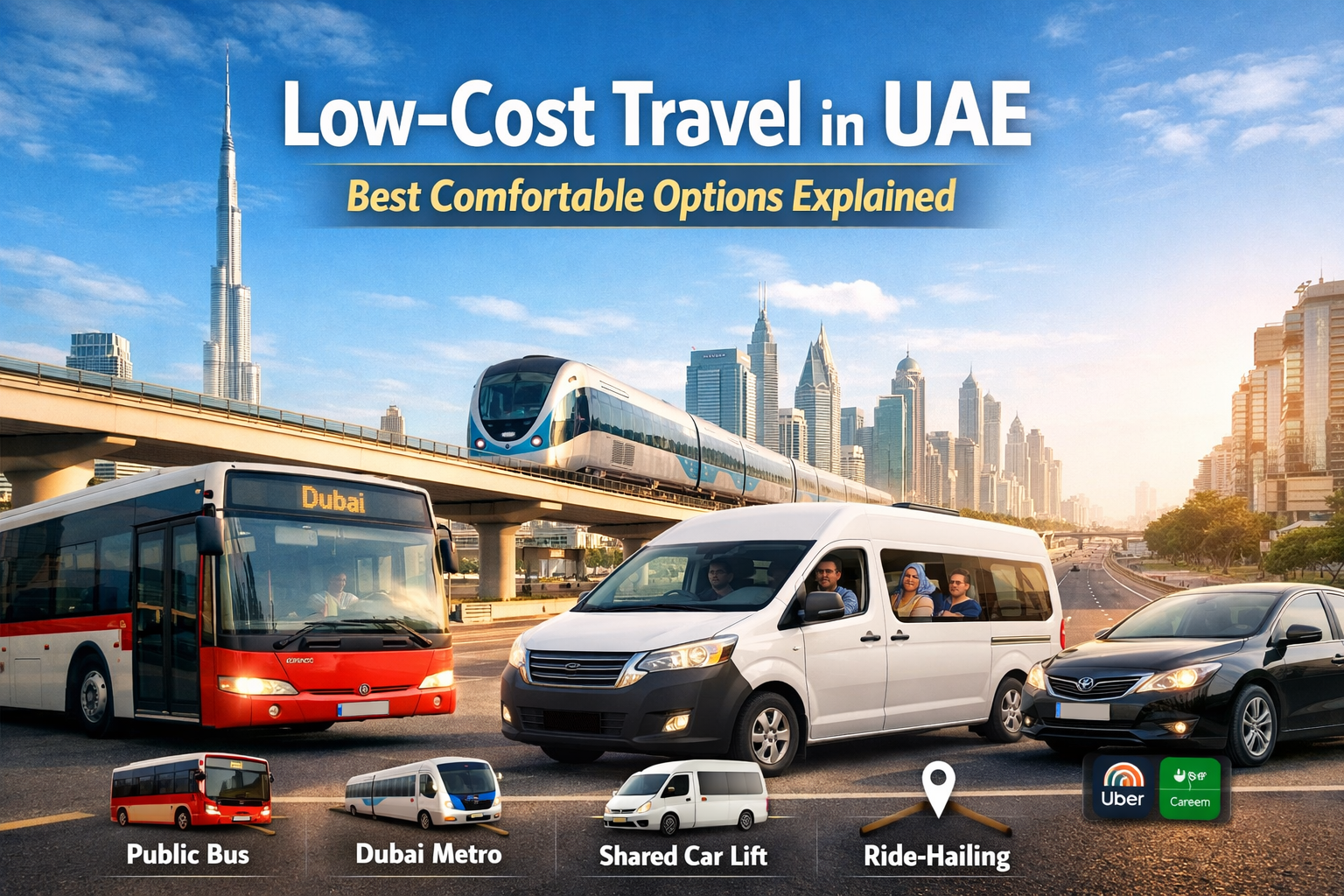
Low-Cost Travel in UAE: Best Comfortable Options Explained
Traveling in the United Arab Emirates (UAE) is often associated with luxury, premium vehicles, and high-end lifestyles. However, despite this reputation, there are many low-cost travel options in the UAE that offer both affordability and comfort. With the right planning, residents and visitors can move between cities efficiently without spending excessively.
This is especially important for frequent routes such as Dubai to Abu Dhabi travel, as well as daily commuting from Sharjah to Dubai. These routes are heavily used by workers, students, and professionals who seek cost-effective transportation solutions.
This guide explains the best budget-friendly transport methods in the UAE, their costs, advantages, and how to choose the right option based on your needs.
Overview of Travel in the UAE
The UAE has a highly developed transport infrastructure that includes highways, metro systems, public buses, taxis, and shared mobility services. Travel between emirates is common due to the close proximity of major cities and the distribution of residential and commercial areas.
Many residents live in one emirate and work in another. For example, it is common for people to live in Sharjah due to lower rent and commute daily to Dubai for work. Similarly, business professionals frequently travel between Dubai and Abu Dhabi for meetings and operations.
Because of this commuting culture, transportation costs can become a significant part of monthly expenses. Choosing the right transport method can make a major difference in overall savings.
Factors That Affect Travel Costs
Before selecting a transport option, it is important to understand the factors that influence pricing in the UAE:
Distance
Longer distances naturally cost more. For example, intercity travel between Dubai and Abu Dhabi is more expensive than short intra-city travel within Dubai.
Mode of Transport
Public transport is the cheapest, while private taxis and ride-hailing services are the most expensive.
Frequency of Travel
Daily commuters spend significantly more than occasional travelers, making cost-efficient options essential.
Comfort Level
Higher comfort usually comes at a higher cost. Shared and private rides offer more comfort compared to buses.
Time of Travel
Peak hours may increase demand and affect availability, especially for ride-hailing services.
Best Low-Cost Travel Options in UAE
1. Shared Car Lift UAE (Best Balance of Cost and Comfort)
Shared car lifts are one of the most popular and practical travel options in the UAE. They involve multiple passengers sharing a vehicle and splitting the cost.
Cost: AED 100–150 per trip
Best for: Daily commuters traveling between emirates
Advantages:
- Door-to-door service
- Comfortable seating with air conditioning
- Faster than public buses
- More affordable than taxis
- Flexible pickup locations in many cases
Disadvantages:
- Limited privacy
- Fixed schedules
- Less flexibility compared to private transport
Shared car lifts are particularly useful for routes like Dubai to Abu Dhabi, where daily taxi usage would be too expensive.
2. Public Buses (Cheapest Travel Option)
Public buses are the most affordable transportation method in the UAE and are widely used by residents.
Cost: AED 25–35 for intercity routes
Travel Time: Approximately 2 to 2.5 hours
Advantages:
- Very low cost
- Safe and regulated
- Reliable schedules
- Wide coverage across major cities
Disadvantages:
- Longer travel times
- Can be crowded during peak hours
- No door-to-door convenience
- Fixed routes only
Public buses are ideal for travelers who prioritize saving money over speed and convenience.
3. Metro and Bus Combination (Best for City Travel)
Within Dubai, the metro system is one of the most efficient ways to travel.
Cost: AED 3–10 depending on distance
Advantages:
- Fast and avoids traffic congestion
- Clean and air-conditioned
- Frequent train schedules
- Integrated with bus network
Disadvantages:
- Limited coverage compared to private transport
- Requires additional transport for last-mile connectivity
- Not suitable for intercity travel
The metro is particularly useful for daily commuting within Dubai and for connecting to other transport systems.
4. Ride-Hailing Services (High Comfort Option)
Ride-hailing services provide a private and convenient travel experience.
Popular platforms include Uber and Careem.
Cost: AED 250–400 for intercity trips
Advantages:
- Door-to-door convenience
- Comfortable and private rides
- Available 24/7
- Easy booking through mobile apps
Disadvantages:
- Expensive for daily commuting
- Surge pricing during peak hours
- Not cost-effective for regular use
Ride-hailing is best suited for occasional trips or situations where convenience is more important than cost.
5. Car Rental (Flexible but Expensive Option)
Car rental is another option for those who prefer flexibility and independence.
Advantages:
- Full control over travel schedule
- Suitable for families and groups
- Ideal for multi-stop travel
Costs include:
- Rental fees
- Fuel expenses
- Toll charges (Salik)
- Parking fees
Disadvantages:
- Requires a valid driving license
- Additional costs can add up
- Not ideal for solo daily commuters
Car rental works best for tourists or groups who need short-term transportation.
Cost Comparison Overview
| Transport Option | Cost (AED) | Comfort | Speed | Best Use |
|---|---|---|---|---|
| Shared Car Lift | 100–150 | High | Fast | Daily commuting |
| Public Bus | 25–35 | Medium | Slow | Budget travel |
| Metro | 3–10 | High | Fast | City travel |
| Ride-Hailing | 250–400 | High | Fast | Convenience |
| Car Rental | Varies | High | Flexible | Groups |
Monthly Travel Cost Comparison
For regular commuting between **Dubai and **Abu Dhabi:
- Shared car lift: AED 2,500–3,000
- Public bus: AED 1,200–1,500
- Ride-hailing services: AED 6,000–8,000
- Car ownership: AED 4,000–5,500
Shared car lifts offer the best balance between cost and comfort for regular commuters.
Best Travel Option by User Type
- Daily commuters → Shared car lift
- Students → Public buses
- Tourists → Metro combined with taxis
- Professionals → Shared rides or ride-hailing
- Families → Car rental
Money-Saving Travel Tips
- Use shared transport whenever possible
- Avoid taxis for daily commuting
- Travel during off-peak hours
- Combine metro and bus services
- Plan routes in advance
- Consider monthly commuting arrangements
Common Mistakes to Avoid
- Relying on taxis for daily transport
- Ignoring shared ride options
- Not comparing prices across transport modes
- Traveling during rush hours unnecessarily
- Overlooking public transport availability
Comfort and Safety Tips
- Choose air-conditioned vehicles
- Travel light for convenience
- Carry essentials such as water and a power bank
- Use verified and trusted transport providers
- Check reviews before booking services
Environmental Benefits of Low-Cost Travel
Using shared and public transport contributes to sustainability:
- Reduces the number of vehicles on roads
- Lowers carbon emissions
- Decreases fuel consumption
- Helps reduce traffic congestion
Shared transport, in particular, maximizes vehicle occupancy and minimizes environmental impact.
Future of Transport in UAE
The UAE continues to invest in smart and sustainable transport solutions, including:
- Electric and hybrid vehicles
- AI-based traffic management systems
- Smart mobility platforms
- Expansion of public transport networks
- Integration of digital booking systems
These developments aim to improve affordability, efficiency, and environmental sustainability.
Frequently Asked Questions (FAQs)
1. What is the cheapest way to travel in the UAE?
The cheapest way to travel in the UAE is using public buses and metro services. For intercity travel, buses are the most affordable option, while metro travel within Dubai is also very budget-friendly.
2. Are shared car lifts legal in the UAE?
Shared car lifts operate in a gray area unless properly licensed. Official shared transport services or organized arrangements are generally safer and more compliant with regulations.
3. How much does it cost to travel from Dubai to Abu Dhabi?
- Public bus: AED 25–35
- Shared car lift: AED 100–150
- Ride-hailing/taxi: AED 250–400
Costs vary depending on service type and timing.
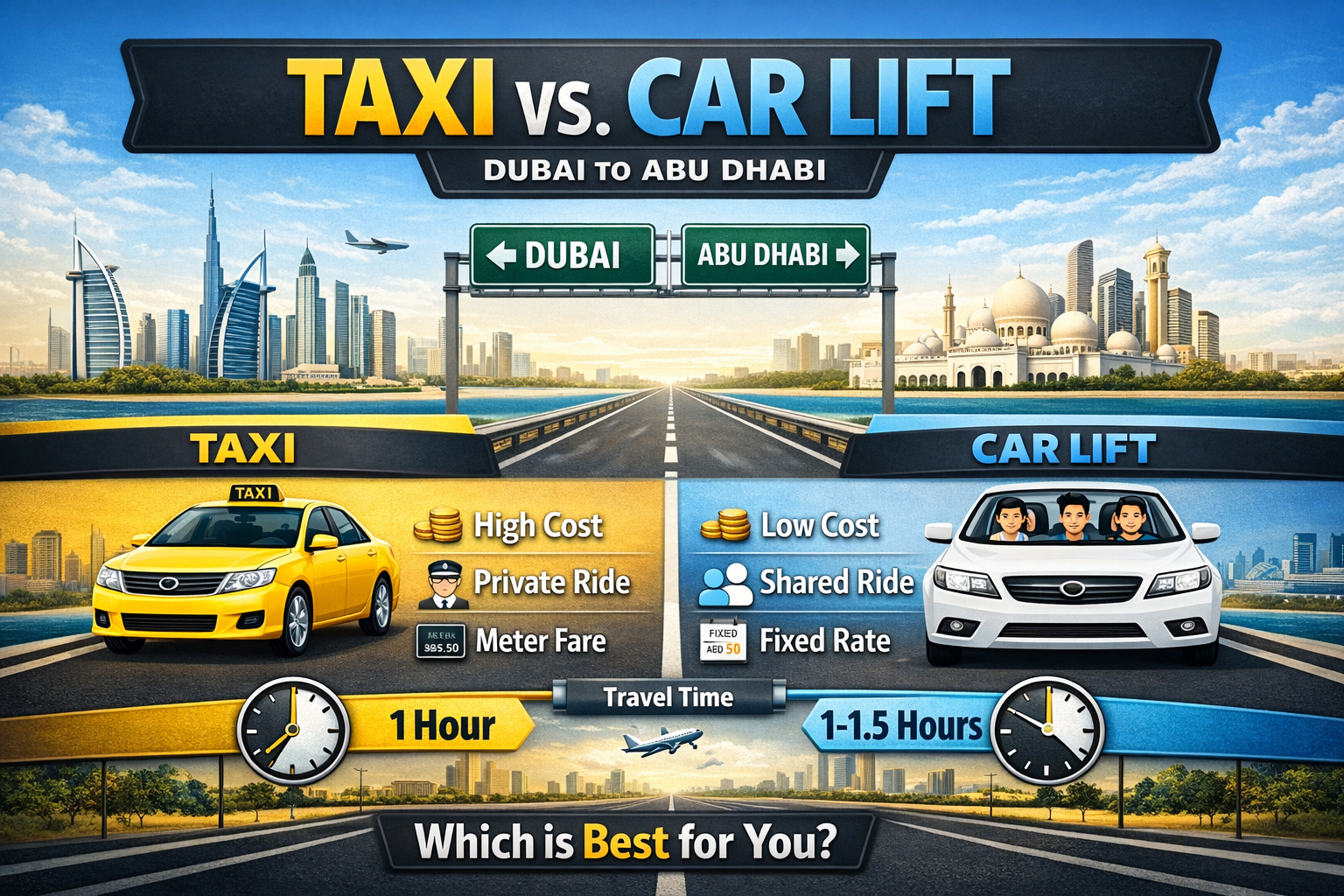
4. Which is better: shared car lift or taxi?
Shared car lifts are more cost-effective for regular commuting, while taxis offer more privacy and convenience but are significantly more expensive.
5. Can I commute daily between emirates in the UAE?
Yes, many residents commute daily between emirates such as Dubai, Abu Dhabi, and Sharjah using buses, shared rides, or private vehicles.
6. Is public transport in the UAE reliable?
Yes, public transport in the UAE is highly reliable, clean, and well-maintained, with strict schedules and modern infrastructure.
7. What is the best option for students traveling on a budget?
Public buses and metro services are the best options for students due to their low cost and wide availability.
8. Are ride-hailing apps expensive in the UAE?
Yes, services like Uber and Careem are convenient but relatively expensive, especially for intercity travel or daily commuting.
9. How long does it take to travel from Dubai to Abu Dhabi by bus?
The average travel time is around 2 to 2.5 hours, depending on traffic and route conditions.
10. Is it better to live in Sharjah and work in Dubai?
Many people choose this option due to lower rent in Sharjah. However, daily commuting can involve traffic delays and transportation planning.
11. What is the most comfortable low-cost transport option?
Shared car lifts are often considered the most comfortable low-cost option because they offer door-to-door service at a reasonable price.
Conclusion
Reliable monthly car lift services in the UAE make commuting between Dubai and Abu Dhabi easier, safer, and more affordable. With professional drivers, comfortable vehicles, and fixed schedules, passengers can enjoy a smooth daily journey without the stress of long-distance driving.
Don’t wait—schedule your car lift today and experience a seamless ride between Dubai and Abu Dhabi. For more, Contact Us or connect directly via WhatsApp.
For more insights and tips on safe, affordable, and reliable transport services, visit our other articles and stay updated with the latest guides and expert advice.
It’s a safe, economical, and reliable option for anyone traveling between Dubai and Abu Dhabi.