The Strategic Economics of Urban Commuting
Back in 2018, I was tasked with auditing transit inefficiencies for a mid-sized logistics firm in the heart of the Middle East for carpool services. The symptoms were glaringly obvious. Employees were arriving exhausted, caffeine-dependent, and visibly stressed before the workday had even commenced. The culprit? The solitary, grinding daily commute. Commuting drains the soul; this is an established, albeit colloquial, psychological fact. Yet, the corporate machinery demands physical presence, forcing millions into a daily synchronized migration that cripples municipal infrastructure. My analysis revealed a startling reality: the reliance on individual vehicles was not just an environmental hazard, but a massive, unquantified financial sinkhole for both the employees and the organization. I realized then that rethinking passenger transit was a vital necessity. Shifting from solitary driving toward structured shared mobility represented the most immediate lever for improving baseline quality of life.
Executive Summary: Solitary Commuting vs. Shared Transit
| Metric | Solitary Commuting | Professional Carpool Services | Net Impact |
|---|---|---|---|
| Annual Financial Cost | Extremely High (Fuel, Tolls, Depreciation) | Moderate (Subscription or fixed monthly rate) | Estimated 40-60% individual savings. |
| Psychological Stress | Severe (Traffic navigation, aggressive drivers) | Low (Passenger status, passive travel) | Significant reduction in baseline cortisol levels. |
| Environmental Footprint | Maximum (1 vehicle per passenger) | Minimized (1 vehicle per 4-7 passengers) | Proportional decrease in Scope 3 greenhouse emissions. |
| Productivity Yield | Zero (Requires full cognitive attention) | High (Enables reading, email triage, or rest) | Recoups approximately 10-15 hours of usable time weekly. |
We often treat the daily drive as an immutable law of physics. You live here, you work there, you drive. However, examining this through a rigorous logistical lens exposes the inherent absurdity of moving a two-ton metal box to transport a single human being. The math simply fails.
The Economics of Carpool Services: Beyond Fuel Savings
When assessing the true financial gravity of commuting, most individuals calculate their daily fuel expenditure and perhaps occasional toll charges. This is a fundamentally flawed, surface-level assessment. The true cost of solitary driving lies heavily in hidden amortization variables. Vehicle depreciation accelerates exponentially with commuter mileage. Every kilometer logged on congested highways degrades engine components, transmission fluids, and tire treads, pulling forward costly maintenance schedules. Furthermore, insurance premiums inflate based on annual mileage tiers and the statistical probability of rush-hour collisions of carpool services.
By transitioning to shared mobility frameworks, commuters effectively externalize these depreciation and maintenance costs. You are no longer financing the wear-and-tear of the asset. I reviewed macro-economic evaluations of municipal transit dependencies published by global financial institutions, and the data paints a vivid picture. Communities with robust ridesharing adoption exhibit higher disposable income per capita precisely because transportation overhead is fractionally divided. The economic liberation experienced by shedding a depreciating daily-driver vehicle allows for capital reallocation into appreciating assets or quality-of-life enhancements.
Psychological Barriers to Ridesharing Adoption
If the financial math heavily favors shared rides, why does the solitary commuter persist? The resistance is deeply psychological. Humans are territorial creatures. The personal vehicle serves as a mobile fortress—a privatized, climate-controlled bubble insulated from the unpredictability of the outside world. Giving up the steering wheel requires relinquishing the illusion of control. There is a palpable anxiety associated with depending on a third party for punctuality. Will the driver be late? Will the other passengers be intrusive?
These are not trivial concerns. Early iterations of community-organized rideboards failed precisely because they lacked rigid vetting and accountability mechanisms. The friction of coordinating schedules with strangers proved too taxing. However, modern platforms have systematically dismantled these barriers. By instituting strict departure windows, behavioral codes of conduct, and dedicated routing algorithms, the friction has been engineered out of the system. The modern passenger trades the illusion of control for the reality of convenience.
Case Study: Managing Route Density on the E11 Corridor
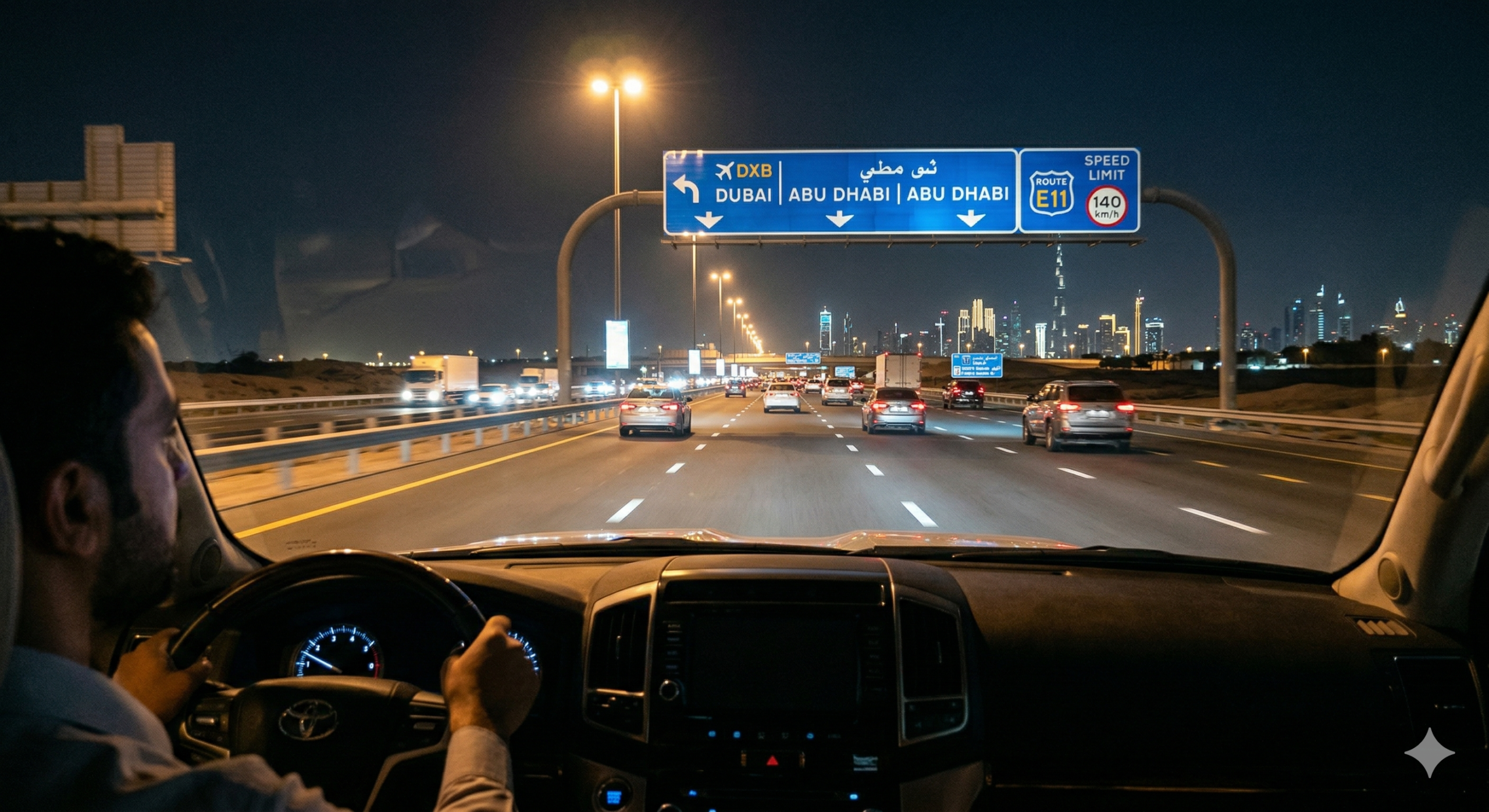
Consider the daily migration between major economic hubs, such as the notorious E11 highway. The sheer volume of vehicular traffic traversing this corridor daily is staggering. During my tenure consulting in the region, I observed that the majority of these vehicles contained a single occupant. The infrastructural stress causes micro-delays that cascade into macro-gridlock. Adding more lanes to the highway is an exercise in futility—a phenomenon urban planners call induced demand. You build more lanes, more people decide to drive, and gridlock resumes at a higher volume.
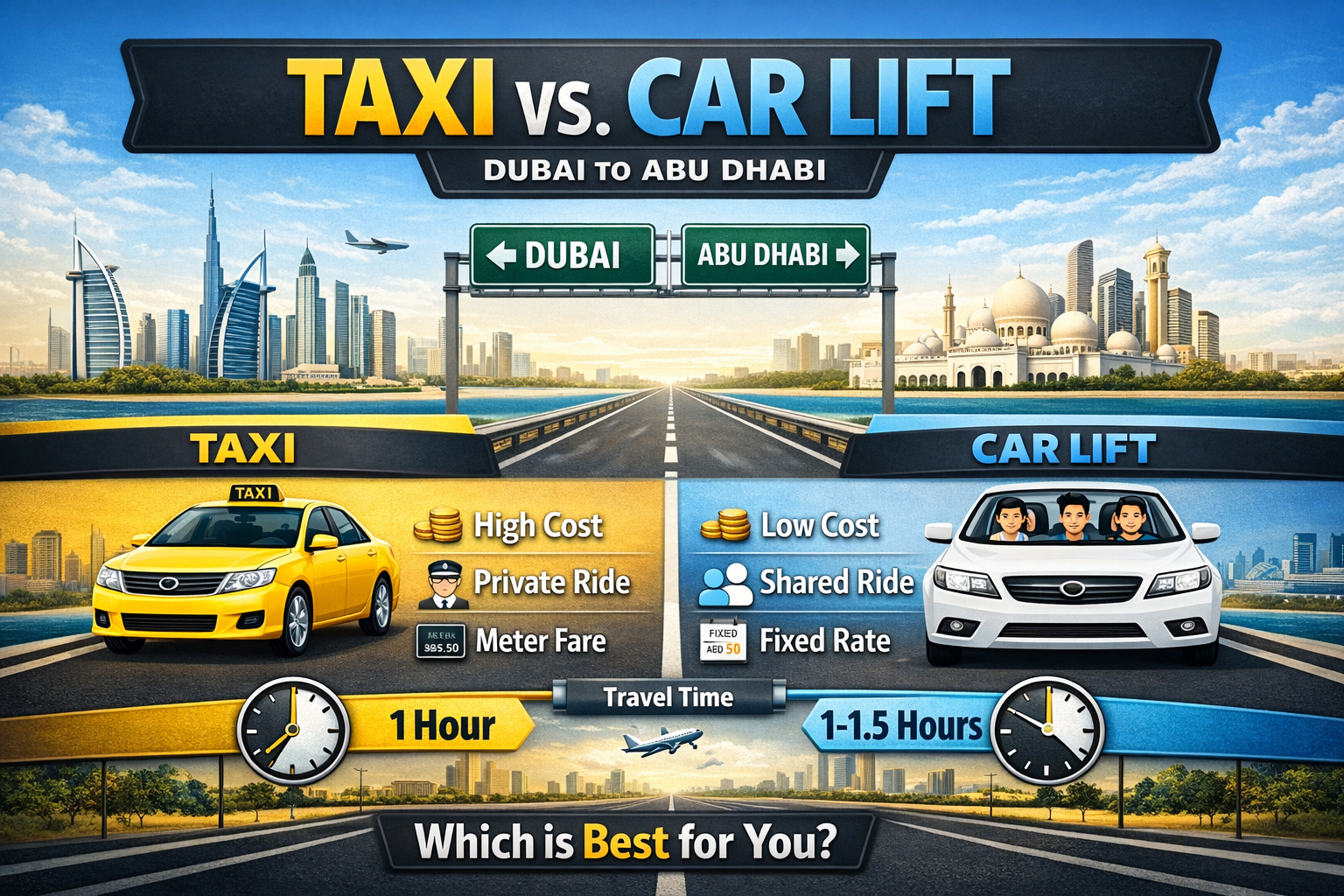
The only mathematically sound solution is increasing passenger density per vehicle. When organizations began facilitating structured transport for their workforce along this corridor, the results were instantaneous. Punctuality improved. By utilizing premium carlift options connecting Dubai and Abu Dhabi, professionals managed to bypass the exhaustion of navigating aggressive high-speed traffic. They arrived at their respective offices having spent the previous ninety minutes resting, preparing for meetings, or simply decompressing. This isn’t merely a logistical adjustment; it is a profound enhancement of human capital management.
Regulatory Frameworks Governing Shared Rides
Transitioning from private commuting to commercial passenger transport introduces complex legal paradigms. Governments globally struggle to categorize modern transit solutions. Is it a taxi service? Is it a private charter? The distinction carries massive weight regarding licensing, commercial insurance indemnification, and tax liabilities. I have sat in legislative committee rooms where policymakers argued for hours over the exact definition of “hire and reward” transit for carpool services.
Strict regulatory oversight, while occasionally stifling rapid innovation, ultimately protects the consumer. Unregulated rogue operators present severe liability risks. If an unverified driver is involved in an incident, the passengers may find themselves entirely uninsured. Consequently, legitimate operators invest heavily in compliance. They secure proper commercial licensing, ensure their vehicle fleets undergo rigorous municipal safety inspections, and maintain extensive liability coverage. As a consumer, verifying this regulatory compliance is non-negotiable.
Technological Infrastructure Powering Route Algorithms
The operational backbone of any successful transit network is deeply rooted in sophisticated mathematics. Coordinating multiple passenger pickups across diverse geographical nodes while adhering to rigid arrival deadlines requires massive computational power. Early transit systems relied on static routing—fixed stops, fixed times. If you missed it, you waited. Today, dynamic routing algorithms process real-time traffic data, passenger cancellations, and weather anomalies to optimize paths on the fly.
I recently examined algorithmic models assessing urban bottleneck formations to understand how dynamic routing mitigates delays. By processing GPS ping rates and integrating edge computing within vehicle telemetry modules, dispatch systems can predict traffic swells before they materialize physically. The system automatically reroutes the vehicle, potentially saving minutes that compound into significant annual time savings. This invisible technological safety net ensures that the service remains fiercely reliable.
Environmental Impact Metrics of Carpooling
Corporate sustainability reports often tout recycling programs or energy-efficient lightbulbs while blatantly ignoring the massive carbon footprint generated by their commuting workforce. These are known as Scope 3 emissions—indirect emissions occurring in a company’s value chain. Mitigating these emissions requires aggressive strategies.
The calculus is straightforward. Four commuters in four distinct internal combustion vehicles generate four separate streams of hydrocarbons, nitrogen oxides, and particulate matter. Consolidating those four individuals into a single, well-maintained vehicle slashes that localized footprint dramatically. When reviewing tailpipe emission reductions categorized by passenger density, the exponential environmental benefit becomes undeniable. Furthermore, fewer vehicles on the road reduce the localized thermal mass of urban centers—the “heat island” effect exacerbated by thousands of idling engines. It is an immediate, localized environmental remedy that yields tangible improvements in municipal air quality.
Corporate Subsidies and Commuter Benefits
Forward-thinking human resources departments are recognizing the strategic value of subsidizing employee commutes. Parking infrastructure is astronomically expensive to build and maintain. For corporations located in dense urban financial districts, leasing parking spaces for employees can cost millions annually.
A growing trend involves “parking cash-out” programs. The employer offers the employee a monthly financial stipend equivalent to the cost of the parking space, provided the employee utilizes alternative transit. Employees pool these stipends to hire dedicated transit solutions. This synergistic approach lowers corporate overhead, provides employees with a stress-free commute, and guarantees reliable arrival times. It is a rare corporate initiative where all stakeholders—the employer, the employee, and the environment—experience undeniable positive yields.
Safety Protocols in Modern Carpool Services
Stranger danger is a primal instinct. Climbing into a vehicle with unknown individuals inherently triggers risk-assessment protocols in the human brain. To counteract this, premium transit operators have militarized their safety protocols. Background checks for captains are no longer cursory glances at driving records; they involve deep API integrations with local law enforcement databases, continuous biometric identity verification, and rigorous psychological profiling.
Vehicles are equipped with dual-facing telematics cameras, ensuring an immutable digital record of every journey. Speed, braking severity, and steering inputs are monitored in real-time by centralized dispatch centers. If a captain deviates from the expected route or exhibits aggressive driving metrics, the system flags the anomaly immediately. This panopticon of safety features creates an environment far more secure than the average solitary commute, where drivers frequently text, eat, or succumb to fatigue.
The Evolution of High-Occupancy Transit
High-Occupancy Vehicle (HOV) lanes represent an infrastructural attempt to incentivize passenger density. By dedicating highway lanes exclusively to vehicles carrying multiple occupants, municipalities offer a highly coveted reward: time of carpool services. Bypassing miles of gridlocked solitary drivers serves as a potent psychological motivator.
However, the enforcement of HOV lanes remains problematic. Single-occupant violators frequently gamble on the low probability of police interception. To counter this, advanced transit corridors are beginning to implement automated thermal imaging and infrared camera systems capable of detecting passenger counts at highway speeds. As these enforcement technologies mature, the time-saving benefits of shared transit will become even more pronounced, rendering the solitary commute increasingly obsolete in major metropolitan zones.
Evaluating Premium Carpool Services in the UAE
When operating in highly demanding corporate environments, not all transit options are created equal. You must distinguish between casual, peer-to-peer ride-sharing and executive-level transit. The former is suitable for occasional trips; the latter is a prerequisite for maintaining professional stamina.
I advise clients to scrutinize several critical factors when selecting a provider. First, assess the vehicle fleet. Are the vehicles late-model, meticulously maintained, and explicitly designed for passenger comfort? Rear-seat climate controls, charging ports, and adequate legroom are not luxuries; they are necessities for a functioning mobile workspace. Second, evaluate the professionalism of the captain. A dedicated transit professional prioritizes smooth acceleration, proactive communication, and absolute discretion. Finally, analyze the platform’s reliability metrics. An executive service must boast a punctuality rate approaching 99%. Anything less introduces unacceptable chaos into the professional schedule.
Autonomous Vehicles and the Commute Matrix
Looking toward the horizon, the integration of autonomous driving technology will radically reshape this industry. We are transitioning from human-piloted vehicles to algorithmic chauffeuring. While true Level 5 autonomy—where vehicles operate everywhere under all conditions without human intervention—remains years away, constrained autonomous transit in geofenced corridors is imminent.
When the cost of the human pilot is removed from the operational ledger, the economics of shared transit will plummet, making it accessible to a much broader demographic. Vehicles will be redesigned explicitly as mobile lounges. Seats will face inward. The vehicle will serve as an extension of the living room or the boardroom. Until that paradigm shift occurs, however, relying on highly vetted, human-piloted transit networks remains the optimal strategy for mitigating the daily friction of urban mobility.
Insurance Liabilities and Risk Mitigation
The intricacies of transit insurance cannot be overstated. Standard personal auto insurance expressly forbids the transport of passengers for commercial purposes. If a driver operates a casual, unverified ride-sharing ring and suffers a catastrophic collision, their personal insurance provider will immediately void the policy upon discovering the commercial nature of the trip.
This exposes the passengers to terrifying financial ruin, facing massive medical bills with zero recourse. Professional operators circumvent this by carrying heavy commercial fleet insurance. These policies provide multi-million dollar indemnification umbrellas, ensuring that in the worst-case scenario, passengers are entirely financially protected. This hidden layer of security is factored into the premium cost of legitimate services and is worth every cent.
Analyzing Data Privacy in Transit Platforms
In our hyper-connected era, data is the ultimate currency. Transit platforms aggregate highly sensitive geographical data for carpool services. They know where you live, where you work, your exact daily schedule, and your financial details. Safeguarding this data is paramount.
I closely monitor the cybersecurity architectures of transit platforms. The elite operators utilize end-to-end encryption, anonymizing passenger data so that even the assigned driver only receives an obfuscated pickup pin rather than an exact residential address. Credit card processing is handled via secure, tokenized gateways. As consumers, we must demand transparency regarding data retention policies. A platform that sells transit data to third-party advertisers compromises the fundamental trust required for long-term customer retention.
The Urban Planning Perspective
City planners are fighting a losing battle against vehicular bloat. Parking minimums—regulations requiring developers to build a certain number of parking spaces per commercial square foot—are destroying urban walkability. These asphalt deserts absorb heat, disrupt water drainage, and distance buildings, forcing further reliance on automobiles.
By aggressively promoting dense, shared transit, municipalities can begin rolling back these archaic parking minimums. Reclaiming parking structures for commercial development or green space drastically improves the livability of an urban center. The individual decision to utilize a shared vehicle, therefore, ripples outward, actively participating in the architectural healing of the city.
Expert FAQ: Navigating Shared Transit
1. How do professional transit services handle significant route delays caused by unexpected accidents?
Elite operators utilize dynamic dispatching. If an accident severely chokes a primary arterial road, the routing algorithm instantly recalculates alternate paths. Furthermore, dispatchers maintain continuous communication with captains, authorizing diversions that a standard commuter might not recognize.
2. What occurs if a scheduled passenger is late for their designated pickup?
Strict adherence to the schedule is the bedrock of the service. Operators typically implement a strict 2-3 minute grace period. If the passenger fails to board within this window, the vehicle departs to prevent penalizing the punctual passengers. This rigid accountability ensures platform reliability.
3. Are passengers permitted to conduct business calls during the journey?
Protocols vary by service tier, but generally, “quiet car” rules apply in shared spaces to ensure comfort for all occupants. If a passenger must take an urgent call, they are expected to use headphones and speak softly. Many platforms enforce a strict code of conduct regarding noise pollution.
4. How is hygiene maintained in vehicles carrying multiple different passengers daily?
Top-tier services mandate rigorous daily sanitization protocols. Captains wipe down touchpoints—door handles, seatbelts, window controls—between trips. Vehicles undergo deep interior detailing weekly, and cabin air filters are replaced at accelerated intervals to ensure optimal air quality of carpool services.
5. Can I request a specific captain for my daily route?
While dynamic routing makes absolute guarantees impossible, highly localized services often assign consistent captains to specific routes to build rapport and familiarity with the passenger manifest. This consistency adds a layer of personalized comfort to the daily routine.
6. Is it financially viable to utilize these services for hybrid work schedules?
Absolutely. Many platforms have adapted to the post-pandemic reality of hybrid schedules, offering flexible subscription models. Instead of paying a flat monthly fee, commuters can purchase trip bundles, ensuring they only pay for the exact days they travel to the corporate office.
7. What mechanisms are in place to handle disputes between passengers?
Disputes are exceedingly rare due to the professional demographic utilizing these services. However, if a conflict arises, captains are trained in de-escalation protocols. Passengers who repeatedly violate the code of conduct are permanently banned from the platform.
8. How do these platforms impact the resale value of my personal vehicle?
By drastically reducing your daily mileage, your personal vehicle avoids severe depreciation brackets. This preserves the asset’s residual value, often saving the consumer thousands of dollars when they eventually decide to sell or trade-in the vehicle.
9. Do professional fleets utilize electric vehicles (EVs)?
There is a massive industry shift toward electrification. While charging infrastructure dictates the pace of adoption, many premium fleets are heavily integrating long-range EVs. This further drives down operational costs and completely eliminates tailpipe emissions.
10. What is the process for onboarding my entire corporate team onto a shared transit platform?
Enterprise onboarding involves a geographical audit. The transit provider analyzes the residential clusters of the employees and designs bespoke routing circuits. The corporation is then billed collectively, often securing significant bulk discounts compared to individual subscription rates.
Conclusion
When it comes to reliable, comfortable, and professional transportation in the UAE, the best carpool services in Dubai stands in a class of its own. With wide coverage across all seven emirates, a rigorously vetted team of drivers, a modern and diverse fleet, and round-the-clock availability, this premium pick and drop service is designed to make every journey effortless.
Don’t wait—schedule your car lift today and experience a seamless ride between Dubai and Abu Dhabi. For more Contact Us or connect Direct via WhatsApp.
For more insights and tips on safe, affordable, and reliable transport services, visit our other articles and stay updated with the latest guides and expert advice.