Taxi vs. Car Lift Dubai to Abu Dhabi: Your Ultimate Guide to a Smooth Ride
Navigating the bustling streets of Dubai is one thing, but planning a journey to another emirate, especially Abu Dhabi, brings a whole new set of considerations. Whether you’re a long-term resident, a first-time visitor, or a business traveler, the question often arises: what’s the best way to get from Dubai to Abu Dhabi? For many, it boils down to a classic dilemma: do you hail a traditional taxi or opt for the modern convenience of a car lift service? This isn’t just about getting from point A to point B; it’s about balancing convenience, cost, comfort, and peace of mind on your inter-emirate journey.
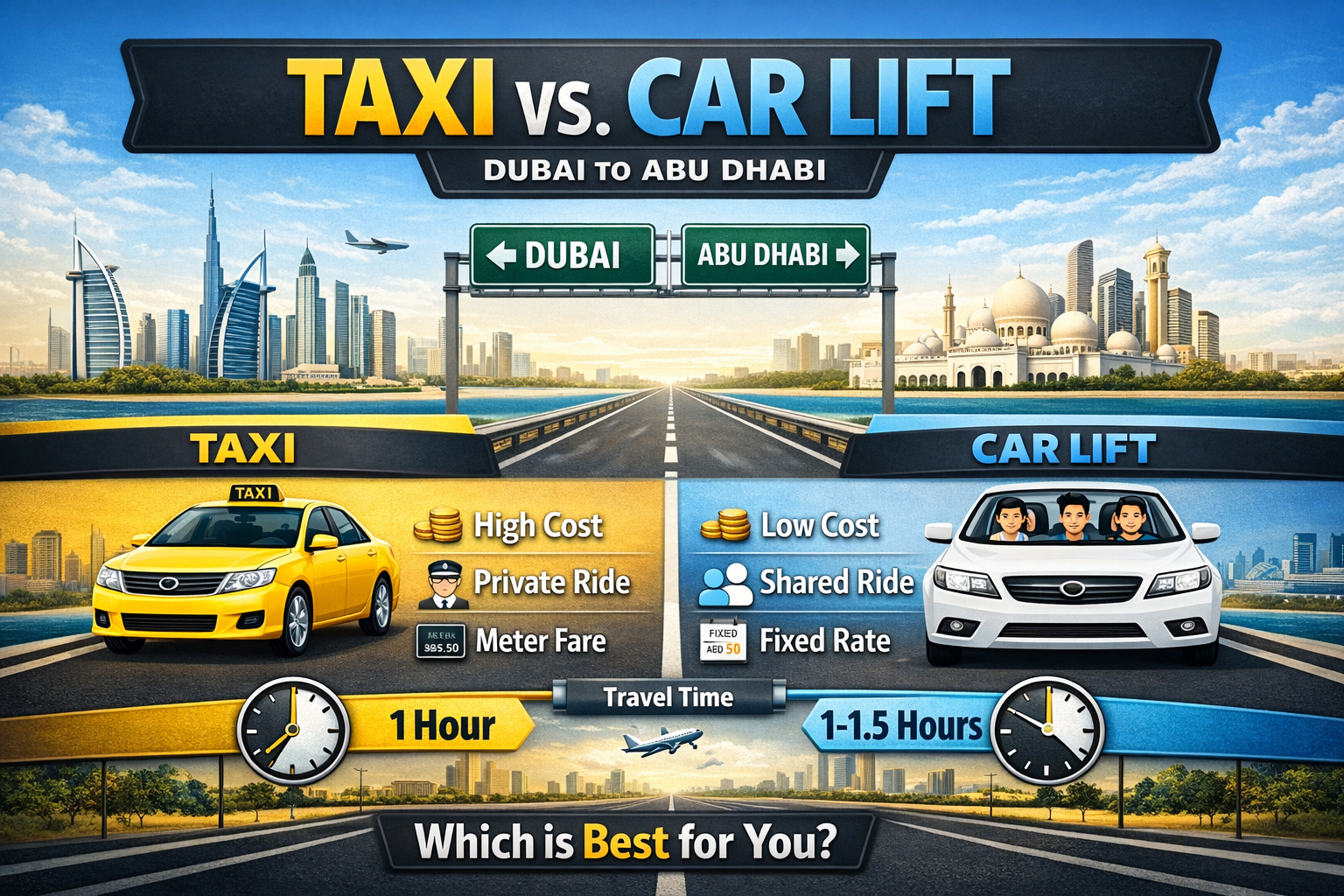
This comprehensive guide is designed to unravel the intricacies of both options, diving deep into the “taxi vs car lift Dubai to Abu Dhabi” debate. We’ll explore everything from pricing structures and booking methods to safety regulations and the overall travel experience. Our goal is to equip you with all the information needed to make an informed decision, ensuring your trip between these two magnificent cities is as seamless and enjoyable as possible. So, buckle up as we demystify the choices and help you find your perfect ride for the approximately 140km journey.
1. The Great Debate: Taxi or Car Lift for Your Inter-Emirate Journey?
The choice of transportation for your journey between Dubai and Abu Dhabi is more than just a logistical detail; it impacts your entire travel experience. For many, it’s about finding the sweet spot between convenience, cost-effectiveness, comfort, and the crucial peace of mind that comes with reliable service. This decision is particularly relevant given the distance and the varying circumstances under which people travel – be it for a day trip, a business meeting, or simply exploring the UAE’s diverse offerings.
The route from Dubai to Abu Dhabi is one of the most frequented inter-emirate trips, connecting the UAE’s commercial and tourism hub with its capital city. While there are other options like intercity buses, private chauffeur services, or even renting a car, the primary contenders for a direct, comfortable, and relatively quick transfer remain the traditional taxi and the increasingly popular car lift services. This guide aims to thoroughly explore these two dominant choices, dissecting their pros and cons to help you navigate the common dilemma faced by both residents and tourists alike when planning this popular route. By the end, you’ll have a clear understanding of which option best suits your individual needs for your “taxi vs car lift Dubai to Abu Dhabi” adventure.
2. Deciphering Your Options: What Exactly Are We Comparing?
Before we dive into the nitty-gritty of costs and convenience, let’s clearly define what we mean by “taxi” and “car lift” in the context of the UAE. Understanding the operational models and regulatory frameworks behind each will lay the groundwork for a more informed comparison.
Traditional Taxis in the UAE:
When you think of a taxi in the UAE, you’re likely picturing the iconic beige vehicles with different colored roofs (red, blue, green, yellow, etc.) that signify various operators. In Dubai, these are primarily operated by the Dubai Taxi Corporation (DTC), a subsidiary of the Roads and Transport Authority (RTA), alongside franchised operators like Cars Taxi, National Taxi, and Arabia Taxi. In Abu Dhabi, the equivalent is TransAD, which regulates the silver taxis.
These taxis operate on a strict meter-based fare system, ensuring transparent and consistent pricing. You can easily spot them at dedicated taxi stands found at shopping malls, airports, and major hotels, or simply hail one off the street in most urban areas. For added convenience, especially in Dubai, you can also book them via the Hala Taxi app (integrated within the Careem app), which dispatches RTA taxis directly to your location. Key characteristics include:
- Distinctive Colors: Easily recognizable vehicle liveries.
- Licensed Drivers: All drivers are vetted, trained, and licensed by the respective transport authorities.
- Uniform Pricing: Fares are standardized and regulated, minimizing negotiation and ensuring fairness.
- Regular Inspections: Vehicles undergo stringent safety and maintenance checks.
Car Lift Services (Ride-Hailing Apps):
Car lift services, often referred to as ride-hailing apps, have revolutionized personal transportation globally, and the UAE is no exception. The major players here are Uber and Careem, both of which are widely available and operate under specific regulations set by local transport authorities. These services offer a more modern, app-based approach to booking a ride.
The operational model differs significantly from traditional taxis. With car lift apps:
- App-Based Booking: You book and manage your ride entirely through a smartphone app, selecting your pickup and drop-off points, and often your preferred vehicle type.
- Cashless Payments: Payments are typically processed automatically through the app using a linked credit/debit card, offering a seamless, cashless transaction experience.
- Private Drivers & Vehicles: Drivers use their own vehicles, which often tend to be newer models or higher-end sedans, depending on the service level chosen. These drivers are also licensed and undergo background checks as part of the regulatory framework.
- Real-Time Tracking: You can track your driver’s location in real-time, get estimated arrival times, and share your journey details with others for added safety.
While there might be other private car services or informal shared ride options, for the purpose of a safe, reliable, and regulated comparison, our focus for “car lift” will primarily remain on established ride-hailing apps like Uber and Careem. This ensures we’re comparing apples to apples in terms of safety, accountability, and regulatory oversight when considering “taxi vs car lift Dubai to Abu Dhabi.”
3. The Money Talk: A Detailed Cost Comparison from Dubai to Abu Dhabi
When planning any journey, especially one spanning emirates, cost is almost always a top consideration. The “taxi vs car lift Dubai to Abu Dhabi” decision often hinges significantly on the financial outlay. Let’s break down the typical costs for both options.
Taxi Fares:
Traditional RTA taxis in Dubai and TransAD taxis in Abu Dhabi operate on a metered system, which means the fare is calculated based on distance, time, and specific surcharges.
- Breakdown of Typical Taxi Costs:
- Starting Fare: There’s a base fare that applies when you begin your journey. This can vary slightly depending on the time of day (day vs. night) or if you’re picked up from a specific location like an airport.
- Per Kilometer Rate: A charge applied for every kilometer traveled. This rate is standardized.
- Salik (Toll) Charges: Dubai’s toll gates (Salik) add a fixed fee (AED 4) each time you pass through one. Since the journey to Abu Dhabi usually involves passing through several Salik gates within Dubai, these charges accumulate and are added to your final bill.
- Airport Surcharges: If your trip originates from Dubai International Airport (DXB) or Al Maktoum International Airport (DWC), there’s an additional airport pick-up fee.
- Inter-Emirate Surcharge: For trips crossing emirate borders, there’s often a fixed inter-city charge applied by the taxi service.
- Practical Example: A standard taxi trip from Dubai city center (e.g., Downtown Dubai) to Abu Dhabi city center (e.g., Corniche area) typically ranges from AED 250 to AED 350. This estimate includes the metered fare, Salik tolls (expect around 4-6 Salik gates), and any inter-emirate surcharges. Variables like specific pickup/drop-off points, traffic conditions (which influence time-based charges), and the exact number of Salik gates passed can cause the final price to fluctuate. For instance, a trip from Dubai Marina might be slightly less than from Deira due to different Salik routes, but the overall range remains consistent.
Car Lift Fares (Uber/Careem):
Ride-hailing apps like Uber and Careem offer dynamic pricing, which means the fare isn’t always fixed and can fluctuate based on various factors.
- How Pricing Works:
- Base Fare: A standard starting fee for the service.
- Per Kilometer Rate: A charge for distance, similar to taxis.
- Per Minute Rate: A charge for the duration of the trip, especially relevant in heavy traffic.
- Dynamic Pricing (Surge Pricing): This is the most significant differentiator. During peak hours, periods of high demand (e.g., public holidays, major events, rush hour), or adverse weather, prices can surge significantly. The app will show a multiplier (e.g., 1.5x, 2.0x) indicating how much higher the fare is.
- Service Levels: Both Uber and Careem offer different vehicle categories (e.g., Economy, Comfort, Business, SUV). Naturally, higher service levels come with higher price points.
- Practical Example: For a similar trip from Dubai city center to Abu Dhabi city center, the estimated range via Uber/Careem could be anywhere from AED 280 to AED 450+. Without surge pricing, an economy option might be comparable to or slightly higher than a taxi. However, during peak demand, surge pricing can easily push the cost upwards of AED 500 or even more, making it significantly more expensive than a traditional taxi. This dynamic pricing is a crucial factor in the “taxi vs car lift Dubai to Abu Dhabi” cost comparison. Always check the real-time quote on the app before confirming your ride.
Hidden Costs & Factors:
Both services share some common cost factors that can influence your final bill:
- Salik Tolls: As mentioned, these apply regardless of whether you’re in a taxi or a car lift, as they are infrastructure charges.
- Airport Fees: Similar to taxis, car lift services often have an additional pickup fee when originating from an airport.
- Peak Hour Surcharges: While taxis have slightly higher night fares, car lifts have dynamic pricing, which can make peak hours substantially more expensive.
- Waiting Time: If you keep your driver waiting for an extended period after arrival, both services may accrue additional charges.
Value for Money Analysis:
- When is a Taxi More Cost-Effective? Generally, taxis tend to be more predictable and often more cost-effective during peak hours, high-demand periods, or when traveling from an airport due to their regulated, non-surge pricing.
- When is a Car Lift More Cost-Effective? Car lifts can sometimes be marginally cheaper or comparable to taxis during off-peak hours, especially if you catch a good rate on an economy service. They also offer better value if you need a specific type of vehicle (e.g., a larger SUV for luggage or more passengers), which might not be readily available or as cost-effective as a standard taxi.
- Consider Your Priorities: If budget is your absolute top priority and you’re traveling during a busy time, a taxi is often the safer bet. If convenience, vehicle choice, and a potentially smoother booking experience outweigh a potentially higher cost, especially during off-peak times, a car lift might offer better value.
Conclusion
Reliable monthly car lift services in the UAE make commuting between Dubai and Abu Dhabi easier, safer, and more affordable. With professional drivers, comfortable vehicles, and fixed schedules, passengers can enjoy a smooth daily journey without the stress of long-distance driving. Don’t wait—schedule your car lift today and experience a seamless ride between Dubai and Abu Dhabi. For more, Contact Us or connect directly via WhatsApp.For more insights and tips on safe, affordable, and reliable transport services, visit our other articles and stay updated with the latest guides and expert advice. It’s a safe, economical, and reliable option for anyone traveling between Dubai and Abu Dhabi.