
Six years ago, my daily drive from Sharjah to Dubai Media City was an exercise in pure endurance. Two hours of gridlock on Sheikh Mohammed Bin Zayed Road slowly chipped away at my morning energy. I arrived at the office already fatigued for car lifts dubai. The drive home was worse. This routine is incredibly common across the United Arab Emirates, where urban sprawl has outpaced the immediate reach of even the most advanced public transit networks. Eventually, I broke the cycle. I transitioned to private transport services. The shift completely restructured my daily productivity and mental clarity. Today, private transit solutions have evolved from informal arrangements into highly structured, professional operations. This analysis explores the mechanics, economics, and strategic benefits of utilizing professional transport solutions across the emirates.
Executive Summary: Transportation Modes Compared
Before diving into the granular economics, we must establish a baseline. Commuters generally choose between three primary transit modes: personal vehicle ownership, ride-hailing applications, and dedicated commuter transport. The table below outlines the aggregate impact of these choices over a standard thirty-day working month.
| Transit Metric | Personal Vehicle Ownership | Ride-Hailing (Uber/Careem) | Dedicated Car Lifts Dubai |
|---|---|---|---|
| Average Monthly Cost | 2,500 – 4,500 AED (EMI, Fuel, Tolls) | 4,000 – 6,000 AED | 600 – 1,500 AED |
| Productivity Potential | Zero. Requires active concentration. | High. Passive travel. | High. Passive travel with consistent schedules. |
| Stress/Fatigue Impact | High. Traffic navigation creates mental strain. | Low. | Low. Routine builds predictability. |
| Flexibility | Maximum. Drive anywhere, anytime. | Maximum. On-demand access. | Moderate. Fixed daily schedules and routes. |
| Environmental Impact | High per-capita carbon footprint. | High per-capita carbon footprint. | Low. Consolidates passengers, reducing emissions. |
The Evolution of Car Lifts in Dubai
Urban planning in the UAE is a masterclass in rapid expansion. Neighborhoods like Dubai South, Jumeirah Village Circle, and Dubai Investment Park emerged seemingly overnight. While the central arteries are well-served, the sheer geographical footprint of the city creates distinct mobility challenges. Decades ago, shared transit was largely informal. Neighbors coordinated rides. Coworkers split fuel costs. Today, that informal network has matured into a sophisticated logistics sector.
Tracing the Infrastructural Boom for Commuter Transport Dubai
The development of the city’s road networks dictates how we travel. Expansions along Al Khail Road (E44) and the Emirates Road (E611) corridors were designed to alleviate pressure on Sheikh Zayed Road. Yet, induced demand invariably fills new lanes with new vehicles. As business hubs decentralized from Deira and Bur Dubai toward Jebel Ali and the Marina district, the daily migration of workers stretched across longer distances. Local authorities continuously upgrade infrastructure. You can track these massive civil projects through the Roads and Transport Authority (RTA), which actively manages the flow of millions of daily journeys. However, trains and buses cannot reach every villa community or remote office park. This infrastructural reality birthed the modern private transit industry.
The First-Mile and Last-Mile Dilemma
Urban planners frequently discuss the first-mile/last-mile problem. The Metro is flawlessly efficient. The challenge lies in getting from your front door to the station, and from the destination station to your office desk. During the height of summer, a fifteen-minute walk is simply not viable. Professional shared transport bridges this gap entirely. By offering door-to-door or cluster-to-door service, private operators eliminate the physical friction of the daily commute. They turn a segmented, multi-modal journey into a single, seamless ride.
Analyzing the Financials: Dubai Carpool Services vs. Ownership
Most residents vastly underestimate the true cost of driving. We tend to focus on the immediate, visible costs: fuel and monthly car payments. The reality of automotive economics is far more complex and significantly more expensive. When I consulted for a mid-sized logistics firm in 2021, we audited the transport expenses of their sales team. The results shocked the management.
The True Cost of Vehicle Acquisition
Purchasing a reliable mid-range sedan in the UAE requires a substantial capital commitment. Whether bought outright or financed through a bank, the asset begins depreciating the moment it leaves the showroom. A typical car loses 20% of its value in the first year alone. If you finance a 100,000 AED vehicle over five years, your monthly Equated Monthly Installment (EMI) sits around 1,800 AED. Add comprehensive insurance, which averages 2,000 to 4,000 AED annually depending on driver history. You are already committing nearly 2,100 AED per month before the engine even turns over.
Toll Gates, Parking, and Unforeseen Expenses
Driving is a continuous bleed of micro-transactions. Passing through the Al Barsha and Al Safa Salik gates twice a day costs 16 AED. Over a 22-day working month, that equates to roughly 350 AED. Parking in commercial zones like Business Bay or Dubai Media City can cost upwards of 16 to 20 AED per day in RTA zones, or much higher in private lots. Add another 400 AED monthly. Fuel costs fluctuate, but a moderate commute easily consumes 600 to 800 AED monthly.
Routine maintenance, tire replacements, and periodic registration fees add hundreds more to the aggregate monthly burden. The actual cost of driving a standard sedan often exceeds 3,500 AED per month. Contrast this with professional shared transit. Securing a seat in a well-maintained, air-conditioned van or SUV typically ranges from 600 to 1,200 AED monthly depending on the distance. The financial asymmetry is staggering. Commuters are effectively paying a 2,000 AED premium simply for the privilege of gripping a steering wheel in gridlock.
Evaluating Reliability in Car Lifts Dubai Providers
Not all transport providers are created equal. The market ranges from highly professional, fleet-managed operations to single-vehicle owners running side hustles. Reliability is the metric that separates the two. A cheap fare is useless if the vehicle breaks down on the side of the highway, causing you to miss a critical client presentation.
Regulatory Compliance for Car Lifts in Dubai
The legal framework governing passenger transport is strict. Authorities actively penalize unauthorized, unlicensed passenger transport. This protects consumers from uninsured liabilities. When evaluating a service, professional credentials are non-negotiable. Legitimate operators maintain commercial vehicle registrations and carry specialized passenger liability insurance. They employ drivers with the correct commercial licensing classifications. I learned this the hard way years ago when an informal driver I hired got stopped at a checkpoint. The vehicle was impounded, and I was stranded on the side of the E11. Always demand proof of commercial operation before signing a monthly contract.
Vehicle Maintenance and Fleet Redundancy
Mechanical failures happen. Tires blow out. Batteries die. The hallmark of a premium service is how they handle these inevitable failures. Single-operator setups have zero redundancy. If their van won’t start, you don’t get to work. Professional fleet operators maintain backup vehicles. If a primary transit van requires routine servicing or suffers a breakdown, a replacement vehicle is dispatched immediately. Furthermore, corporate operators adhere to strict preventative maintenance schedules. Air conditioning systems—arguably the most critical component of any UAE vehicle—are serviced quarterly. Tires are replaced long before the tread reaches the legal minimum. This operational rigor ensures consistent, daily reliability.
The Hidden Value of Reclaimed Time via Daily car Lifts Dubai
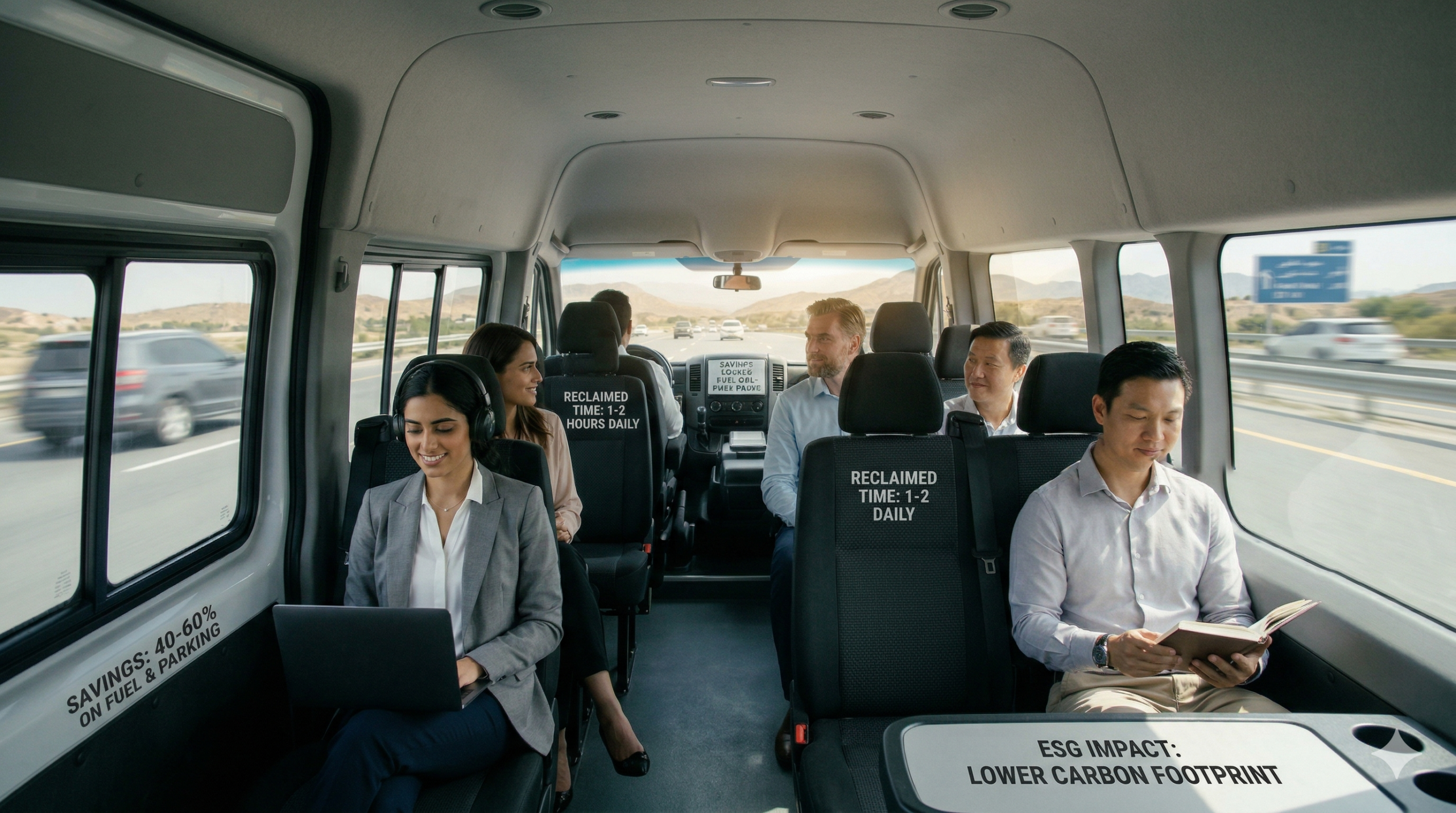
Time is the only non-renewable resource we possess. Active driving consumes this resource entirely. You cannot safely draft an email, read a market report, or close your eyes while navigating rush-hour traffic. Shared transit fundamentally alters the temporal economics of your day.
Psychological Benefits of Passive Commuting
The psychological toll of driving in heavy traffic is quantifiable. Medical studies consistently link long commutes to elevated cortisol levels, increased blood pressure, and chronic fatigue. Navigating aggressive drivers, sudden braking, and complex interchanges triggers a constant state of low-level fight-or-flight response. By the time you reach your desk, a portion of your daily cognitive battery is already depleted. Transitioning to passive travel eliminates this stress. Sitting in the passenger seat allows the nervous system to remain at baseline. You arrive at your destination mentally fresh. This shift in baseline stress drastically improves overall occupational well-being and reduces burnout.
Maximizing Productivity on the Road
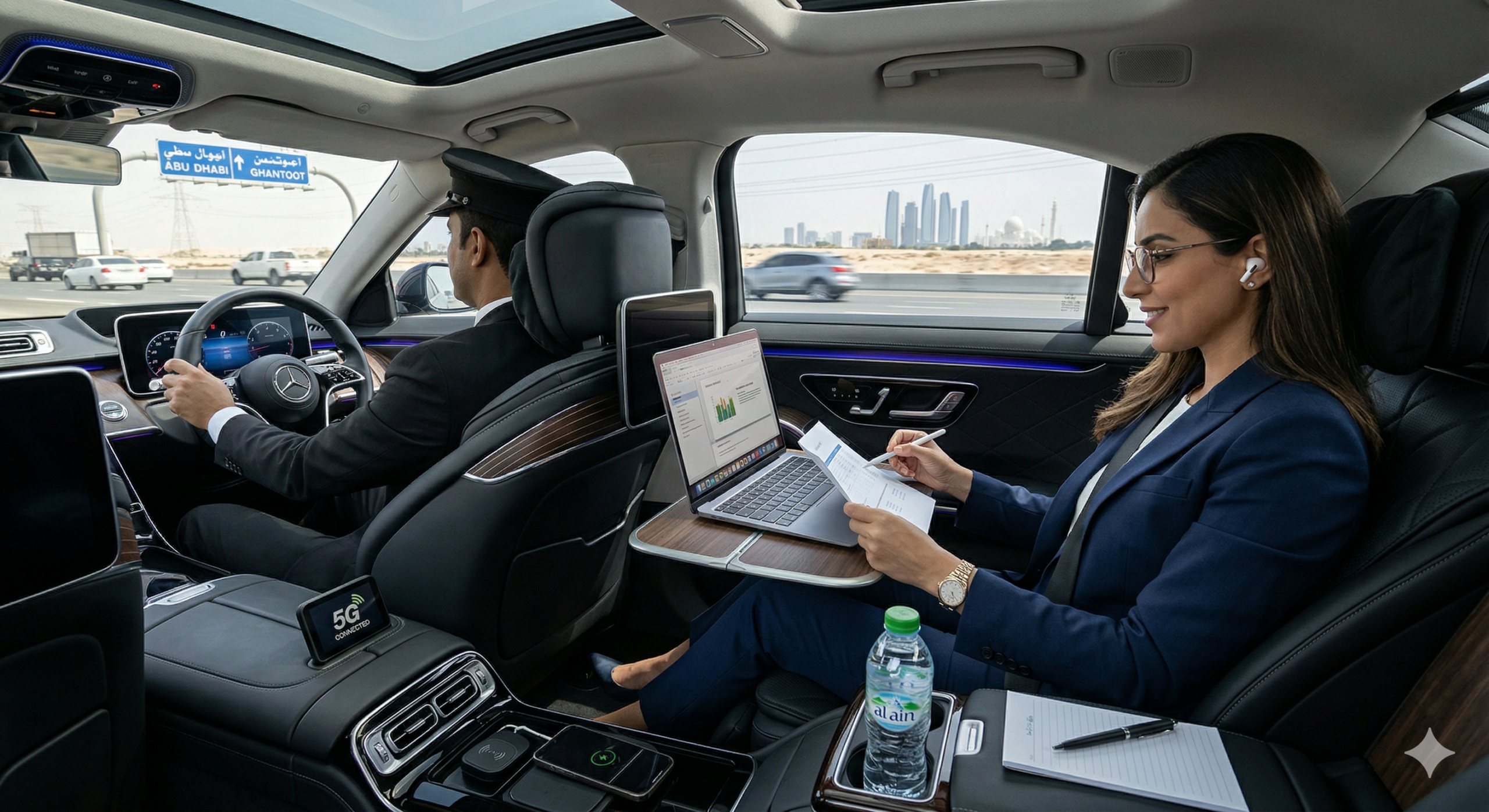
Reclaiming two hours of your day creates immense opportunity. For the corporate professional, this time is highly actionable. A morning commute can be utilized to clear out overflowing inboxes, review daily agendas, or listen to industry-specific audiobooks. For software developers or creative professionals, it provides uninterrupted focus time. During my daily transit from Sharjah, I used the hour-long ride to draft project proposals on an iPad. That recovered time allowed me to leave the office earlier in the evening, as my administrative tasks were already completed before I even walked through the office doors. Passive commuting does not just save money; it generates usable hours.
Integrating Commuter Transport Dubai into Corporate Structures
Forward-thinking human resource departments are increasingly viewing transit solutions not as an employee perk, but as a strategic operational necessity. The friction of the daily commute directly impacts employee performance, punctuality, and long-term retention.
Enhancing Employee Retention Through Transit Solutions
Talent acquisition is expensive. Replacing a burned-out employee costs a company significantly more than their monthly salary in lost productivity and recruitment fees. Commute fatigue is a leading, yet rarely discussed, cause of employee turnover. If a highly skilled worker receives an offer from a competitor located closer to their residence, the reduced commute is often the deciding factor in their resignation. To combat this, organizations are actively contracting daily transit providers. By subsidizing or entirely funding commuter routes for their staff, companies effectively neutralize the geographical disadvantage of their office location. It builds immense employee loyalty. Staff members view the provided transport as a massive upgrade to their daily quality of life.
Aligning with Corporate Sustainability Goals
Modern corporate governance places heavy emphasis on Environmental, Social, and Governance (ESG) criteria. Reducing a company’s carbon footprint is a primary objective for multinational branches operating in the region. Scope 3 emissions—which include the carbon generated by employees commuting to and from the workplace—are notoriously difficult to manage. Encouraging the use of shared transit is a highly effective mitigation strategy. Consolidating twenty employees from individual sedans into a single, modern transport vehicle drastically cuts the aggregate greenhouse gas emissions associated with the company’s operations. This provides measurable data that organizations can feature in their annual sustainability reports, aligning corporate operations with broader national environmental initiatives.
Interstate Transit: Car Lifts Dubai to Abu Dhabi Connections
The economic relationship between the various emirates requires constant physical movement of personnel. The corridor connecting the two largest economic hubs is particularly vital. Thousands of professionals live in one city and work in the other, driven by variations in rent prices, schooling options, or specific industry clusters.
Navigating Cross-Emirate Regulations
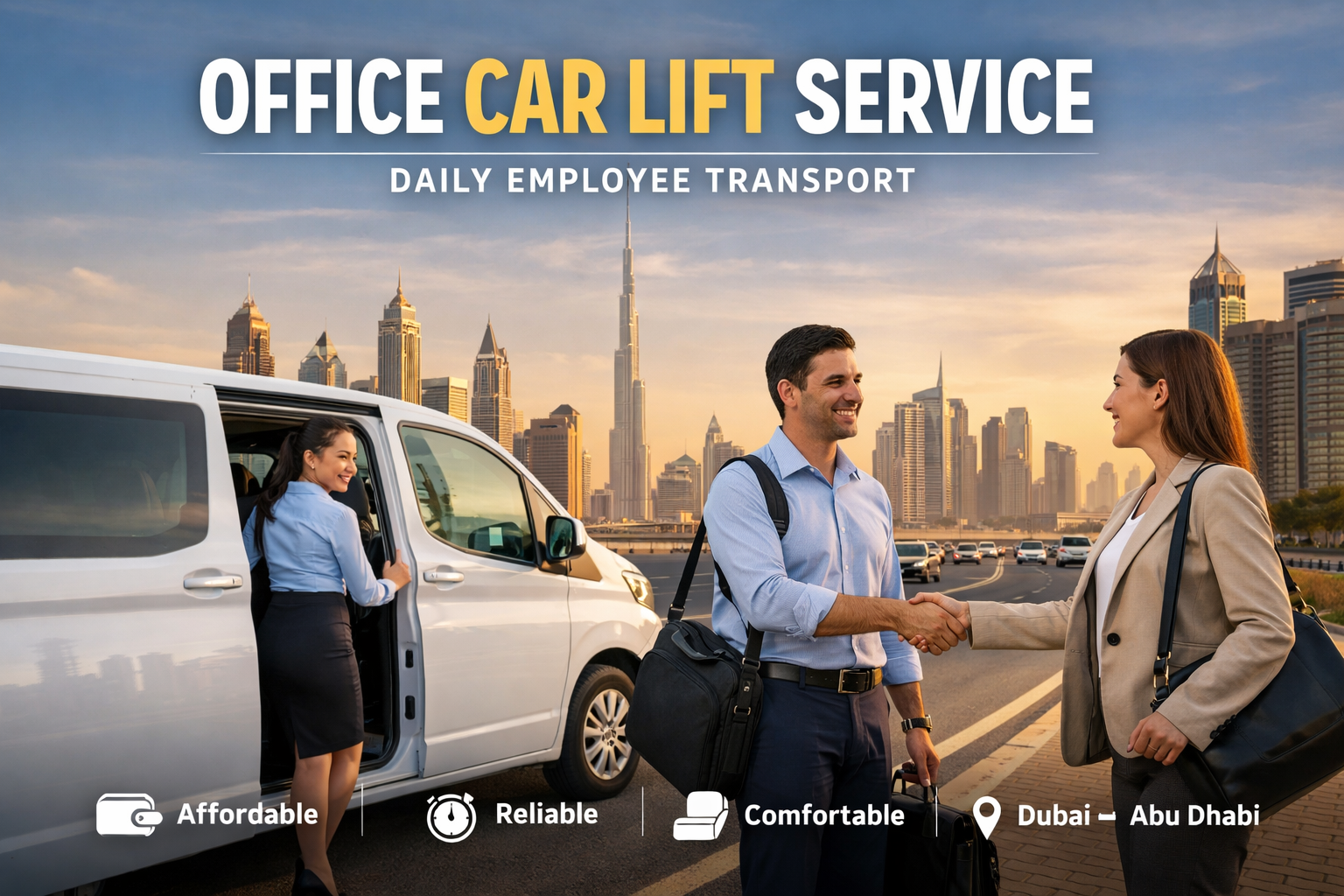
Operating a transit service across borders requires adherence to federal transport regulations, not just municipal ones. Vehicles must meet stringent highway safety standards to operate continuously at high speeds on the E11 highway. Drivers must be familiar with the distinct traffic laws, speed buffers, and toll systems of both jurisdictions. For commuters looking for verified, consistent routes across these key emirates, services like Car Lift Dubai Abu Dhabi provide structured daily transport. They manage the logistical heavy lifting of interstate travel, ensuring that passengers cross borders smoothly without worrying about fatigue, fuel consumption, or localized traffic anomalies.
Choosing Dedicated Commuter Routes
Interstate commuting is a distinct sub-genre of travel. A one-way trip can easily span 120 to 150 kilometers. At these distances, vehicle comfort becomes paramount. Operators servicing these long-haul routes typically deploy higher-end vehicles—spacious SUVs or modified luxury vans equipped with upgraded seating, individual climate controls, and high-speed Wi-Fi. The economics of interstate travel lean even more heavily in favor of shared transit. The sheer volume of fuel consumed and the accelerated depreciation of a personal vehicle racking up 300 kilometers a day make personal driving financially ruinous over the long term. Shared interstate transit is the only logical economic choice for the permanent commuter.
The Future of Urban Mobility and Carpool Service UAE
The transport sector is currently undergoing a massive technological disruption. The methods we use to navigate cities will look drastically different in the next five to ten years. Professional transit operators are at the forefront of adopting these new technologies to improve efficiency and reduce costs.
Artificial Intelligence in Route Optimization
Historically, shared transit relied on static routing. A driver picked up passengers in a specific order, regardless of daily traffic variations. Today, advanced fleet management software utilizes predictive artificial intelligence to dynamically alter routes in real-time. By analyzing historic traffic patterns, current accident reports, and localized congestion data, algorithms can re-route a vehicle on the fly to avoid delays. This technology ensures that multi-stop passenger pickups are calculated for absolute maximum efficiency. As an observer of local economic reports, I constantly see logistics firms investing heavily in this proprietary routing software to maintain a competitive edge. It minimizes fuel burn for the operator and guarantees a tighter arrival window for the passenger.
The Shift Toward Hybrid Fleets in Dubai Car Lifts
The internal combustion engine is slowly being phased out of commercial fleets. The operational cost savings of transitioning to hybrid and fully electric vehicles (EVs) are too massive for transit companies to ignore. While the initial capital expenditure for a commercial EV is higher, the per-kilometer energy cost is a fraction of that of diesel or petrol. Furthermore, EVs require significantly less routine maintenance—no oil changes, fewer moving engine parts, and reduced brake wear due to regenerative braking. As the charging infrastructure expands across the commercial zones, expect professional transit providers to rapidly electrify their fleets. This shift will further reduce the carbon footprint of shared commuting and potentially lower subscription costs for end-users as operational overhead drops. Tracking these shifts through dedicated transportation sector updates reveals a clear trajectory toward fully sustainable urban mobility.
How to Choose the Best Daily Ride Lift Dubai
Selecting a transport provider is a critical decision. You are entrusting them with your safety, your time, and your professional punctuality. A rigorous vetting process is essential to avoid the pitfalls of sub-standard operators.
Vetting Operators and Checking References
Do not simply choose the cheapest option found on a social media classified board. Treat the selection process like a corporate procurement exercise. Request the operator’s trade license. Verify the commercial registration of their vehicles. Ask about the driver’s experience and licensing status. It is perfectly reasonable to ask for references from current passengers. A reputable operator will gladly connect you with existing clients who can vouch for their punctuality and vehicle cleanliness. Furthermore, physically inspect the vehicle before committing. Ensure the air conditioning is robust, the seats are in good condition, and the tires are not heavily worn.
Establishing Clear Service Level Agreements
Ambiguity is the enemy of a smooth commute. Establish clear parameters before handing over a monthly fee. What is the exact pickup time? How long will the driver wait if a passenger is running late? What is the policy if the primary vehicle breaks down? How much notice is required to cancel or pause the service during annual leave? Having these terms explicitly stated—preferably in a written contract or digital agreement—prevents disputes down the line. It ensures both the passenger and the operator understand their obligations. Professionalism in the administrative setup is usually a strong indicator of professionalism on the road.
Urban mobility is fundamentally about efficiency. The romanticism of the open road rarely applies to the daily, grinding reality of a 7:30 AM highway commute. Moving away from the stress of personal driving toward structured, professional transit is a strategic lifestyle upgrade. It reallocates capital, preserves mental energy, and guarantees reliable movement across our rapidly expanding urban landscapes. As infrastructure continues to grow and the spaces between residential and commercial hubs widen, securing a dependable transport solution remains one of the most effective ways to optimize daily life in the emirates.