Cheapest Ways to travel in uae: The Complete 2026 Budget Guide
The United Arab Emirates (UAE) is globally renowned for its opulence, from the towering Burj Khalifa to the sprawling luxury of Saadiyat Island. However, for the savvy traveler or the budget-conscious resident, the “Luxury of the Middle East” is surprisingly accessible. In 2026, the UAE will have completed several major infrastructure upgrades, making public and shared transport more efficient and affordable than ever before.
This 1500-word guide explores every corner of the Emirates, revealing the cheapest ways to move between cities, navigate urban centers, and even explore the rugged desert landscapes without breaking the bank.
1. The “Smart Card” Revolution: Your Ticket to Savings
In the UAE, cash payments on public transport are a thing of the past. To travel cheaply, you must own the specific smart card for each Emirate. Without these, you often cannot board at all.
Dubai: The Nol Card
Dubai’s RTA (Roads and Transport Authority) uses the Nol Card. It works on the Metro, Tram, Buses, and even the Water Bus.
- Silver Card (Best for Budget): Costs AED 25 (with AED 19 credit). It offers the lowest fare per kilometer.
- Gold Card: Double the price for “Gold Class” cabins. Not recommended for budget travelers.
- Personal Blue Card: Available for residents, offering 50% discounts for students and seniors.
Abu Dhabi: The Hafilat Card
Abu Dhabi’s Hafilat Card is mandatory for all city and suburban buses.
-
Cost: AED 10 for a permanent card (valid for 5 years).
- The 2026 Pass Hack: If you are staying for a week, buy the AED 30 Weekly Pass. It provides unlimited travel on all local buses—an unbeatable deal for tourists.
Sharjah: The Sayer Card
While Sharjah buses allow cash (AED 8), using a Sayer Card reduces the fare to AED 6. If you commute daily between Sharjah and Dubai, this 25% saving adds up significantly.
2. Navigating Dubai: The Metro and Beyond
Dubai is the most expensive city in the UAE, but its transport network is a masterpiece of budget engineering.
The Dubai Metro (Red & Green Lines)
The Metro is the lifeline of the city. Fares are based on three tiers:
- Tier 1 (Within 1 Zone): AED 3.00
- Tier 2 (2 Adjacent Zones): AED 5.00
- Tier 3 (More than 2 Zones): AED 7.50
SEO Tip: To save money, plan your accommodation near a Metro station on the Red Line. This allows you to travel from Dubai International Airport (DXB) to the Marina for less than $3 USD.
The “30-Minute Transfer” Rule
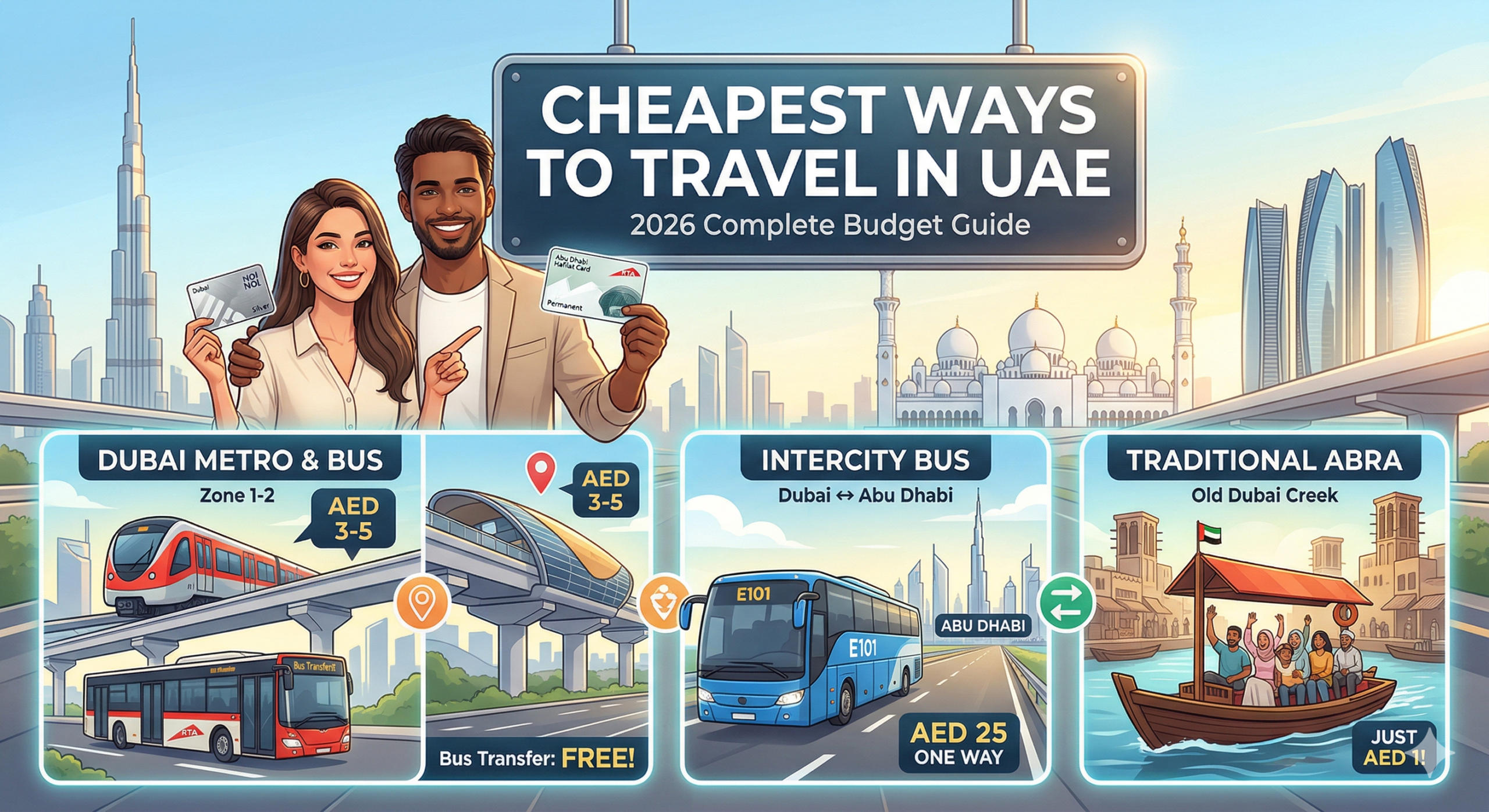
One of the best-kept secrets in Dubai is the free transfer. If you tap out of the Metro and tap into a Bus within 30 minutes (and within the same or adjacent zone), the bus trip is free. This “last-mile” connectivity makes the bus network an extension of the Metro at no extra cost.
Traditional Abras: The AED 1 Cruise
For a historical and incredibly cheap experience, head to Dubai Creek. Traditional wooden boats called Abras ferry passengers between Deira and Bur Dubai for just AED 1. It is the cheapest “tourist attraction” in the city and offers the best views of the old trading ports.
3. Abu Dhabi: Local Buses and On-Demand Shuttles
Abu Dhabi’s transport is remarkably flat-priced, making it one of the cheapest cities to navigate.
Standard City Fare
Most trips within Abu Dhabi city cost a flat AED 2. Regional trips (to the suburbs) cost AED 2 + 5 fils per kilometer.
Abu Dhabi Link (On-Demand Bus)
In 2026, the Abu Dhabi Link service will have expanded to Yas Island, Saadiyat Island, and Khalifa City. This is a “corner-to-corner” shuttle booked via an app. For just AED 2, a high-end minivan will pick you up and drop you at your specific destination within the service zone. It is essentially a “shared taxi” for the price of a bus ticket.
4. Intercity Travel: Moving Between Emirates
Traveling between Emirates by taxi can cost upwards of AED 250. Fortunately, the intercity bus network is robust and highly affordable.
The “E” Bus Network
- Dubai to Abu Dhabi (E100/E101): AED 25 (90-120 minutes).
- Dubai to Sharjah (E303/E306): AED 10 (30-60 minutes).
- Dubai to Fujairah (E700): AED 25 (2 hours).
- Ras Al Khaimah to Dubai: AED 27 via RAKTA buses.
Etihad Rail: The 2026 Game Changer
2026 marks the official launch of the Etihad Rail Passenger Service. This high-speed rail connects 11 cities.
- Route: Connects Abu Dhabi, Dubai, Sharjah, and Fujairah.
- Cost: While slightly more expensive than a bus, the time saved (Dubai to Abu Dhabi in 50 minutes) and the introductory “Early Bird” fares make it a competitive budget option compared to private car rentals.
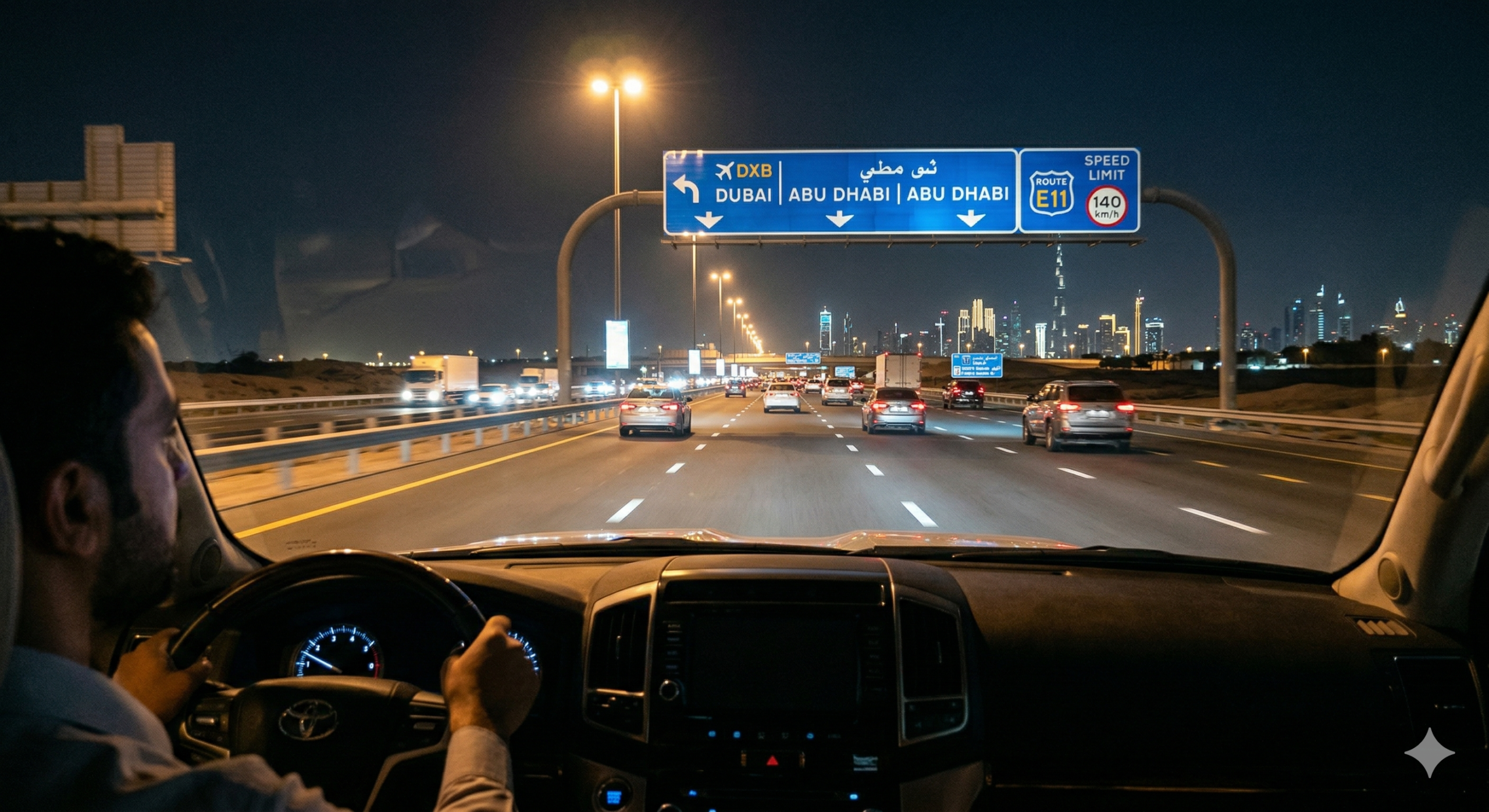
5. The “Car Lift” Culture: Shared Commuting
For those living or working in the UAE, the Car Lift is a staple of budget life.
How it Works
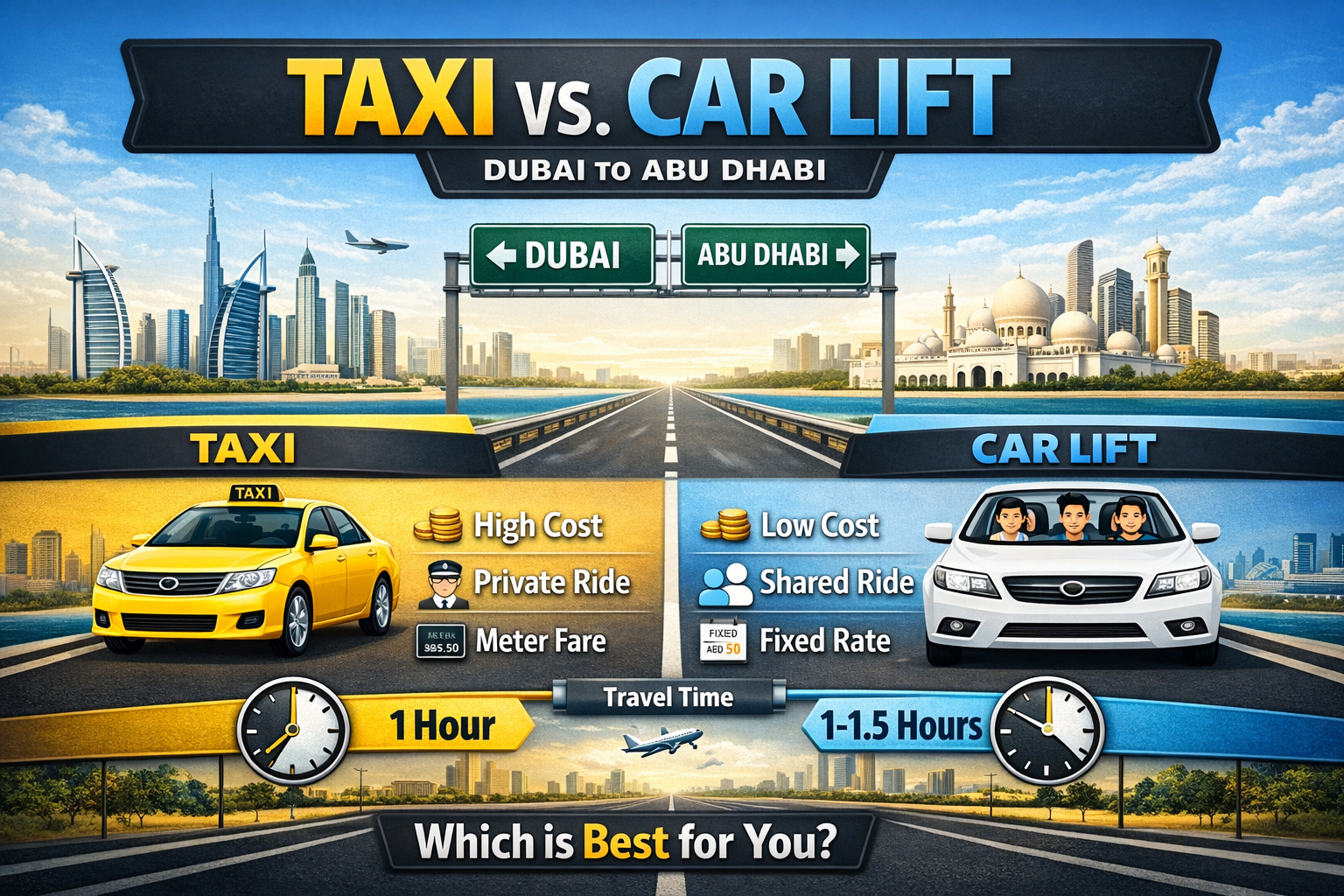
Private drivers operate “shared taxis” on popular routes like Sharjah to Dubai or Dubai to Abu Dhabi.
-
Price: A single trip from Dubai to Abu Dhabi usually costs AED 40-50.
-
Monthly Packages: If you are a regular commuter, monthly car lift packages range from AED 800 to AED 1,200, including home pick-up and office drop-off.
Disclaimer: Always ensure you use licensed transport services, as informal car lifts can occasionally face regulatory scrutiny.
6. Budget Car Rentals: When to Drive
If you are traveling in a group of 3 or 4, renting a car can actually be cheaper than public transport, especially if you plan to visit remote spots like Jebel Jais or Al Ain.
2026 Rental Market Rates
-
Economy Cars (MG 5, Toyota Yaris, Hyundai Accent): In 2026, off-peak daily rates are as low as AED 40–60.
-
Fuel Costs: While global prices fluctuate, fuel in the UAE remains subsidized compared to Europe, making road trips highly economical.
Rental Hacks for SEO Ranking:
-
Book Weekly: A weekly rental is often 20% cheaper than a daily rate.
-
Avoid Airport Pickups: Renting a car from a neighborhood branch (like Al Barsha or Deira) saves you the “Airport Surcharge” of roughly AED 50.
7. Air Travel: The Low-Cost Carriers
If you are using the UAE as a hub to travel to neighboring countries (Oman, Qatar, Saudi Arabia), you should skip the flagship carriers and book with local budget airlines.
-
Air Arabia (Sharjah): The original low-cost carrier. Often has “AED 1 plus taxes” sales.
-
FlyDubai (Dubai): Offers a massive network of budget flights, often departing from Terminal 2.
-
Wizz Air Abu Dhabi: Famous for sub-AED 100 flights to Europe and the GCC.
8. Seasonal Savings: When to Travel
SEO data shows that “Cheap Travel UAE” searches peak during the summer.
The Summer “Sizzle” (June – September)
This is the cheapest time to visit. Hotels that cost AED 1,000 in December often drop to AED 250.
-
Transport Tip: Use the Metro exclusively during these months to avoid waiting at hot bus stops.
Ramadan 2026
Ramadan in 2026 (starting mid-February) is a unique time for budget travelers. While transport schedules change slightly, many “Iftar” tents offer free or very cheap high-quality meals, and retail sales provide huge discounts on travel gear and electronics.
9. Essential Apps for the Budget Traveler
To keep your costs low, your phone must be loaded with these 2026 essentials:
-
S’hail (RTA Dubai): The most accurate route planner for buses and trains.
- Darbi (Abu Dhabi): Essential for checking your Hafilat balance.
- Careem (Hala Taxi): Always select “Hala” for the cheapest government-regulated taxi rates.
-
The Entertainer: A must-buy for groups. It offers “Buy One Get One Free” on tours, food, and even some transport experiences.
10. Detailed Comparison Table: Cost per Journey
| Mode of Transport | Route | Approx. Cost (AED) | Best For |
| Abra (Water Taxi) | Old Dubai Creek | 1 | Heritage/Cross-river |
| Dubai Metro | Airport to Marina | 7.50 | Solo/Quick Travel |
| Intercity Bus | Dubai to Abu Dhabi | 25 | Budget Intercity |
| Abu Dhabi Link | Yas Island Local | 2 | On-demand luxury |
| Car Rental | Daily Economy | 50 | Families/Groups |
| Careem (Hala) | 10km Trip | 35-45 | Night travel |
11. Final Tips for 100% Budget Success
-
Walk Al Seef and La Mer: These are free-to-enter walking districts that provide high-end vibes for zero cost.
-
Use Free Shuttles: Many malls (Dubai Mall, Mall of the Emirates) and theme parks (Yas Island) offer free shuttle buses from major hotels. Always check with your hotel concierge first!
-
Avoid Peak Hours: Between 7:30 AM and 9:00 AM and 5:30 PM – 7:30 PM, taxis often have surge pricing or higher meter rates due to traffic. The Metro remains the same price.
faqs
1. Can I pay for my bus or metro fare with cash in Dubai or Abu Dhabi? No, you cannot use cash on any public transport in these cities. In Dubai, you must use a Nol Card, and in Abu Dhabi, you must use a Hafilat Card. You can purchase and top up these cards at metro stations, bus terminals, and many convenience stores like Zoom or Lulu Hypermarket.
2. What is the cheapest way to travel from Dubai to Abu Dhabi? The most budget-friendly option is the RTA Intercity Bus (E100 or E101). It costs AED 25 one-way. The E101 departs from Ibn Battuta Bus Station and is often the fastest route, while the E100 departs from Al Ghubaiba in Old Dubai.
3. Is there a free shuttle bus between Dubai and Abu Dhabi? While there isn’t a general public free shuttle, many airlines like Emirates and Etihad provide free shuttle services for their passengers between the two cities. Additionally, some major theme parks on Yas Island offer free shuttles from select locations in Dubai for ticket holders.
4. How much does a “car lift” cost from Dubai to Sharjah? A shared car lift (carpooling) typically costs between AED 10 and AED 20 per trip, depending on the pickup point. For regular commuters, monthly packages are available ranging from AED 500 to AED 800, which often include door-to-door service.
5. Can I use my Dubai Nol Card in other Emirates? Currently, the Nol card is accepted in Dubai and on RTA intercity buses going to other Emirates. However, you cannot use it for local city buses within Abu Dhabi (Hafilat) or Sharjah (Sayer). You will need the specific card for each Emirate’s local network.
Conclusion
Reliable monthly car lift services in the UAE make commuting between Dubai and Abu Dhabi easier, safer, and more affordable. With professional drivers, comfortable vehicles, and fixed schedules, passengers can enjoy a smooth daily journey without the stress of driving long distances.
Don’t wait—schedule your car lift today and experience a seamless ride between Dubai and Abu Dhabi. For more, Contact Us or connect directly via WhatsApp.
For more insights and tips on safe, affordable, and reliable transport services, visit our other articles and stay updated with the latest guides and expert advice.
It’s a safe, economical, and reliable option for anyone traveling between Dubai and Abu Dhabi.