UAE Travel Cost Guide: Save Money on Transport (2026 Edition)
The United Arab Emirates is a land of superlatives—home to the world’s tallest building, the most luxurious hotels, and sprawling desert landscapes. However, for many travelers, the perceived high cost of “getting around” can be a deterrent. Whether you are navigating the sleek skyline of Dubai or the cultural corridors of Abu Dhabi, transportation expenses can quickly eat into your budget if you aren’t savvy.
This comprehensive UAE Travel Cost Guide is designed to help you navigate the Emirates efficiently while keeping your dirhams in your pocket. From mastering the metro to understanding the nuances of intercity buses, here is how to save money on transport in the UAE in 2026.
1. Mastering Smart Cards to Save Money on Transport
In the UAE, cash is no longer accepted on public transport. To save money on transport, you must use local smart card systems, which offer significantly lower rates than single-use tickets. Each Emirate has its own system, and understanding them is the first step in any UAE Travel Cost Guide.
Dubai: The Nol Card
Dubai’s Nol Card is an all-in-one pass for the Metro, Tram, Buses, and even Water Taxis.
-
Silver Nol Card (Best for Tourists): Costs AED 25 (includes AED 19 credit). It offers the lowest fares per zone and is rechargeable.
-
Gold Nol Card: This gives you access to the Gold Class cabins on the Metro and Tram. While it offers more comfort, it costs double the standard fare. If your goal is to save money on transport, stick to Silver.
-
Red Ticket: This is a paper-based ticket best for a single trip or a one-day stay (cost: AED 2 plus the trip fare). It can be loaded with up to 10 single trips or 5 daily passes.
Abu Dhabi: The Hafilat Card
Abu Dhabi uses the Hafilat Card for its extensive bus network. Unlike Dubai, Abu Dhabi does not currently have a metro system, so mastering the bus is essential.
-
Standard Card: Costs AED 10 and is valid for 5 years. You must load it with credit at “Ticket Vending Machines” (TVMs) located at major bus stops and malls.
-
Weekly Pass: If you are staying in the capital for a week, a Weekly Pass for AED 30 offers unlimited local travel, which is an incredible steal to save money on transport in the capital.
2. Using the Dubai Metro: The Best Way to Save Money on Transport
The Dubai Metro is one of the most advanced and affordable driverless rail systems in the world. It is divided into 7 zones, and your fare depends on how many zones you cross. This is the ultimate “life hack” for any UAE Travel Cost Guide.
Fare Breakdown (Silver Card)
| Journey Type | Cost (AED) |
| Within 1 Zone | 3.00 |
| Across 2 Adjacent Zones | 5.00 |
| More than 2 Zones | 7.50 |
Strategic Tips to Save Money on Transport via Metro
-
Strategic Lodging: Book a hotel near a Red Line station (like Al Barsha, Deira, or Bur Dubai). This eliminates the need for expensive taxis to reach major attractions like the Dubai Mall, Burj Khalifa, or the Airport.
-
Avoid Gold Class: As mentioned, the price for Gold Class is double. While the view from the front window is great for a one-time photo, standard cabins are perfectly clean, air-conditioned, and efficient.
-
The 30-Minute Rule: In Dubai, you can transfer between the Metro and a Bus for free, provided the transfer happens within 30 minutes. This is a massive way to save money on transport when your final destination is a short bus ride away from the station.
3. Intercity Buses: How to Save Money on Transport Between Emirates
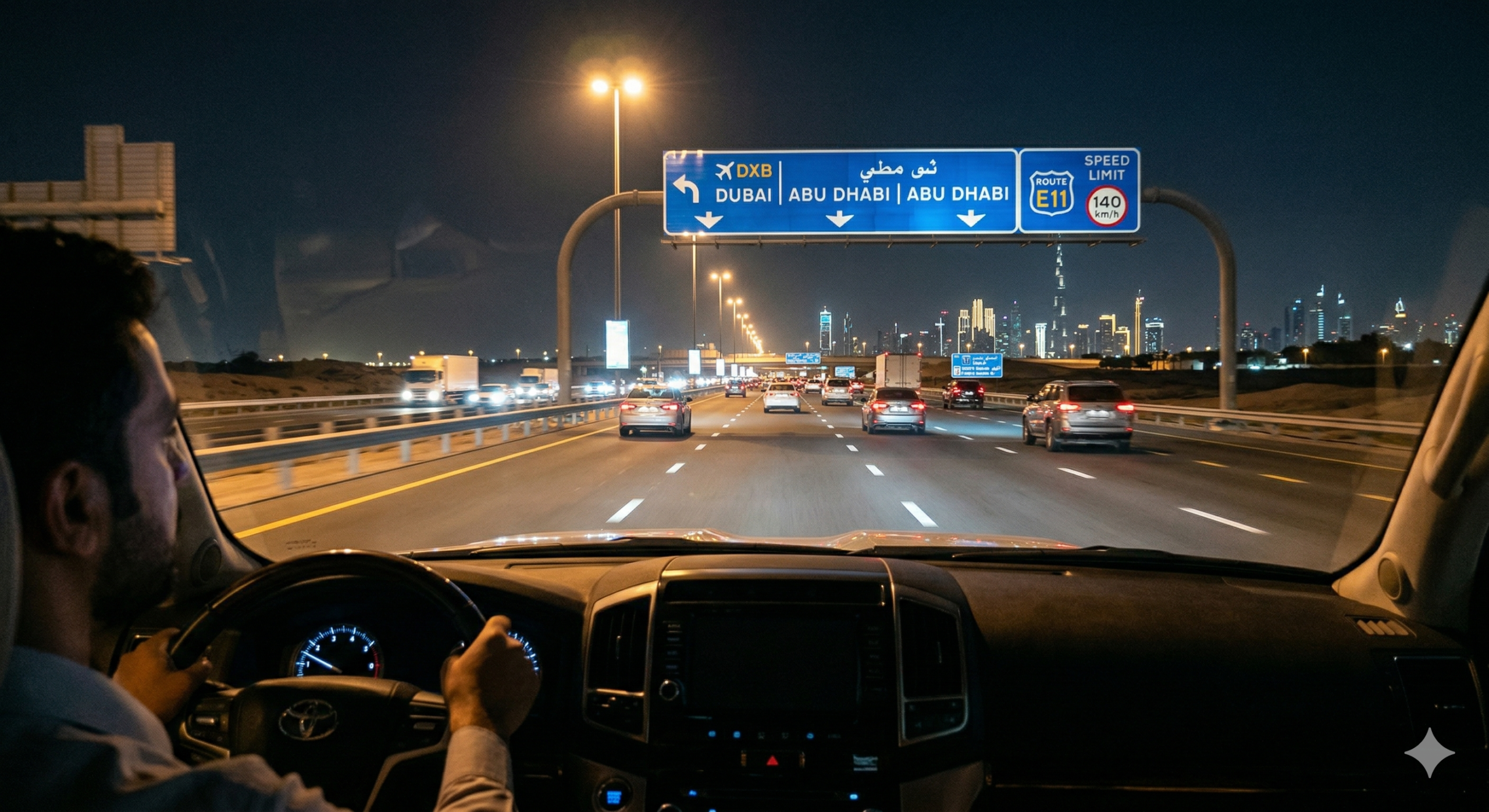
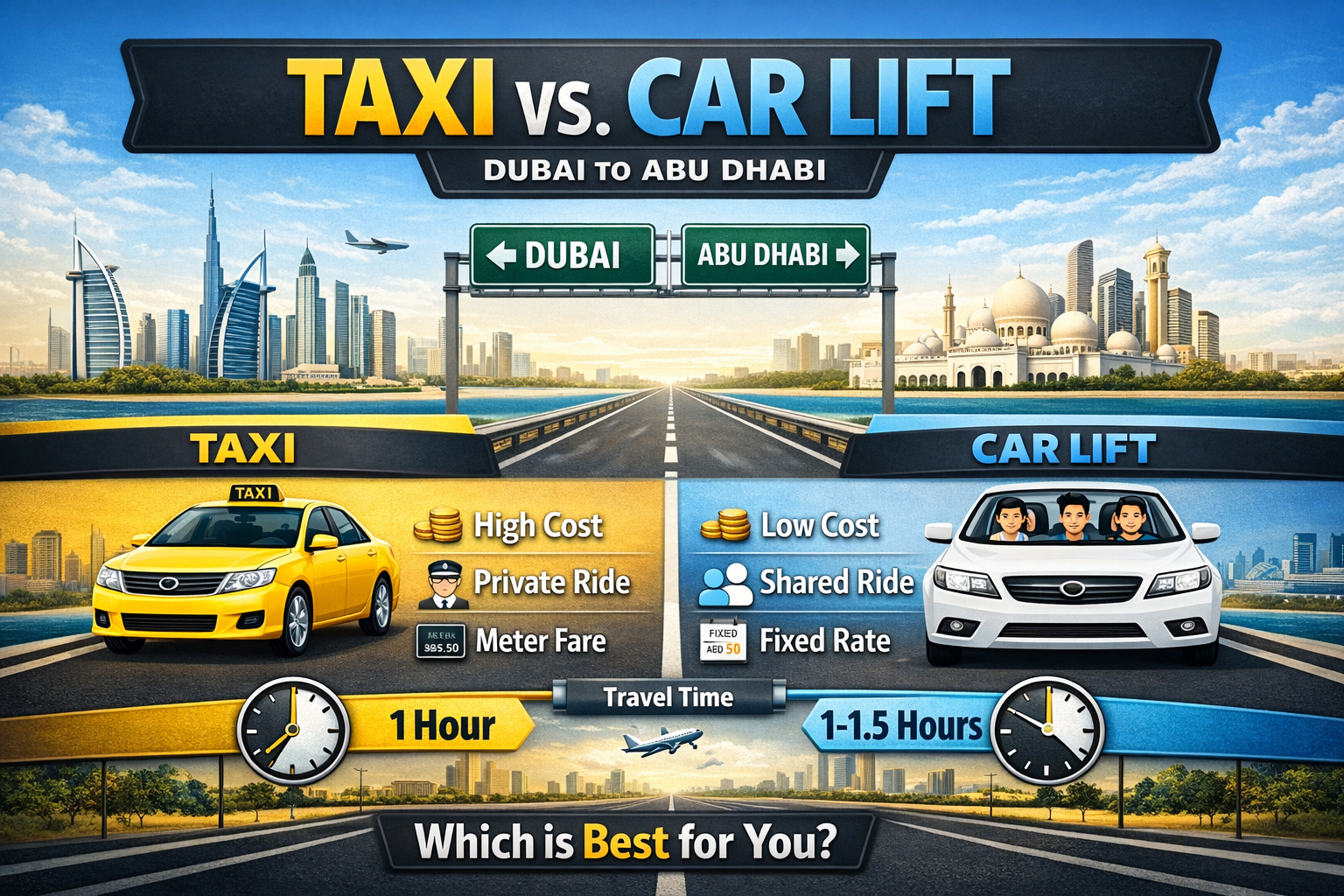
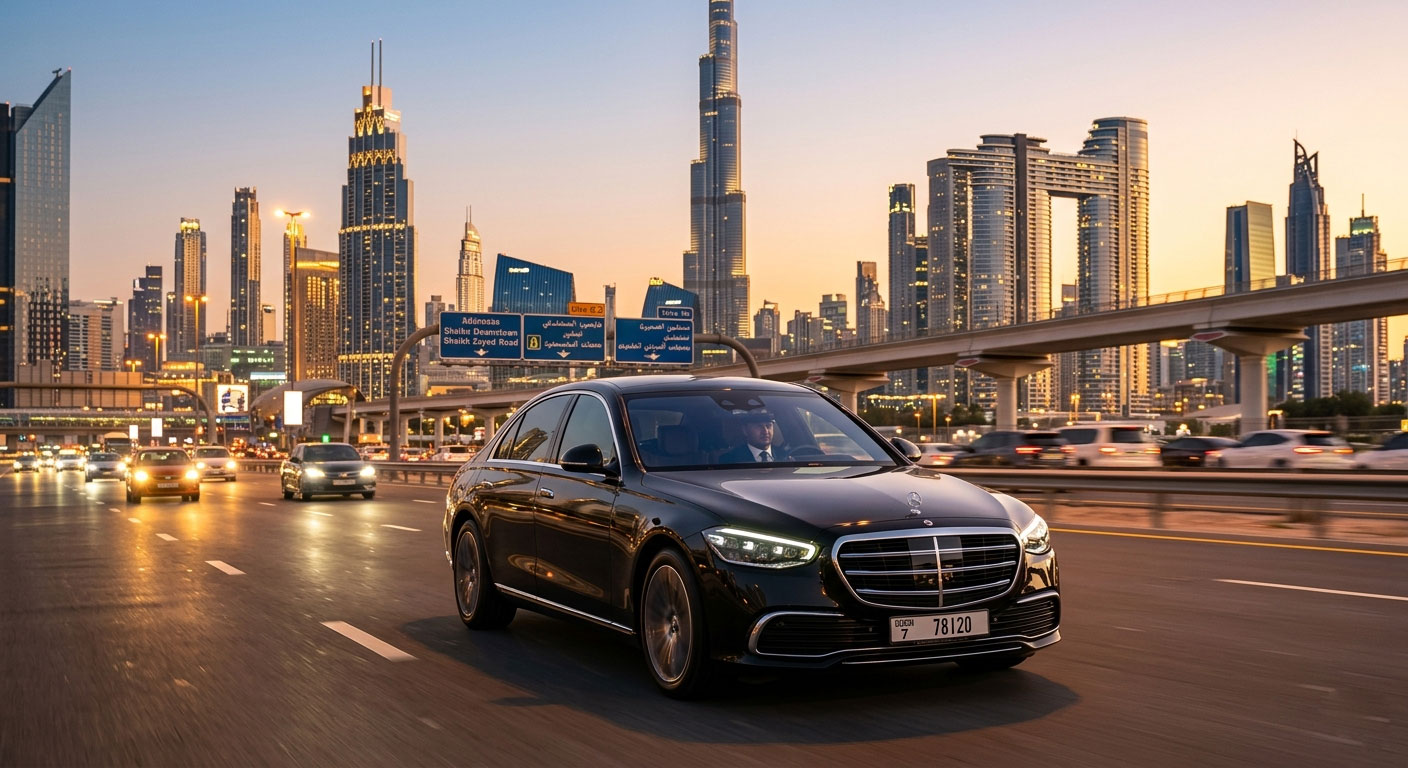
A private taxi from Dubai to Abu Dhabi can cost between AED 250 and AED 350. Even for a group of four, this is expensive. To follow this UAE Travel Cost Guide properly, you should look toward the intercity bus network.
The RTA Intercity Bus (Dubai to Other Emirates)
The most cost-effective way to travel between Emirates is the RTA Intercity bus.
-
To Abu Dhabi: Routes E100 (from Al Ghubaiba) and E101 (from Ibn Battuta) are the most popular. The cost is only AED 25 per way.
-
To Sharjah: Buses run frequently from various points in Dubai (Union, Al Ghubaiba, Deira City Centre) for around AED 10 – 15.
-
Payment: For RTA-operated intercity buses, you must use your Dubai Nol Card. Ensure you have sufficient balance before boarding, as you cannot pay the driver in cash.
4. Taxis vs. Apps: Choosing the Right Ride to Save Money on Transport
In many global cities, Uber is the “cheap” option. In the UAE, the hierarchy is slightly different. If you want to save money on transport, you need to know which app to open and which car to flag down.
Public Taxis (Hala Taxi)
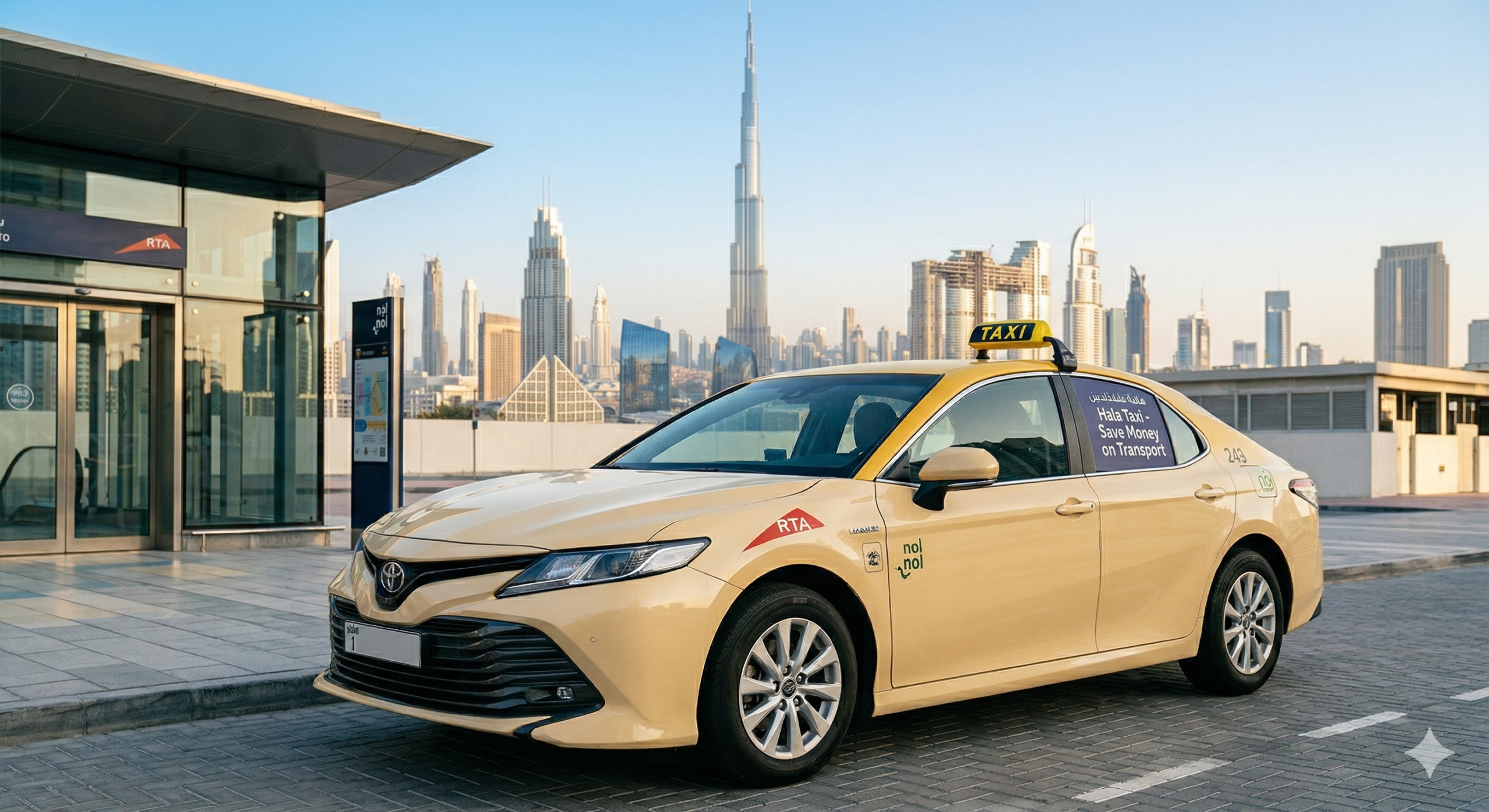
Managed by the government (RTA in Dubai, TransAD in Abu Dhabi), these are usually the most affordable way to take a private car.
-
The Meter: In Dubai, the meter starts at AED 5 if flagged on the street (during the day) or AED 12 if booked via the Careem app.
-
Hala Taxi via Careem: In Dubai, you can book a standard public taxi through the Careem app by selecting the “Hala Taxi” option. This gives you the convenience of GPS tracking and card payment with the lower price of a public meter.
Uber and Careem (Private)
While Uber and Careem’s private car options (like UberSelect or Careem Comfort) offer premium Lexus vehicles, they are generally 20-30% more expensive than standard taxis.
5. Car Rentals: When Driving Yourself Helps You Save Money on Transport
If you plan on visiting the Jebel Jais mountains in Ras Al Khaimah, the “Garden City” of Al Ain, or the Liwa Desert, renting a car is often cheaper than booking multiple tours or long-distance taxis.
Costs and Considerations for 2026
-
Economy Car Rates: You can find small economy cars (like a Mitsubishi Attrage or Nissan Sunny) for approximately AED 60 – 90 per day for short-term rentals. For a week, this can drop to AED 450.
-
Fuel Costs: Petrol prices in the UAE are regulated and adjusted monthly. While they are higher than they were a decade ago, they remain significantly cheaper than in Europe or Singapore, helping you save money on transport on long-range trips.
-
Salik (Tolls): Dubai uses an automated toll system called Salik. Each time you pass a gate (like on Sheikh Zayed Road), it costs AED 4. Rental companies usually charge you AED 5 per crossing to cover administrative costs.
-
Saving Tip: Use Google Maps and toggle the “Avoid Tolls” setting. It might add 10-15 minutes to your trip by taking Al Khail Road instead of Sheikh Zayed Road, but it can save you AED 40 a day if you are driving across the city multiple times.
-
6. Marine Transport: Scenic Ways to Save Money on Transport
The UAE’s waterways are not just for luxury yachts; they are functional transit routes that are surprisingly cheap and offer some of the best views in the country.
The Traditional Abra
For just AED 1, you can cross the Dubai Creek on a traditional wooden boat (Abra). This connects Bur Dubai and Deira. It is the cheapest, fastest, and most authentic way to save money on transport while crossing the water.
The Dubai Ferry
The Dubai Ferry is a more “tourist-centric” public transport option.
-
Route: The trip from Dubai Marina to Al Ghubaiba (Old Dubai) is spectacular.
-
Cost: Approximately AED 25 – 50, depending on the class.
-
Value: Compare this to a private “Skyline Tour” which can cost AED 200+. Using the Ferry is a brilliant way to see the Palm Jumeirah and the Burj Al Arab from the water while sticking to your UAE Travel Cost Guide goals.
7. Walking and Biking: Zero-Cost Ways to Save Money on Transport
While the UAE is famously car-centric, the infrastructure for pedestrians and cyclists has improved drastically by 2026.
Walkable Hubs
You can save money on transport by grouping your sightseeing by “district” and walking within them:
-
Downtown Dubai: You can walk from the Metro station through the air-conditioned tunnel to the Dubai Mall, then explore the Burj Lake area on foot.
-
Dubai Marina/JBR: A 7 entirely walkable km promenade.
-
Al Fahidi: The historical district is best explored on foot.
Careem Bike
Dubai has a widespread bike-sharing scheme. You can buy a daily or weekly pass via the Careem app.
-
Cost: A daily pass is around AED 20, allowing for unlimited 45-minute trips.
-
Strategy: Use it to get from a Metro station to a nearby beach or cafe that is just a bit too far to walk in the sun.
8. Essential Apps to Help You Save Money on Transport
To save money on transport, you need real-time data. These apps are non-negotiable for a budget-conscious traveler:
-
S’hail (Dubai): The best app for planning journeys across metro, bus, and tram. It gives you live arrival times and fare breakdowns.
-
Darb (Abu Dhabi): Essential for checking Abu Dhabi bus routes and managing your Hafilat balance.
-
Careem: Use it to book “Hala Taxis” (the cheaper public option) and occasionally check for “Bike” rentals in areas like Dubai Marina.
-
Google Maps: Remarkably accurate for UAE public transport schedules and traffic alerts.
9. Budget Planning: Daily Transport Estimates
To wrap up this UAE Travel Cost Guide, let’s look at what you should budget per day for transport:
-
The “Strict Budget” Traveler (AED 15-25/day): Relies solely on the Metro, local buses, and walking. Stays in areas like Deira or Al Qusais.
-
The “Comfort” Traveler (AED 50-80/day): Mixes Metro trips with 1-2 Hala Taxis for “last mile” connectivity.
-
The “Explorer” (AED 120-150/day): Rents a small car, pays for petrol and parking, and visits multiple Emirates or remote desert spots.
10. Conclusion
Reliable monthly car lift services in the UAE make commuting between Dubai and Abu Dhabi easier, safer, and more affordable. With professional drivers, comfortable vehicles, and fixed schedules, passengers can enjoy a smooth daily journey without the stress of long-distance driving.
Don’t wait—schedule your car lift today and experience a seamless ride between Dubai and Abu Dhabi. For more, Contact Us or connect directly via WhatsApp.
For more insights and tips on safe, affordable, and reliable transport services, visit our other articles and stay updated with the latest guides and expert advice.
It’s a safe, economical, and reliable option for anyone traveling between Dubai and Abu Dhabi.