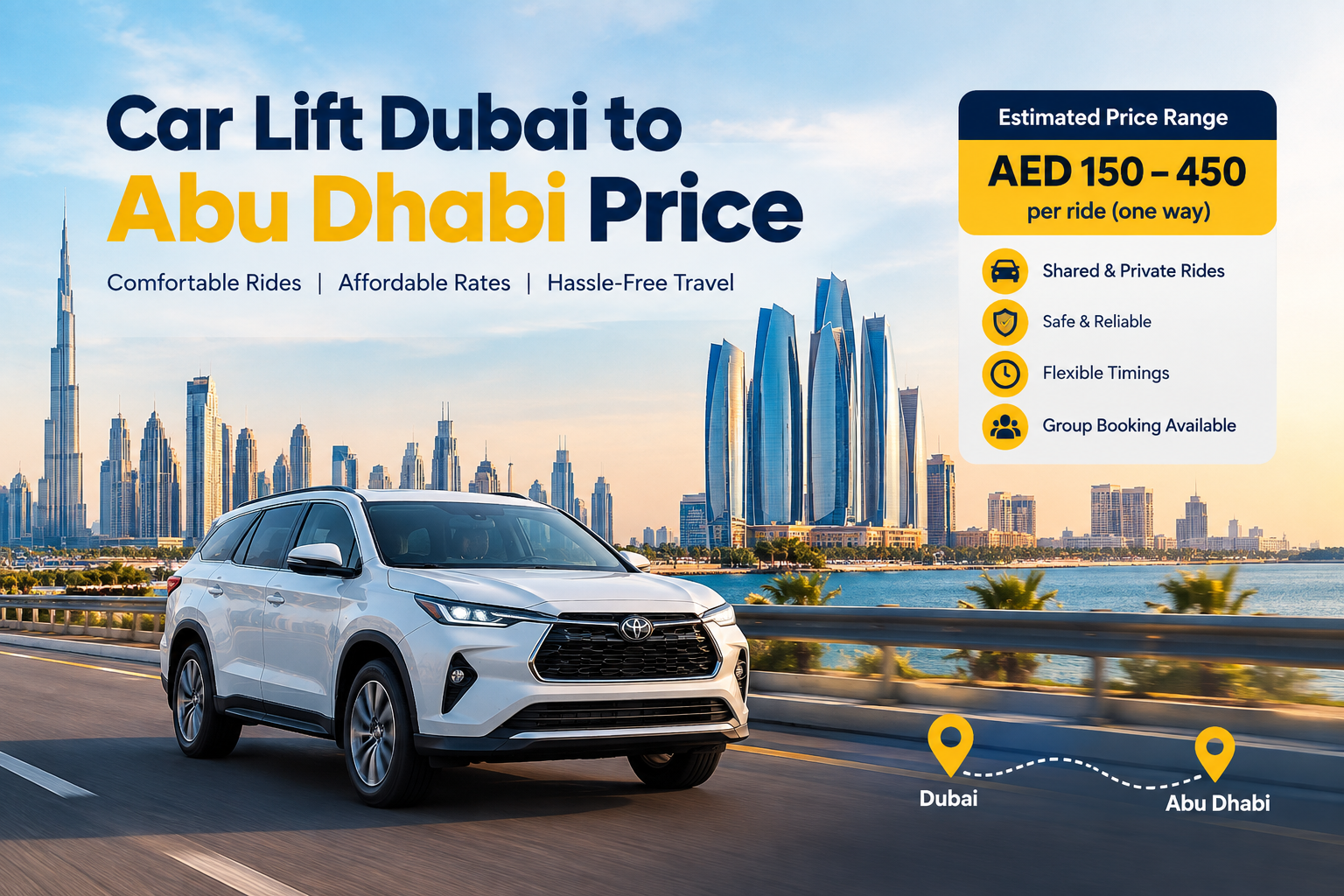

Two years ago, I stared at a complex spreadsheet tracking the annual attrition rate of a mid-sized technology firm based in Dubai Media City. Their most senior developers, many commuting daily from Abu Dhabi, were handing in their notices at an alarming frequency. Exit interviews repeatedly cited a single, undeniable culprit: the sheer physical and mental exhaustion of navigating the E11 highway. We needed a severe logistical intervention, not another superficial corporate wellness initiative. That specific corporate crisis forced me to completely dismantle the mechanics of inter-emirate transit and evaluate the actual return on investment associated with outsourced professional transport. I quickly realized that continuing to pay individual fuel allowances was a mathematically flawed retention strategy. The data demanded a pivot.Monthly Car Lift Packages
The Economics of Monthly Car Lift Packages
Most professionals severely underestimate the financial bleed of daily solo driving. Most people routinely calculate the obvious fuel costs, treating them as the primary expense. From time to time, electronic toll gates make it into the equation as well. What often gets overlooked, however, is the aggressive vehicle depreciation, faster maintenance cycles, and the near certainty of traffic fines over time. The raw mathematics of driving 140 kilometers each way tells a rather grim story. A standard commuter covers roughly 6,160 kilometers per month just traveling between Dubai and Abu Dhabi. That extreme mileage demands a comprehensive oil change every six weeks. It requires new premium tires every eight months. Brake pads disintegrate at a highly accelerated rate due to highway speed braking.
Furthermore, depreciation does not respect your daily commute. A mid-tier sedan absorbing 75,000 kilometers annually will lose nearly half its total resale value within eighteen months. When I audit transport frameworks for corporate clients, I frequently point out that personal car ownership for extreme commuting is fundamentally a wealth-destruction mechanism. Transitioning away from this archaic model shifts a volatile, unpredictable expense into a manageable, fixed operational cost. The financial clarity alone justifies the transition.
Calculating the Hidden Costs of Solo Driving
Let us examine the highly granular expenses involved in regional travel. Tracking volatile petrol rates via regional trackers like Khaleej Times demonstrates a persistent unpredictability in monthly fuel budgeting. A large SUV, heavily favored in this region, might easily consume upwards of 2,500 AED in fuel alone each month. Add the daily Salik tolls, which easily exceed 400 AED monthly depending on your specific route. Then factor in commercial insurance premiums that naturally spike when you declare extreme annual mileage to your broker. You are routinely looking at a baseline operational cost of 4,000 AED before even factoring in the invisible, aggressive tax of vehicle depreciation. This is precisely why mathematically savvy professionals are actively abandoning the steering wheel.
Case Study: The Corporate Amortization Schedule
Consider the case of Sarah, an Operations Director I consulted for late last year. She was stubbornly attached to her European luxury sedan, viewing it as a sanctuary. After one brutal summer of replacing three cracked windshields from flying highway debris and a completely blown AC compressor, I ran the exact amortization schedule for her. She was quietly losing 8,000 AED a month in raw equity and emergency maintenance. Once she saw the hard data, her perception of driving shifted from a status symbol to a logistical liability.
Decoding the Best Monthly Car Lift Packages
The marketplace for shared transit has matured rapidly over the last decade, but not all operators provide the exact same caliber of service. Identifying a truly premium fleet operator requires looking far past the glossy exterior of a minibus. When my team restructured a recent corporate logistics plan, we specifically sought out vendors capable of handling aggressive schedules without compromising on strict passenger comfort. We ultimately ended up integrating monthly car lift to stabilize the daily commute for over fifty critical employees. The immediate internal feedback was overwhelmingly positive, largely because we selected an operator that prioritized strict vehicle telematics and absolute driver accountability.
Premium transport operators equip their sophisticated fleets with real-time GPS tracking, hardcoded speed limiters, and high-capacity climate-controlled cabins perfectly tailored for the harsh Middle Eastern summer. They absolutely do not employ fatigued drivers working unauthorized double shifts. Instead, they operate with a highly regimented schedule that mimics corporate aviation logistics far more than it resembles a municipal public bus route. Thoroughly assessing these specific packages requires auditing the operator’s backend logistics just as rigorously as examining their vehicle interiors.
Door-to-Door vs. Centralized Transport
A critical divergence in modern service models is the specific routing strategy employed. Door-to-door service offers undeniable luxury. Stepping out of your private villa directly into a waiting, climate-controlled van removes the friction of the initial morning transition. However, from a purely logistical standpoint, it forces the heavy vehicle to navigate multiple complex residential neighborhoods, potentially adding forty-five minutes to the overall journey time.
Conversely, centralized pickup nodes—where commuters gather at a strategic, highway-adjacent location—drastically optimize the total travel time. The most efficient operators utilize complex traffic density algorithms to establish pickup points that perfectly minimize neighborhood crawling and completely maximize uninterrupted highway cruising.
The Technological Evolution of Commuter Transport
We are no longer relying on chaotic, informal messaging groups to secure a ride across the desert. The modern transit industry is heavily digitized. Premium operators utilize proprietary applications that allow passengers to track their assigned vehicle in real-time, completely eliminating the anxiety of waiting on a dark street corner. These platforms manage automated billing, handle seat reservations, and instantly alert passengers if a highway accident requires a sudden route diversion. This level of technological integration transforms a simple ride into a highly predictable, enterprise-grade logistical operation.
The Psychological Shift in Inter-Emirate Transit
Daily commuting is not merely a geographic transition; it is a profound, often unrecognized psychological burden. Navigating a hyper-aggressive, high-speed corridor at seven in the morning demands intense cognitive focus. Tailgating, sudden unsignaled lane changes, and the blinding glare of the morning sun create a sustained fight-or-flight biological response. A fascinating, heavily cited study published by the Harvard Business Review highlights that prolonged driving directly correlates with drastically heightened cortisol levels and chronic cardiovascular stress. Solo drivers inevitably arrive at their corporate desks already mentally depleted.
Sitting comfortably in the passenger seat of a commercial van radically alters this biological dynamic. The heavy responsibility of hyper-vigilance is entirely outsourced to a trained professional. The passenger’s cognitive load immediately drops to baseline. I have spoken with countless senior professionals who describe their morning commute not as a trial to be endured, but as a critical transitional sanctuary.They sip their espresso in total peace, allowing themselves a quiet moment. Gradually, they begin to decompress, letting the stress fade away. In that calm space, meditation comes naturally.This psychological buffering is arguably the single most valuable component of outsourcing the daily drive.
How Monthly Car Lift Packages Impact Productivity
Time remains the only truly non-renewable asset in any business environment. A professional commuting between the major emirates squanders approximately three hours a day rigidly fixed behind the wheel. That equates to roughly sixty-six hours a month, or nearly two entire work weeks completely lost to the highway tarmac. By aggressively utilizing structured transit, this previously dead time is immediately reclaimed.
I have personally observed executives draft complex quarterly financial reports from the quiet backseat of a commuter van. I have watched software developers write flawless, intricate code while cruising at a perfectly steady 100 kilometers per hour.
Even if the time is not utilized for active billing labor, using those ninety minutes for deep sleep, meditation, or consuming educational audiobooks yields a massive personal return on investment. The individual arrives at the office operating at peak mental acuity, fundamentally outperforming exhausted colleagues who just battled an hour of unpredictable gridlock.
The Concept of the Mobile Third Space
Sociologists frequently discuss the absolute necessity of a ‘Third Space’—an environment that is strictly neither the demanding workplace nor the busy home. For extreme commuters, a premium transit van effectively becomes this vital third space. It serves as an isolated, quiet decompression chamber. You are entirely unreachable by your immediate family’s demands, yet physically disconnected from your manager’s immediate presence. Owning this specific block of isolated time acts as a powerful buffer against long-term corporate burnout.
Ensuring Safety within Your Monthly Car Lift Packages
Risk mitigation must always remain the primary filter through which any daily transit service is judged. Commercial fleet operators operate under incredibly stringent regional regulatory frameworks. Their specific vehicles undergo rigorous, mandated mechanical testing cycles that far exceed the basic requirements for civilian passenger cars. Professional commercial drivers are heavily subjected to continuous background checks, stringent medical evaluations, and advanced defensive driving courses designed specifically for heavy highway traffic.
Beyond immediate physical safety, there is a highly compelling environmental safety argument to be made. The Environmental Protection Agency (EPA) models definitively demonstrate that consolidating passenger transit drastically cuts individual carbon footprints. Replacing ten solo, fuel-heavy SUVs with a single, modern, high-efficiency diesel van removes significant carbon emissions from the fragile atmosphere. Corporations heavily focused on improving their ESG (Environmental, Social, and Governance) scores are increasingly subsidizing these exact services precisely to visibly lower their scope 3 corporate emissions.
Fleet Maintenance Protocol
The hidden operational reality of maintaining a high-mileage fleet is structurally brutal. Heavy transmissions inevitably degrade. Air conditioning compressors frequently fail under the extreme summer loads.When you own the vehicle yourself, a sudden mechanical failure can leave you stranded on the shoulder of the E11, scrambling to call a recovery truck while missing critical morning meetings. Professional operators remove this risk entirely. Top-tier transit providers maintain backup vehicles ready at all times. The entire complex maintenance protocol occurs completely in the background, entirely invisible to the paying end-user.
The Corporate Case for Subsidized Transit
Progressive human resources departments are finally recognizing that transport is a core workplace issue. When I consult with enterprise HR teams, I explicitly advise them to transition their budget away from raw housing allowances and directly into subsidized transit solutions. When a company manages the commute, they effectively control the punctuality and energy levels of their entire workforce. A team that travels together frequently engages in informal problem-solving before they even badge into the office building. The cross-departmental networking that naturally occurs in a shared transit vehicle breaks down rigid corporate silos faster than any artificial team-building retreat.</p>
The Final Verdict on Outsourcing Your Commute
We are currently witnessing a massive structural shift in exactly how regional professionals manage their time and capital.The outdated model forces people to tie significant personal wealth into a rapidly depreciating vehicle just to commute to work, creating clear inefficiency. When you analyze the hard data—extreme fuel consumption, constant maintenance costs, irrecoverable lost hours, and the heavy physical toll—the case for outsourced professional transit becomes undeniable. A structured subscription transport model does not limit personal freedom; it elevates it. This approach protects your finances, preserves your mental well-being, and helps you reclaim your most valuable asset—your time.