
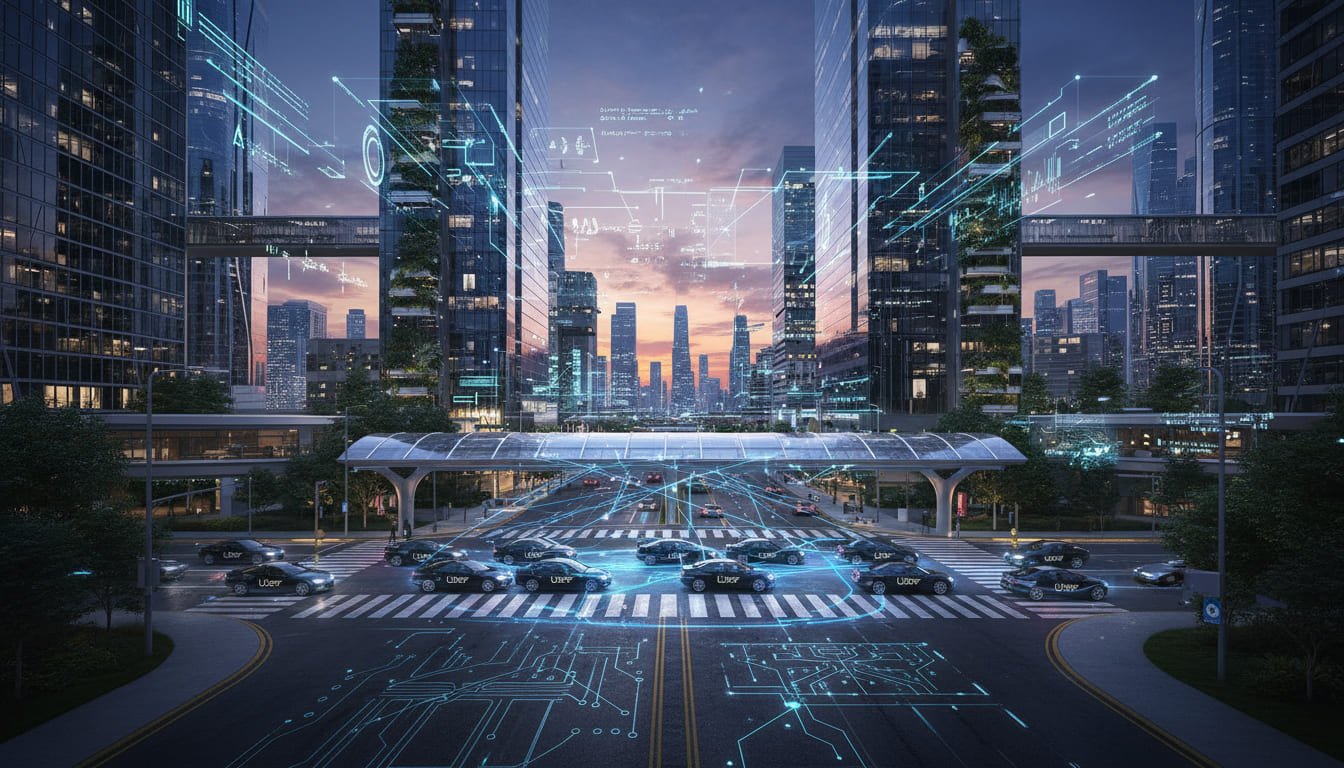
The Economics, Algorithms, and Evolution of Uber Car Pool Services
| Feature | Legacy Uber Pool (Pre-2020) | UberX Share (Current) | Private Commuter Networks |
|---|---|---|---|
| Pricing Structure | Steep upfront discounts | Discount applied post-match | Fixed monthly or weekly rates |
| Routing Efficiency | High detour tolerance | Strict limits on added travel time | Point-to-point scheduled routes |
| Capacity | Up to 3 strangers | Maximum 2 riders (no middle seat) | Optimized van or SUV capacity |
Deconstructing the Uber Car Pool Algorithm
To understand how a shared rides app functions, you must first dismantle the illusion of real-time seamlessness. Behind the consumer-facing interface lies a modified variant of the Traveling Salesperson Problem, executed millions of times per second. When a user requests an Uber car pool, the system does not simply look for the nearest vehicle. Instead, it creates a ‘probability cone’ projecting the vehicle’s future trajectory.
It evaluates dozens of active requests within that geometric cone, scoring potential matches based on vector alignment, estimated time of arrival impact, and historical traffic densities on the projected detour route. The computational load is staggering. Every time the algorithm considers grouping Rider A with Rider B, it must calculate the opportunity cost: will this detour frustrate Rider A enough to trigger an app abandonment next time? Will the added distance push the driver into a different compensation tier that erases the margin on the trip? This delicate balancing act dictates the underlying mechanics of every shared trip you take. In the early days, the parameters were incredibly loose.
I remember reviewing dispatch logs where drivers were routed across heavy traffic arteries to collect a second fare, extending the original trip duration by over forty percent. The priority back then was market capture—proving to municipal governments and venture capitalists that shared rides could replace traditional public transit. Over time, the engineering teams tightened these parameters significantly. The modern heuristic logic governing the Uber car pool strictly limits deviations. If a secondary pickup adds more than eight minutes to the primary rider’s journey, the system will instantly discard the match. This pivot toward stricter temporal boundaries fundamentally altered the economics of the service, shifting the focus from maximum occupancy to optimal fleet utilization.
The Core Logic Behind UberX Share and Modern Batching
The transition from legacy pool services to UberX Share represents a masterclass in managing consumer expectations through algorithmic batching. Unlike the older model, where deep discounts were guaranteed simply for opting in, the contemporary shared rides framework utilizes a conditional incentive structure. Riders receive a negligible upfront discount—often just a few percentage points—for selecting the shared option. The true financial reward only materializes if the algorithm successfully pairs them with a co-rider along the route. This is a brilliant application of behavioral economics. By removing the guaranteed subsidy, the platform eliminated the massive financial bleed associated with unmatched shared trips. Simultaneously, it trained the user base to accept the variability of transit. You are paying for the possibility of a cheaper ride, subsidizing the network’s liquidity with your own flexibility.
I spoke with a systems architect last year who described this as ‘asynchronous batching.’ The system delays the final routing decision for just a few crucial seconds after you hit request, artificially holding your dispatch in a localized queue to increase the density of potential matches. Those extra five seconds of loading screen animation provide the mainframe the breathing room it needs to evaluate overlapping trajectories. It is a subtle manipulation of the user experience designed entirely to optimize the backend matchmaking yield.
Driver Economics in the Uber Car Pool Ecosystem
One cannot analyze the viability of a carpooling app without scrutinizing the supply side of the equation: the driver. For years, the shared ride format was highly contentious among gig economy workers. The primary grievance centered on the disproportionate ratio of effort to compensation. Maneuvering through dense urban environments to execute multiple pickups and drop-offs inherently increases the cognitive load and physical risk for the driver. Yet, under older pay structures, the financial uplift for carrying a second passenger was marginal. Drivers were effectively penalized for the platform’s efficiency. The calculus changes when you examine regional incentive modifiers. In major metropolitan hubs, platform algorithms began offering consecutive trip bonuses to counteract driver reluctance. If a driver accepted three shared requests in a row, they unlocked a fixed cash bonus.
This created a fascinating dynamic where drivers would actively seek out shared rides during promotional windows, then immediately toggle the feature off once the quota was met. This toggling behavior caused severe localized supply shortages, forcing the algorithmic dispatch to surge pricing artificially to attract drivers back into the pool. Modern compensation frameworks attempt to address this by paying drivers based on the total time and distance driven, regardless of the passenger count in the vehicle. While this stabilized driver earnings, it transferred the financial risk squarely back onto the platform. If the routing engine fails to find a co-rider, the platform absorbs the loss. Consequently, the profitability of the entire Uber car pool ecosystem hinges on maintaining an incredibly high match rate, which is only mathematically possible in high-density urban cores during peak transit hours. Outside of these parameters, the shared ride model rapidly disintegrates into an economic liability.
Environmental Efficacy: Greenwashing or Genuine Impact?
The foundational promise of the algorithmic shared ride was the reduction of urban congestion and greenhouse gas emissions. The narrative was compelling: put more people into fewer cars. However, independent audits of transit data paint a far more complex picture. The phenomenon of ‘induced demand’ severely undercuts the environmental benefits. By drastically lowering the cost of point-to-point transportation, rideshare platforms did not primarily pull commuters out of private single-occupancy vehicles; they pulled them out of buses, trains, and subways. This modal shift actually increased the total vehicle miles traveled in major city centers. Furthermore, the issue of deadheading—the distance a driver travels without a passenger while waiting for a dispatch—remains a stubborn source of emissions.
Even when two riders are successfully paired, the miles driven to execute the detour often negate the carbon savings of combining the trip. Relying on greenhouse gas emissions metrics from federal environmental agencies, researchers have demonstrated that a ride-hailing vehicle operating in a dense city can generate significantly more pollution per passenger mile than traditional mass transit. This realization has forced platforms to pivot their environmental messaging. The focus has shifted away from the inherent greenness of the Uber car pool model itself, pivoting instead toward the electrification of the fleet. By mandating transitions to electric vehicles, the platforms hope to neutralize the emissions debate entirely, bypassing the uncomfortable reality that algorithmic routing, no matter how efficient, cannot overcome the geometry of a car in a crowded city.
Global Context and Middle East Commuter Realities
Urban mobility is not a monolith; spatial geography and local economic conditions drastically alter how shared transit operates. A routing algorithm that thrives in the dense, predictable grid of Manhattan will fail spectacularly when applied to the sprawling, multi-nodal infrastructure of the United Arab Emirates. Having monitored transit logistics across various continents, the dichotomy between western rideshare habits and Middle Eastern commuter strategies is stark. In cities like Dubai and Abu Dhabi, the concept of the ad-hoc Uber car pool struggles against the physical realities of the commute. The distance between residential communities in Dubai and commercial hubs in Abu Dhabi spans over 140 kilometers. An algorithmic shared ride is fundamentally unsuited for this journey.
The detour penalty for picking up a stranger halfway down the E11 highway is simply too severe, and the pricing variability of dynamic surge multipliers makes daily budgeting impossible for the workforce. This infrastructural gap has birthed a highly specialized secondary market. Rather than relying on randomized algorithmic matching, professionals heavily utilize structured, subscription-based transit. For those executing this specific daily inter-emirate journey, engaging reliable carlift services from Dubai to Abu Dhabi provides a superior logistical solution. These private commuter networks operate on fixed routes, optimized capacity, and guaranteed schedules. By removing the algorithmic variability, they offer the predictability of a corporate shuttle with the comfort of a private vehicle. This hyper-local adaptation proves that while generalized shared rides apps excel at spontaneous micro-transit, heavy commuter corridors require dedicated, deterministic routing.
Why Dedicated Networks Outperform Algorithmic Shared Rides</h3&gt;
The failure of generalized rideshare to capture the heavy commuter market stems from the fundamental difference between trip types. An Uber car pool is designed for flexibility; a commuter requires reliability. When you are traveling to a critical business meeting or maintaining a strict daily office schedule, the potential savings of three dollars do not justify the risk of a fifteen-minute detour to collect a secondary passenger. Furthermore, the psychological strain of continuous ad-hoc interactions takes a toll. Structured carlifts build micro-communities. You ride with the same four people every day, establishing a social contract and a predictable environment.
The driver operates a known vehicle, and the route is optimized through human experience rather than a black-box heuristic. This distinction highlights the boundary of software engineering in urban transit. You cannot code away the stress of a highly variable commute. The algorithmic model prioritizes platform liquidity; the dedicated commuter model prioritizes passenger sanity. It is a vital distinction for anyone analyzing the future of urban mobility integr
ation.
Evaluating Uber Car Pool Against Dedicated Alternatives
To truly grasp the utility of a shared rides application, one must map its performance against both traditional public transit and dedicated private networks. The modern UberX Share occupies a precarious middle ground. It is more expensive and often less efficient than a municipal subway line, yet cheaper but far less reliable than a private taxi or specialized carlift. This positioning makes it highly susceptible to economic shifts. When disposable income tightens, users migrate downward to public transit. When time becomes the premium commodity, users migrate upward to private single-rider options. Consequently, the shared rides feature operates primarily as an elasticity buffer for the platform. It captures price-sensitive users during peak hours who would otherwise abandon the application entirely.
This dynamic is deeply studied within academic circles. Extensive behavioral economics research indicates that consumer willingness to share a vehicle is inversely correlated with the urgency of their destination. Platforms counter this by implementing dynamic pricing algorithms that aggressively widen the price gap between solo and shared options during times of high demand. If a private ride surges to fifty dollars, the twenty-dollar shared alternative suddenly becomes highly palatable, regardless of the detour. This is not a matter of transit innovation; it is a mechanism of aggressive yield management. The platform is continuously testing your pain threshold, balancing your wallet against your patience.
The Sociology of the Shared Vehicle</h3>
Beyond the economics and routing logic lies the raw sociology of placing strangers in an enclosed moving space. The unwritten etiquette of the Uber car pool is a fascinating study in modern urban isolation. The ‘no middle seat’ rule, introduced to combat user friction, was a direct concession to the limits of passenger comfort. For years, driver feedback logs were filled with reports of interpersonal tension—disputes over window controls, phone call volumes, and scent. The friction was so pervasive that platform engineers considered implementing ‘quiet ride’ preferences specifically for shared trips long before they rolled them out to premium tiers.
The social contract of a shared ride requires mutual invisibility. The ideal co-rider is silent, scentless, and exiting the vehicle before you do. When this contract breaks down, the perceived value of the financial discount evaporates instantly. I recall auditing safety logs where the mere presence of a highly talkative co-rider resulted in consecutive one-star ratings for the driver, who had absolutely no control over the situation. This inherent unpredictability is the Achilles heel of decentralized carpooling. It is a risk factor that structured commuter services eliminate entirely through consistency
and vetting.
Corporate Adoption and Municipal Subsidies
The true growth vector for the shared mobility sector does not lie in individual consumer adoption, but in institutional integration. Forward-thinking municipalities and massive corporate campuses are increasingly utilizing these platforms to solve their own ‘last mile’ transit failures. Instead of investing millions of dollars into fixed-route bus lines that run empty during off-peak hours, city governments are subsidizing Uber car pool trips for residents in designated transit deserts. By analyzing comprehensive urban transit reporting, we can see a clear trend: cities are outsourcing their public mobility liabilities to private algorithmic networks.
In certain suburban zones, a commuter can request a shared ride to the nearest train station for a flat fee of two dollars, with the local transit authority paying the platform the difference. This public-private partnership model essentially transforms the rideshare platform into an ad-hoc micro-transit agency. Similarly, major corporations are purchasing bulk shared-ride credits to offer as employee perks, replacing the traditional company shuttle. This shift represents a massive institutional validation of the algorithmic routing model. However, it also raises critical questions about data privacy, accessibility for unbanked populations, and the long-term consequences of allowing private tech entities to dictate the flow of municipal transit.
Uber Car Pool Commuter Strategies and Platform Lock-in
For the daily user navigating these systems, strategy is paramount. Relying blindly on the dispatch algorithm is a recipe for frustration. Veteran commuters have developed specific tactics to leverage the system’s rules. For instance, requesting an UberX Share from a slightly offset location—such as a corner adjacent to a major arterial road rather than deep within a residential cul-de-sac—drastically reduces the probability of a high-friction detour, thereby decreasing the likelihood of a co-rider match while still securing the upfront discount. Furthermore, understanding the timing of shift changes in major commercial districts allows savvy users to ride just ahead of the surge multipliers. The platform, of course, continually updates its heuristics to close these loopholes, engaging in a perpetual cat-and-mouse game with its most active users.
This dynamic breeds a deep platform lock-in. Once a commuter calibrates their daily routine to the specific quirks of a routing algorithm, switching to a competitor becomes a highly disruptive proposition. The barrier to entry for a new rideshare platform is not merely technological; it requires breaking the ingrained behavioral habits of millions of deeply entrenched commuters.
The Future of Decentralized Carpooling: Autonomy and Beyond
Projecting the trajectory of the Uber car pool requires anticipating the inevitable removal of its most volatile variable: the human driver. The integration of Level 4 autonomous vehicles into shared mobility networks will completely rewrite the economic fundamentals we have discussed. Without the need to compensate a driver or manage gig-worker incentive structures, the marginal cost of executing a detour plummets toward zero. An autonomous fleet can theoretically operate a hyper-efficient, continuously looping shared transit network that mimics a localized bus system, but with dynamic, on-demand routing. We are already seeing the preliminary testing phases of this reality in heavily geofenced urban zones. However, the spatial geometry problem remains. You cannot fit five autonomous vehicles into the physical space of one lane.
Therefore, the long-term survival of the shared rides model depends on municipal regulations heavily taxing single-occupancy vehicles in city centers, effectively forcing the population into algorithmic carpools. Until that regulatory hammer falls, the ecosystem will continue to exist in its current state of fragile equilibrium—balancing the rider’s desire for cheap transit, the driver’s demand for fair wages, and the platform’s desperate pursuit of profitability. Whether you are navigating the gridlock of downtown San Francisco or organizing an inter-emirate commute, the mechanics of shared mobility will dictate the rhythm of our urban lives for decades to come.