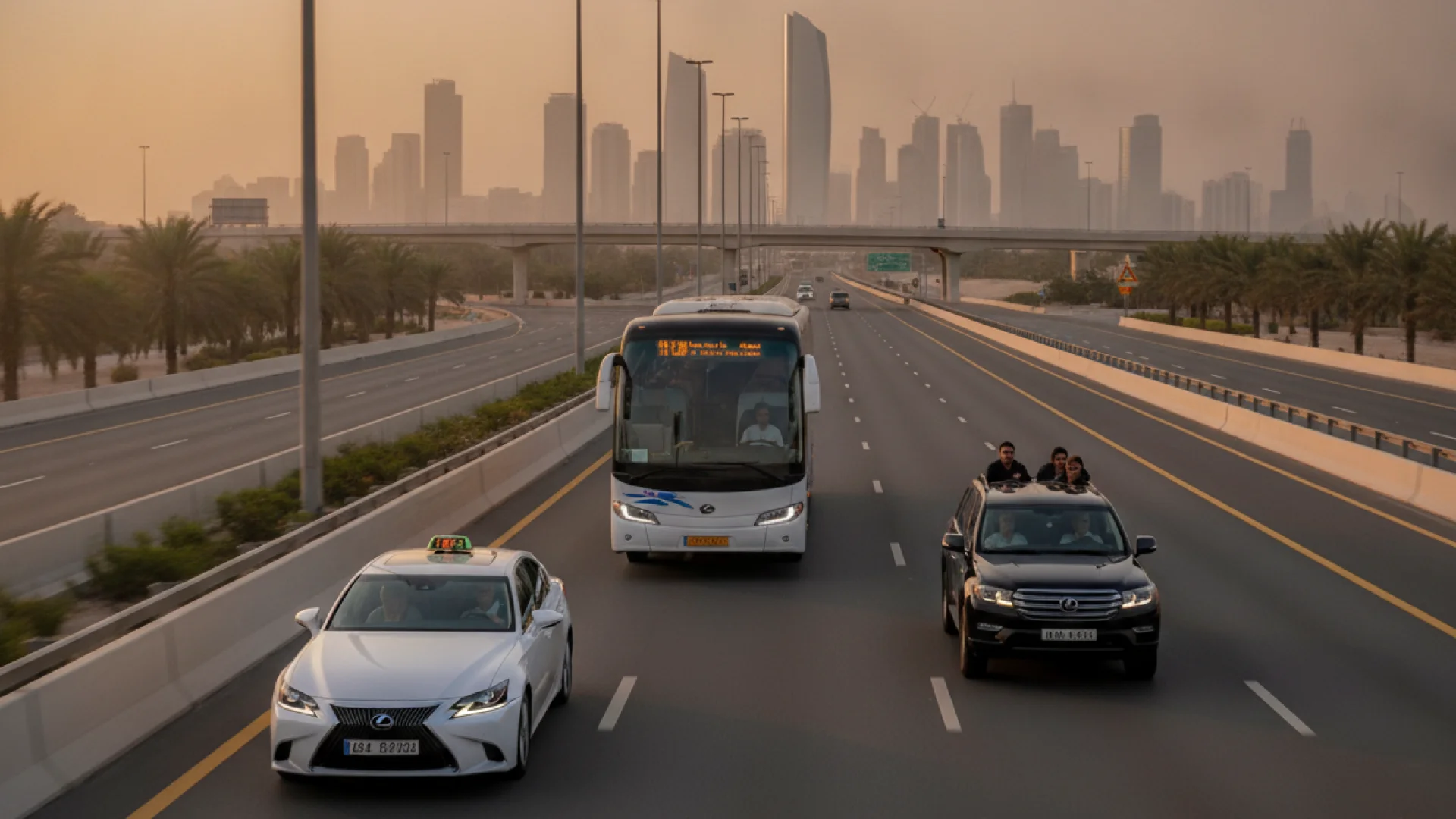

Commuting 140 kilometers each way changes a person. I learned this the hard way during my first two years consulting for a firm based in Al Reem Island while living in Dubai Marina. Traffic on Sheikh Zayed Road is unpredictable. One day, it flows smoothly; the next, a minor fender bender near the Ghantoot border turns the highway into a parking lot. I used to grip the steering wheel until my knuckles turned white, silently calculating the fuel I was burning and the sleep I was losing.
Eventually, I realized that operating my own vehicle for this grueling daily trek was a profound waste of capital and energy. I decided to audit the entire ecosystem of inter-emirate transit. My findings were clear: outsourcing the drive is the only sustainable method for long-term commuters. If you are preparing for this exact lifestyle, understanding the mechanics of a professional car lift Dubai to Abu Dhabi monthly subscription will save your sanity, your schedule, and your bank account.
Executive Summary: Car Lift Dubai to Abu Dhabi Monthly Dynamics
Before examining the specific granular details, we need to look at the raw numbers. I constructed a comparative matrix based on my personal transit data, cross-referenced with quotes from various licensed transport providers across the UAE. This table outlines exactly what you face when choosing between self-driving, public transport, and a dedicated monthly passenger service.
| Transit Modality | Average Monthly Cost (AED) | Time Investment (Daily) | Stress Quotient | Flexibility Index |
|---|---|---|---|---|
| Personal Vehicle (Self-Drive) | 3,800 – 4,500 (Includes Salik, Fuel, Depreciation) | 3 to 4 Hours | Severe | Maximum |
| Intercity Public Bus (E100/E101) | 1,100 (Based on daily NOL fares) | 4.5 to 5.5 Hours | Moderate | Low |
| Professional Shared Minivan | 800 – 1,200 | 3.5 to 4 Hours | Low | Moderate |
| Premium Sedan/SUV Commuter | 1,800 – 2,500 | 3 to 3.5 Hours | Negligible | High |
The Hidden Economics Behind Your Drive
Most expats drastically miscalculate the financial hemorrhage caused by a 280-kilometer round trip. Human brains are wired to track immediate, visible expenses like petrol and toll gates, entirely ignoring the silent killers of wealth: asset depreciation and aggressive maintenance schedules. Let me break down the actual arithmetic. The distance between central Dubai and downtown Abu Dhabi ensures you will stack roughly 6,160 kilometers onto your odometer every single working month. That equates to nearly 74,000 kilometers annually just for your job.
Breaking Down the Monthly Carpool Dubai to Abu Dhabi Costs
Assuming your vehicle consumes an average of 8 liters per 100 kilometers, you are burning roughly 500 liters of petrol a month. Based on current UAE fuel pricing indices, you will easily breach AED 1,400 monthly just at the pump. Then factor in Salik. Passing through Al Barsha and Al Safa toll gates twice a day strips another AED 16 daily, adding up to roughly AED 350 a month. But the catastrophic financial blow happens when you try to sell the car. Placing 75,000 kilometers a year on a vehicle decimates its resale value.
According to financial analysts studying regional transport economics over at Gulf News Business, hyper-mileage vehicles suffer an accelerated depreciation curve, stripping an extra AED 1,500 to AED 2,000 from your net worth monthly. You are effectively paying AED 4,000 a month for the privilege of navigating exhausting traffic. This makes the economic argument for securing a scheduled service absolute common sense.
Navigating Transport Regulations Across Emirates
The UAE maintains strict regulatory oversight regarding passenger transport. You cannot simply jump into a stranger’s Honda Civic and hand them cash at the end of the month. The government actively combats illegal, unlicensed taxi operations. Participating in an unsanctioned carpool exposes both the driver and the passengers to severe consequences, including massive fines starting around AED 3,000, vehicle impoundment, and potential legal complications with residency visas.
Legal Framework for Your Car Lift Dubai to Abu Dhabi Monthly Routine
When you transition to a shared transit model, verify the credentials of the operator. Legitimate operators hold specific trade licenses sanctioned by the local authorities and carry comprehensive commercial insurance. This distinction is vital. If a standard personal vehicle gets into an accident on the E11 and the insurance adjuster discovers the driver was operating an unrecorded commercial enterprise, the policy is voided instantly. That leaves you, the passenger, completely unprotected regarding medical coverage or liability. Always ensure the company you contract with adheres to the official guidelines laid out by the Roads and Transport Authority (RTA) and the Integrated Transport Centre (ITC) in Abu Dhabi. Legitimate operators issue formal monthly invoices, provide registered driver credentials, and utilize commercially plated vehicles.
Route Optimization: E11 vs E311 vs E611
An amateur driver blindly follows their GPS. A professional transport operator reads the highway like a seasoned sailor reading ocean currents. The journey between the two emirates essentially relies on three massive asphalt arteries, each with distinct personalities and hazard profiles. Sheikh Zayed Road (E11) is the most direct path. It is visually stunning, flanked by skyscrapers, but heavily congested and plagued by sudden, unpredictable braking waves near Jebel Ali. When an accident occurs here, the resulting bottleneck can trap you for over an hour. Sheikh Mohammed Bin Zayed Road (E311) sits further inland.
It carries the bulk of heavy commercial trucks and logistics transport. While the speed limits are favorable, the sheer volume of multi-ton vehicles requires aggressive defensive driving. Emirates Road (E611) is the deepest inland route. It acts as a bypass, completely circumventing the density of central Dubai. A seasoned operator offering a highly rated car lift Dubai to Abu Dhabi monthly service will actively monitor live traffic data, dynamically shifting routes to bypass sudden congestion zones. During my commuting years, I specifically chose providers who preferred the E311 for morning runs to bypass the Marina bottleneck, seamlessly shifting to the E11 for the evening return when commercial truck traffic peaked.
Selecting the Best Car Lift Dubai to Abu Dhabi Monthly Provider
The barrier to entry for claiming to be a transport provider is unfortunately low, which means the market is flooded with varying degrees of quality. I have sat in cramped minivans with broken air conditioning, and I have ridden in spotless SUVs smelling of fresh leather. The difference between the two entirely dictates your mood and energy levels when you arrive at your office. To bypass the trial-and-error phase, you must conduct a rigid vetting process.
Evaluating Vehicle Categories
Demand transparency regarding the actual vehicle fleet. If an operator quotes you AED 800 for the month, expect a 14-seater Nissan Urvan or Toyota Hiace. These are functional but offer minimal personal space. If you need to open a laptop and prepare a presentation during the transit, you require a sedan or a luxury SUV configuration, which typically commands between AED 1,800 and AED 2,500. I eventually found my sweet spot by utilizing a dedicated platform that transparently lists certified operators, vehicle types, and authentic reviews. By leveraging the specific listings on car lift Dubai to Abu Dhabi monthly networks, I matched my exact schedule with an executive fleet that guaranteed a maximum of three passengers per vehicle, ensuring I had the physical space to work and the quiet environment to decompress.
Productivity Shifts Through Managed Transport
We rarely quantify the cognitive toll of aggressive driving. Navigating high-speed traffic demands hyper-vigilance. Your sympathetic nervous system is engaged, pumping low-level cortisol through your veins for almost four hours a day. When you finally sit at your office desk, your brain is already experiencing decision fatigue. Transitioning to a chauffeured environment flips this paradigm entirely. The back seat of a comfortable vehicle transforms dead transit time into actionable hours. I started using my morning commute to clear my email inbox, review daily project briefs, and read industry whitepapers. The evening journey became my dedicated decompression zone, listening to audiobooks or simply sleeping. The World Health Organization extensively documents how environmental stressors, including long-distance daily commuting, directly correlate with chronic fatigue, musculoskeletal issues, and burnout. Relinquishing the steering wheel is not just a financial decision; it is an investment in your occupational longevity and mental equilibrium.
The Logistics of Pickup and Drop-off Zones
Your residential location within Dubai heavily influences the viability and timing of your monthly commute. Dubai is a sprawling metropolis stretching over 70 kilometers along the coast. If you live in Al Nahda or Deira, you must account for an additional 40 minutes of internal city traffic just to reach the inter-emirate highways. Conversely, residing in Discovery Gardens, Dubai Marina, or Jumeirah Village Circle places you strategically close to the exit arteries.
When negotiating your monthly contract, define the exact pickup coordinates precisely. Many budget providers utilize centralized pickup hubs. They will ask you to stand outside a specific metro station or landmark at 6:00 AM. If you value your sleep and comfort, pay the slight premium for door-to-door service. Walking 15 minutes in the July humidity to reach a centralized van collection point will ruin your day before it even begins. Ensure the operator agrees to your exact residential building and outlines exactly how they handle delays if another passenger in your shared pool is running late. A strict five-minute wait policy is standard among premium operators; this prevents one chronically tardy passenger from penalizing the entire vehicle.
Addressing the Environmental Impact
Beyond personal comfort and fiscal savings, aggregating inter-emirate transit serves a broader ecological purpose. The UAE has witnessed exponential population growth, bringing an immense influx of personal vehicles onto the road networks. Commuting solo in a five-seater sedan is an incredibly inefficient use of carbon resources. By adopting a shared transit model, you immediately reduce your personal commuting carbon footprint by up to 75%. While this might not be the primary motivator for an exhausted professional simply trying to get to work, it remains a tangible secondary benefit. Corporate HR departments are increasingly recognizing this metric, with progressive firms beginning to offer specific stipends or environmental transit allowances to employees who prove they utilize aggregated, shared transport rather than driving individually.
FAQs: Mastering Your Car Lift Dubai to Abu Dhabi Monthly Strategy
Over the years of managing inter-emirate project teams, I have fielded hundreds of questions from new expatriates terrified of the E11 commute. Here are the most critical data points you need to internalize.
How do operators handle passenger tardiness?
Professional networks operate on razor-thin time margins. If you are sharing a sedan with two other executives, the driver will typically wait exactly five minutes past the scheduled departure time. If you do not appear, they leave, and you forfeit that day’s transit. This strictness is necessary to ensure everyone arrives at their offices by 8:00 AM. You must build your morning routine around absolute punctuality.
Are road tolls and fuel completely covered in the quoted price?
Yes. A legitimate monthly contract is an all-inclusive rate. The operator absorbs all fluctuations in petrol prices at the pump, all Salik charges, and all vehicle maintenance costs. Do not accept contracts that attempt to add a ‘fuel surcharge’ halfway through the month.
What happens if the transport vehicle breaks down on the highway?
This highlights the massive difference between a man with a van and a licensed transport logistics company. A certified provider maintains a standby fleet. If a tire blows out near Ghantoot, the driver immediately dispatches a secondary vehicle from the nearest depot to collect the passengers. Always ask about the company’s emergency recovery protocols before signing the monthly agreement.
Can I change my pickup timings mid-month if my office hours shift?
Flexibility depends on the tier of service you purchased. If you are in a 14-seater budget van, the route and timings are rigid. You cannot change them. If you hired a premium 3-passenger sedan, operators are generally accommodating given 24 to 48 hours of notice, provided it aligns with the other two passengers. If your job requires highly erratic hours, you might need to hire an exclusive car without shared passengers, though this drastically increases the financial layout.
Is it customary to tip the driver monthly?
While not mandatory, it is highly encouraged if the driver maintains a clean vehicle, drives safely, and respects the schedule. A tip of AED 100 to AED 200 at the end of the month directly to the driver builds immense goodwill. This often translates to them waiting an extra minute if you are running late or reserving the most comfortable seat in the vehicle specifically for you.
Do these services run on public holidays or weekends?
Standard corporate commuter contracts strictly cover Monday through Friday. If your industry requires weekend work or holiday attendance, you must stipulate this during the initial negotiation. Providers will typically charge a customized pro-rata fee for extra days outside the standard 22-working-day calendar month.
How much notice is required to cancel a monthly subscription?
Most providers operate on a pre-paid, month-to-month basis. If you intend to cease the service, giving a two-week notice is standard professional courtesy. If you suddenly lose your job or relocate mid-month, do not expect a prorated refund, as the operator has already reserved your seat and turned down other potential clients for that specific route.
Are food and beverages allowed in the vehicles?
Bottled water and closed travel mugs for coffee are universally accepted. Consuming actual meals, especially anything with a strong odor, is heavily frowned upon and often explicitly forbidden in the contract to maintain the vehicle’s interior for the other passengers. Eat your breakfast before you enter the car.
What are the specific luggage allowances?
These services are designed for daily commuters carrying a laptop bag or a small gym duffel. They are not designed for airport transfers. If you attempt to bring a massive 30-kilogram suitcase into a shared sedan, you will likely be denied entry, as trunk space is divided equally among the passengers. If you need to transport bulk items, you must arrange alternative freight.
How secure are my personal belongings if I fall asleep?
The environment inside a premium, vetted shared car is highly professional. The other passengers are corporate employees like yourself, usually deep into their own work or sleep. While you should always keep valuables like your wallet and phone on your person, it is incredibly safe to close your eyes and rest. The peace of mind provided by a fully licensed operation cannot be overstated.
Managing a dual-emirate lifestyle is a marathon, not a sprint. The sheer physiological toll of navigating heavy highway traffic twice a day will eventually degrade your work performance and your weekend energy levels. By intelligently sourcing a verified passenger transport service, calculating the true economics of vehicle depreciation, and reclaiming your transit hours for rest or focused work, you transform a brutal daily obstacle into a highly managed, seamless routine.